Showing posts with label Seth Rogen. Show all posts

Thursday, September 10, 2015

Is That Real: Smoke, Shoot & SnoRt

Thinking about the logistics of our upcoming film, Stopover City, an important question is how will we show the marijuana. Although in Ithaca smoking weed seems to be a very common occurrence among students and locals alike, it still is illegal. So I took to the internet to find out how they fake actors using drugs.

Of course alcohol has a very easy solution; you can just make non-alcoholic drinks for your actors to slug down. But in thinking about how many films or television shows show their actors smoking weed, snorting lines of cocaine or even shooting up heroine, there are a variety of solutions.

                                                             Marijuana Alternatives:

If at first you don't succeed, try to replicate illegal drugs again. Ben Sinclair and Katja Blichfeld, the creators of High Maintenance, first tried using herbal cigarettes. They would slice the props open and pack it into bowls. The fake cigarettes they use are notorious for being very unpleasant, so they switched to an alternative. Once they tried using legal smokable herb blends, it became their choice alternative. For the baggies the dealer doles out they actually used cotton balls soaked in glue and covered with dried parsley, cilantro and rosemary.

Trying to get a catepillar high in Pineapple Express. 

Jenji Kohan's hit show Weeds, has an entire art department to create fake marijuana. The huge quantities of weed needed in that show called for a very realistic looking substitute. They custom made their supply using moss and other plants. Then they spray-painted and bound them together while also painting individual tiny hairs. As for the grow houses, they actually just use fake plastic plants.
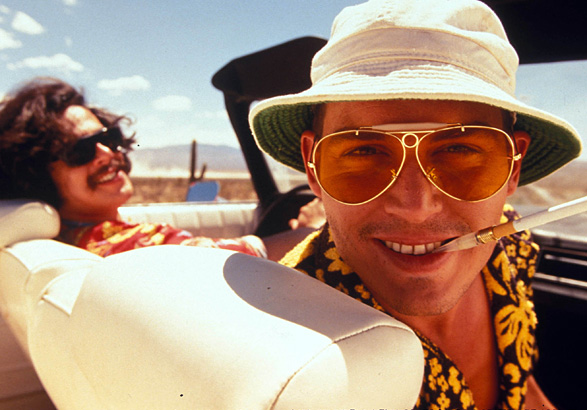
Basically a (very good) movie about a bunch of drugs. 

I'm sure our solution will be more low-budget like the first. In reading a few different articles about substituting drugs for film, here's a quick bullet list of alternatives.


  • Cocaine: powdered lactose for snorting, a mix of cornstarch and baby powder as a prop

(Sometimes they will even coat the inside of the straw with vaseline so most of the powder doesn't go up the actor's nose.)

  • Heroin: milk and vitamin powder blend, when it needs to be heated they use sugar and baking soda


  • Ecstasy Pills: sugar placebos


  • Magic Mushrooms: freeze dried fungus


  • Crack Rocks: "created by dropping globs of krazy glue into a pile of baking soda


Enough about drugs, have a fun weekend kids.

Wednesday, October 5, 2011

50/50: Strong Odds for a Good Movie

This last weekend I saw 50/50, a dramedy written by Will Reiser starring Joseph Gordon-Levitt and Seth Rogen. The film, which is loosely based on the life of Reiser, is about a 27-year-old guy who learns he has cancer and his struggle to beat the disease. While it may sound sad and depressing, the film, because of the work by the production team especially by the writer and actors, was a perfect blend between comedy and drama. It really had the entire spectrum of emotion and made it one movie I had to write about.
Even though Elizabeth has already done a great post about this film and how great the script was, when watching the movie in the theater there were many moments that I thought to myself that this would be a great movie to write about and have people discuss. I am going to look at more of the production side instead. Going back to the idea of the spectrum, 50/50 used a specific color scheme to give the film not only a certain look but also a certain feel. There are a lot of neutral colors and hardly many bright colors. Grays, browns, blacks, and dark greens are very evident when watching the film. The sky is usually cloudy and gray. I do not remember seeing any bright sun shiny days. (Photos taken of the film from online do not do the film justice because they were most likely taken by an on-set photographer and are not screenshots from the final color-corrected film). Not only do these very subdued colors seen in the set and sky reflect the setting of the film (Seattle, Washington) but it also creates a very bleak and sad mood that goes well with the main character’s battle with cancer. The brightest color I remember seeing was red, which the main character’s therapist often wore in accessories like scarves. Throughout the story she helps Adam sort his feelings and emotions through this ordeal and by the end of the movie after Adam has recovered six months later they begin dating. She is the bright spot in Adam’s life during this process literally and figuratively.
Another interesting production choice I remember seeing was a lot of scenes of the main character in the dark with a small light somewhere on screen. Either he was walking down a dark street with a streetlight visible ahead of him or he was alone in a room with a side table lamp. To me this was to show that Adam was in the dark about the future. He did not know what was next and if he would survive. There is a theory that when you die you go towards the light. This lighting that the production team chose was their way of telling the audience that Adam was currently on a dangerous path that could have ended with him dead at a young age of 27. At the same time there is a saying that there is a light at the end of the tunnel which means that after a difficult adventure there is hope or a bright future ahead.Even though the script was great, one of my favorite scenes was actually improvised by the actors. The scene where the main character shaves off his head with his best friend Kyle was not in the originally script. Joseph Gordon-Levitt, who played Adam, actually shaved off his head as he improved lines and jokes with Seth Rogen, who played Kyle. This just goes to show how important choosing actors are and allowing them a chance to give their ideas about the movie. It may end improving your odds of box office and critical success (no pun intended).