Showing posts with label Robin Wright. Show all posts

Thursday, October 2, 2014

House of Cards Part Three: Why It's Actually The Worst

Alright, SPOILERS FOLLOW. IF YA CAN'T HANDLE IT MOVE ON. Part three, now. 

Peter Russo dies. He doesn’t just die. Frank Underwood kills him. See, he lapsed back into alcoholism and botched his chance at being Governor. With nothing left he wants to atone for his crimes and come clean about all his illegal backdoor politicking. That’d put Frank in an uncomfortable spot. So he picks up Russo from a drunken stupor and drives him to a garage, leaves the car ignition on, rolls down the windows and shuts the garage door. The U.S. House Majority Whip Leader did that. When I expressed some mild reserve regarding the plausibility of such an event to two avowed House of Cards fans, they looked at each other and then to me.
“What else was he gonna do?”
Anything. Anything at all. Frank Underwood, the viewer is led to believe, is capable. A man able to manipulate the subtle nuances and impulses of the human mind to his advantage. He knows where every piece on the chessboard is, where they will soon be and how they’ll get there. Five turns in advance. So he looks at this man, a drunken wretch of a human being who’s only been talking about coming clean while disastrously inebriated to absurd proportions and may very well wake up the next morning and see the light and laugh off what he was saying the night before, Underwood sees this man and believes the only solution to be murder. And the moment’s not treated as a mistake made amidst a paranoid haze of anxious uncertainty but a cold, deliberate decision. As if no other option remained. I’m sorry but fuck that.
Aside from the whole murder thing being all sorts of stupid, Frank got an emotionally unstable alcoholic to go on a high profile, high stress election campaign that would leave him more tempted than ever before but did not consider the possibility that he may in fact relapse as 75% of alcoholics do within their first year of recovery. A smart man would see that risk and not take it. If he did, he’d plan a variety of backups to cushion the potential fallout. But Frank is surprised as anyone else when it happens. As for the actual murder, really, what the fuck, there were so many other possible solutions. Discredit the drunken alcoholic as a crazy person in the press, threaten his family, bribe him with all the money in the world, manipulate the events publicly so that he looks like the one who masterminded it all, drug him and ship him off to Guam or something. At least Guam would’ve been a fun sort of camp. It’s just crazy that Frank murders Peter in order to avoid the possible legal ramifications should Peter come forward and speak up but anticipates no apparent consequences for fucking murder. Granted, the issue rears its head in the first episode of season two when a reporter suspects him of the Russo murder. So he pushes the reporter in front of a train. Then that thing is all null and void. Okay then.
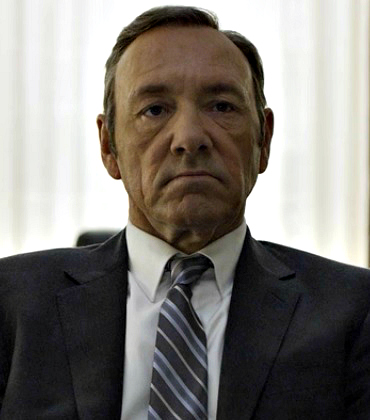
It is not as if television shows can’t explore the creative potential outside the realm of possibility. Many of the great shows thrive off of the implausible, often achieving their most powerful moments via batshit-when-you-think-about-it means. But these moments all function within the boundaries the shows set for themselves and never come at their own expense. House of Cards set the boundaries as a tell all fictional tale of the true nature of Washington but then shits all over them with murder. Twice. It took its carefully crafted verisimilitude and tore it asunder. At the same time, it’s not like it’s some frivolous soap opera where the stretching of reality does not matter either. Between the dialog and all the interviews about commitment to reality and the episode being called “Chapters,” as if there was a grand literary scheme to all this and the narrative wasn’t just riding by the seat of its shit stained coat tails to an ending.
Much of my anger stems from the disservice the show did to Peter Russo in his final moments. Part of it comes from the fact that everyone else thinks the show is great and it’s not and everyone thinks that moment is great and harrowing and it’s not and how I wished the show was great but it’s not. But most of my anger comes from the realization of what about show is really about.
See, the show was never about Russo. He was a narrative pawn, a character that existed just to die and provide emotional watershed. It’s not about politics. It just does not have enough to say about the subject. Hell, it’s not even about Frank. It’s about his slow and often illogical ascent to power and all the giddy kickass moment that accompany it. The entire dramatic thrust of the show, what entertains the viewer and guides the narrative and provides catharsis, is Frank winning. The other characters don’t complicate or challenge him in anyway. They exist solely to be beaten and disposed of in the wake of his path. It ends up being some high-class snuff film with flag pendants and cuff links and C-Span. Ascent narratives are a delicate art and they botch it. Breaking Bad, another one of the great shows, centered itself around the inherent thrills of an ascent narrative as well. But that narrative worked in large part due to its attention to the side characters. Their existence outside of the main character’s was fully developed and entertaining in its own right. This gave them the air of not obstacles but complications. So when the main character inevitably hurt those side characters on his way up, it complicated our joy and sympathy for the main character and the ascent itself, and at a certain point for many viewers out right displaced the sympathy. House of Cards is too careless with its side characters to ever pull of such a delicate balance of thrill and empathy. But it does try and it does fail, reaching for these overly dramatic moments that seem like needless and preposterous story beats intended to inject stakes and emotional heft into the narrative but end up just completely undercutting every emotional moment that proceeded them, like some bogus shot of adrenaline bought off some shady dude in an alley that sends the user into an even worse state, ultimately rendering them a lifeless corpse.

House of Cards spends too much time trying to be great without doing any of the groundwork that helped create a strong foundation the actual great shows used to ascend into greatness. And so it ends up being a good show that thinks it’s great. And a smart person who thinks they’re the smartest in the room will always irritate more than a dumb one that knows he’s dumb.

People buy into it because of the pedigree of it all. Smoke and mirrors. For me, it’s like if everyone else in the world looked at wrestling and thought of it as a deeply engaging narrative with a lot to say about the barbaric state of violence in society, with out of nowhere plot twists that are really gratifying and some nuanced, well balanced character work that meshes real well with the visceral physicality of it all.
It's a shame because we deserve a show like this to be great. It just didn't happen. Oh well! 

Friday, September 26, 2014

House of Cards Part Two: The Troubling Aspects


Alright, House of Cards essay part two. Let's go. SPOILERS GOING FORWARD
Part of what got to me was that the dialog was not doing it for me. Now, dialog is especially subjective. They way people talk is so varied by nature and in art specifically it can be used to convey story, theme or character in so many different ways that saying any particular style of dialog is bad as opposed to you think it’s bad is a bit foolish. So let me say, I think the House of Cards dialog is bad. See, the dialog’s rote. Very, very rote. There is an air of importance and elegance to it, a style clearly modeled after Shakespeare and other regal models of speaking. And there are some moments when this pay off in dividends and the lines crackle with life and intrigue, such as:
I’ve always loathed the necessity of sleep. Like death, it puts even the most powerful men on their backs. – US Housed Majority Whip, Frank Underwood
Spacey really nails the dialog as Frank, taking potentially corny lines and selling them with a Southern drawl and a slight smirk. But there are far too many moments that leave me cringing and pretending I did not just hear what I heard, such as when a journalist is also debating the nuances of sex with Frank Underwood:
Time is precious; powerful people don’t have the luxury of foreplay Poorly Written Journalist Character, Zoe Barns
...or when said journalist’s called a cunt fired by her editor and she tweets about it, telling him why he’ll regret this:
Call me what you want, but you should remember that these days when you’re talking to one person, you’re talking to a thousand. – Really, A Character So Bad And Poorly Conceived I Fear The Essay’ll Descend Into Irate Babbling If I Get Into It, Zoe Barnes
             Anyway.
That last bit right there is performed with the air and bravado of the final moments of Braveheart while having the actual resonance and quality of something more along the lines of my 9th grade one act play about the President contemplating leaving his wife while in office for an old high school flame. Dialog like this, very wordy and ornate, needs to be saying a lot while also leaving some things off the table. But the characters are always speaking in one off aphorisms like they’re some tear away cat calendar sitting on somebody’s office desk that’s weirdly political. Deadwood had a similarly obtuse sense of language but then the words fuck or cocksucker or hooplehead would be uttered every other five seconds and that would really help to undercut the more up-its-ass moments of linguistic brandishing. On House of Cards, the ornate dialog comes across saying a whole lot about not that much at all just to show they can. And Frank ends up being the only character to make any of the dialog work. Though that may result from a more dire issue I was having with the show. 
Aside from the alcoholic Peter Russo and Frank, no character did all that much for me. Everybody on House of Cards wants something but that’s all most do. Work to get what they want and then either succeed or fail. All characters in any narrative want something, that or they want to want something. But the best writing brings characters beyond that. The characters feel conflicted about their wants, their wants get in the way of their own best interests, they have multiple wants all at once and they exist in vicious conflict with one another. All this spools out into dynamic, well-realized characters that are far more complicated than just their goals or the plot they take part in. House of Cards never arranges its characters in meaningful enough situations to ever pull of half as messy a confluence of motive as its characters need to thrive. Instead they succeed or fail and then move onto the next opportunity for success. These characters, in their most boring insipid moments, are lifeless husks of wants. It leaf a real sour taste in my mouth and left me thinking even worse of Washington D.C. than I already did. 

Many people have testified to the authenticity of House of Card’s depiction of modern day Washington D.C. And while I did not necessarily dispute these claims, I did think the show was squandering this realistic atmosphere. Authenticity is powerful a powerful narrative device because when the viewer is presented with an at least a credible facsimile of reality, they are far more open to accepting the lessons and virtues of the narrative. But House of Cards does nothing with this. No time is spent exploring or explaining the sociological, psychological or even ethical circumstances that birthed such a corrupt and cynical environment as Washington D.C. It just is the way it is, apparently. The one attempt it makes at achieving something like this is also, not coincidentally, its most successful character, Peter Russo.
On a show filled composed power players that only calculate and seek, Russo is just a refreshing mess. Drunk, divorced, sleeping with employees. Underwood himself finds him drunk driving with a hooker. He gets Russo out of jail on the condition Russo abandons the project he’s been working on for his hometown longshoreman. Going back on promises that got him elected torture the man, and it becomes clear this is a good enough man who just got caught up in the fire and fuel that corrupts all power. It’s the rare moment on House of Cards that does not work on a “Damn that was smooth and clever,” level but an “Oh please make this end please this hurt my soul,” one. For a moment, House of Cards says something substantial with its narrative and I was encouraged by this plot development. Maybe the show has secretly been about him all along. An example of how a good heart does not get far in Washington D.C. and the choices, the compromised he has to make along the way.
Underwood later pays Russo for his sacrifice back by getting his name on the ticket to be the democratic nominee for the Governor of Pennsylvania. Granted, the audience does not know where this fits into Underwood’s plans and the writers did not either as they later admitted but I was still pretty happy my boy Russo was getting his shot. Watching him go back to those same longshoremen to convince them he was worth fighting for and then winning them over with pure honesty, that was powerful. Encouraging. Russo became a sole pulsing heart in the real dark soul of the show. His presence both conflicted and empowered its cynical tone.

Then they blew it. Then they made clear what the show was really about then I started my bile spewing.  More on that next time!

Thursday, September 18, 2014

House of Cards Part One: The Parts to Like

So on my 22nd birthday, I got a package from my girlfriend. I was at the age when I wasn't expecting too much, just happy to get something. Hopes for something cool and mysterious were not high but there were there. I opened it up. It was the second season of House of Cards on DVD.
A cheeky grin and a hushed string of expletives followed.
See, around episode eleven of House of Cards, I decided a casual distaste for the show would not suffice and I would instead need to take upon myself a rather fiery, impassioned crusade that involved spewing overly-analytical bile upon any person who crossed my path with even a vaguely informed positive impression of the show, a mindset that would win me no friends but a whole series of very, very casual acquaintances that probably wouldn’t mind not seeing me again. I made this clear to Ms. Ryan O’Leary and perhaps labored upon the point a tad too often because a week later all talk of House of Cards was banned. A few months later, smartass little bastard, she had a joke at my expense with my birthday gift.
House of Cards came into play with perfect timing. People are dissatisfied with the wallowing cesspool of greed and incompetence that defines the government, with 75% of people expressing dissatisfaction with the direction of America and Congressional approval ratings at an all time low. And yet at the same time there is also a distinct absence of mainstream entertainment willing to address this unease. It was Kevin Spacey’s first big project since we, as a people, realized we missed Kevin Spacey. Also, acclaimed director David Fincher’s first foray into television after a wildly successful career in film. All this delivered to viewers via Netflix’s revolutionary bulk delivery of episodes, an innovation not unlike when HBO first debuted The Sopranos fifteen years ago without commercials but with boobs and fucks and blood. Yes, House of Cards had the narrative of innovation and singularity behind it to be considered for entry into the Pantheon alongside the other greats such as The Sopranos, The Wire, Breaking Bad, Mad Men. And Deadwood if you pretend it has an ending, which I do, and Twin Peaks if you ignore the ending, which I don’t. Honorable mentions to Hill Street Blues for kicking it all off though. That show gets something like a plaque on the wall or they name the whole building after it.
Anyway.
House of Cards, in case the reader is unaware, is about a Congressman with a nice southern drawl but probably a penis a couple sizes too small for his liking cause he sure works hard to compensate for something we’re never really made aware of by ruining a variety of lives until he reigns supreme and powerful at the top of it all, named Frank Underwood. Slighted and angered when he’s denied the promised position as Secretary of State by the administration, he crafts an elaborate plot to attain revenge and power. Shenanigans follow.
There was a lot to like as I started watching. Sometimes, to marvel at. Spacey as Frank Underwood kills it, giving him a somehow simultaneous edge of camp and malevolence. Robin Wright, as his wife Claire, is just as good, though Claire is not given nearly enough interesting material for Robin to shine as much as she could. Of the bunch though, the stand out is Corey Stoll as an alcoholic congressman looking to clean up his act for the big time named Peter Russo. For the first few episodes he was the only actor of the ensemble to ever make feel any emotions, but that’s more due to the character than anything. The plot machinations can be hit or miss, but there are certain moments and episodes that offer a real cathartic look at just how dreadfully fucked government can be. On a technical level, the cinematography is a pitch perfect collection of dull grays and blues that bring to mind for whatever reason a cold unexpectedly caught on a cloudy summer day or a dreary day spent in a hospital room when it’s raining outside but for some reason you leave the window open. It’s a perfect match for the cynicism that underpins every facet of the show.

All this added up to a good show. In its strongest moments, a really good show. But as I kept watching, I still felt a distance. When a TV show hits me, it burrows into my gut and rests there. I’ll spend countless hours, though only really countless because I don’t care to know how much time I’m wasting on this shit, reading, understanding, analyzing, rewatching the parts I can’t quite let go of. And it wasn’t happening with House of Cards. But it was with everyone else. Next week, I'll get into what wasn't clicking with me.