So over the past week, I watched this documentary mini series called America in Primetime. Each episode dissects and analyzes an aspect of popular American television. Mainly they are common characters like the father figure or the crusader/hero.
This doc series is awesome! It is a really cool analysis on over 50 years of television in America. The series uses clips of television from The Honeymooners to Breaking Bad.
The even cooler part about this doc series, is that the interviews are of historians, prominent actors, directors, and writers. What is so cool about that is that you get all of these different perspectives from people who are involved and experienced in all different aspects of television; from watching it, to being in it, to creating it.
If you like television, or like me, absolutely love it, this is definitely something you should check out!
I am a firm believer in that every choice you make affects
the path your life will take. I sat in my bed Friday night thinking of what I
wanted out of the weekend. I knew that we would be shooting the Stopover City title sequence and
scootering pickups most of Sunday, and also had my 10 AM-noon WICB Best of Broadway show
before all of that. So basically Saturday was my only time off; therefore I had a
choice to make about how to spend my Saturday; I could either:
a.go to the Cortaca football game and have a
mediocre time whilst freezing my butt off.
b.sleep in and regain some strength lost from
overworking the whole week.
c.attend the sound workshop held by multiple
Ithaca alumni and professionals in the field.
After a fair amount of late night internal debate, I decided
to attend the sound workshop. I reasoned that there are a ton of opportunities
to sleep and have fun with friends, but it’s not everyday that professional
location & post sound mixers come in to talk with students freely (it
literally only happens once a semester). I also don’t know a ton about
on-location sound mixing but would really like to improve in case I ever needed
to do emergency sound mixing for a film.
So I woke up the next morning (at 7:30 AM because my
roommates were blasting music in preparation for the game, *sigh*) and made my
way over to Park to learn! I thought I would experience some fear of missing
out (aka FOMO) but the workshop was so interesting that I forgot all about the
other potential plans I had.
The workshop began with the sound mixers in a panel
discussion, including both location and post-sound mixers. They spoke not only
of the sound industry, but also of the overall tv/film industry workflow. The
panelists had a lot of very helpful/inspirational things to say—some of which I
wrote down in my handy-dandy notepad. Here’s a few pieces of advice they gave
(all 8 of) us:
-it’s really important to invest in your own equipment—that
way you get more practice with the equipment.
-(more audio-concentrated but) know signal flow; that helps
you troubleshoot a live recording session if something isn’t working
-learn how to manipulate mics
-“it’s all about listening”
-the turnaround is a lot faster in television than in TV.
-fast problem solving is the key to making yourself
irreplaceable
-if & when you’re a freelancer, you have to be
accountable for yourself
-figure out what type of work you thrive in and what works
for your personality*
*I found this piece of advice most significant for people of
all concentrations. I am still unsure of where my “calling” is in the industry
based on my personality. On the one hand I love doing art department but it is
extremely difficult with little to no budget, and I am not interested in
producing because I don’t enjoy
bossing people around. Location sound is not something I’d like to pursue as a
career but I would definitely like to get a better handle on it so I could run
sound on a future documentary passion project(?). I am getting quite off topic,
but that’s how most of these posts go.
the 1 picture I sniped: mama & baby mixer--SO CUTE
After the panel, we split off into location and post-sound
mixing. Four people (including myself) meandered off to 269 for the location
sound where Jeff Pullman and David Rosenberg worked with us on refining skills
such as boom and lavaliere placement, in addition to little tips and tricks in
making our location mix the best it could be. While most of the mixing stuff
went right over my head, it was extremely helpful to learn about the microphone
manipulation tips. It definitely inspired me to refresh on the pickup patterns
of different mics to be better prepared for shoots. At the end of the workshop
Jeff generously offered for any of us to shadow him on Madame Secretaryin the Big Apple, which I will definitely do
(hopefully) over winter break.
Overall, it was a very intriguing workshop and I feel that it was time very well spent.
Why being fired was one of the best things to happen to me.
This past Monday I was fired, plain and simple. During a workshop by DP Chris Scarafile, camera operator on "Boardwalk Empire" and "Blacklist" I was one of three who volunteered to help set up and demonstrate what a professional production might look like. My job...Grip.
Here's what I didn't know.
1) How to use a C-Stand properly.
2) How to put on a tool belt.
3) What the different flags did what. 4) How to put two apple boxes together to make a firm base.
5) How to use tape.
6) How to push a dolly
7) To get out of the way of the lights.
8) How to not fuck up in a general and very specific sense.
I was obviously fired in the first thirty seconds. I had no experience or right to be a grip for someone such as Chris Scarafile (or a grip at all). But I knew that I was going to put my foot forward and at least try, and by the grace of god I was allowed to stay and help for the remaining. I am not someone who likes to sit on the sidelines, and as Chris said if someone asks you to do a job you don't know how to do it SAY YES and you can learn in the time between when you're asked and when you're on the job. Unfortunately for me that time was 0 seconds so that really didn't apply to me in this situation...
Here's what I did know and did learned.
1) How to use a C-Stand properly
2) How to put on a tool belt and use the tools on them
3) What different flags did what and what they are used for
4) How to use tape and apple boxes
5) How to use a Dolly
6) How to not get in the way of lights
7) Don't fuck up
8) Always say yes and put your foot forward no matter what
9) How to perform under pressure and do your job
10) Ask questions
11) Give no excuses
12) Change my name and grow a mustache. TRY AGAIN.
13) Never give up
14) Keep a positive attitude
This was an insanely eye opening and helpful experience. For me, it was invaluable in seeing what the actual industry of what I want to do is like and how I can get in and be a part of it. It showed me the holes in my education at IC and what I need to work on and learn how to do. Most importantly it showed me that your attitude is an extremely important factor in how you learn, how you move up, and how you succeed in this business.
Though I got my ass kicked, I got out of there with even more excitement and passion than I had before and am extremely thankful for all those who made it possible.
With our second casting call for Stopover City rolling around I've definitely picked on to some of the do's and don'ts of casting calls. I thought you all would appreciate some tips for your future casting calls...
How to run a successful casting call
Casting Location
The location needs to be in an comfortable environment with ample room for actor to prepare prior to auditioning.
Advertise Casting Call
Promote your casting date on all social media (Facebook, Twitter, and the film webpage)
Promote via posters *literally post them everywhere*
Expand promotion outside of school, send mass emails and contact actor agencies.
Choose Scenes for Actors to Read at Casting Call.
Look for short scenes that involve the character interacting and illustrate a range of emotion.
Have more than one scene available for reading.
Make a schedule
Rent Location for casting, and if needed equipment before hand to avoid any potential conflicts
Extensive time block. *you want to avoid making the actor feel rushed.
Distribute information sheets to actors
At the end of each audition, you should provide the actor with an information sheet that contains the following:
outline the days of production
contact information for them to fill.
Extra Tips for Casting Day!
Be knowledgeable of script and all deadlines
Have a script available. I recommend 1 electronic copy, and 2 hard copies.
Have a script breakdown and character descriptions *actors will appreciate more context of their character prior to auditioning
Have a camera ready to record the audition
Have a sign in sheet posted
Provide refreshments and snacks to leave a professional and lasting impression.
I say hey! Let's go back to our childhood and to the glory days of Public Television. The days of "Cyberchase", "Between the Lions", "The Bernstein Bears", "Wishbone", "Clifford the Big Red Dog", and I guess there was "Caillou" (but actually f*** Caillou). In all of these though only one had a intro song performed by Ziggy Marley with an original point of view, and only one reigns supreme. That is "Arthur", created in 1996 based on the Marc Brown book series, and it is perhaps the greatest kids show of all time, so open up your eyes, open up your ears and let's get into this.
The genius of Arthur, and the reason why it is still on today, is completely due to storytelling. I think today in kids television shows people can't relate to the source material. They can't relate to the problems the characters face, and even though to kids the content itself is viscerally interesting they don't get sucked into the characters as much as they did (and still do) with a show like Arthur. Take shows today like "Martha Speaks," "Word Girl," and "Dinosaur Train." They all lack one thing, relate-ability. Though the zany adventures of dinosaurs, talking dogs, and a super-girl with monkey sidekick are all interesting within the nature of themselves how could we possibly relate to their problems? Arthur was about kids who had real problems, bullying, being different, making new friends, saying goodbye, the bond of family. The stories were rich and progressed the character development in the series, something educational television severely lacks these days.
Every episode Arthur tackled an issue that mattered and effected the lives of us kids. When we watched it we could relate, and in some cases lived, these exact scenarios. They enriched and educated us, made us into better people, supplemented our education on how the world works and how we need to treat people better and work together.
Arthur was a show not about ratings, or fast paced action, or learning the alphabet, it was about Love; and Love is universal and timeless. That why is Arthur will forever remain the greatest kids show of all time.
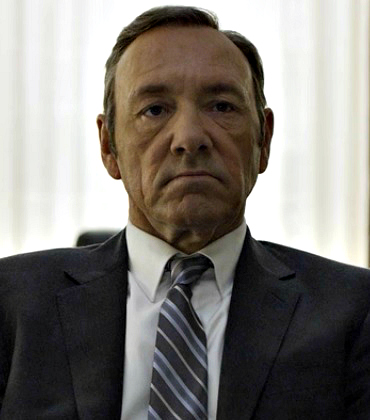
House of Cards is a hit Netflix Original Series that has run from 2013 and released it's third season on Netflix as of last February. It revolves around Frank Underwood (played by Kevin Spacey) a corrupt and often maniacal politician in Washington doing anything he can to get on top. The show itself is great for so many reasons, blocking, sound, color; but I think what really grabs people's attention is the fourth wall breaks (breaks from the story directed at the audience) periodically scattered across the show. Here's a quick video to demonstrate.
Fourth wall breaks, to me, are typically found in comedies and typically movie, not TV shows. The classic fourth wall break can be seen in movies like Ferris Bueller's Day Off, Space Balls, Annie Hall, ect...But to see these breaks in television I think was a new experience for me and here's why it works.
They allow us into the world of Frank Underwood, it gives us his moves and his plays before his opponents know what's coming. By allowing this we also start to sympathize with an almost unlikeable character. It also doesn't come across as cheesy or overdone. This show has a very Shakespearean storytelling style to it, and as actors often broke the fourth wall in plays to give monologues Frank Underwood masterfully does the same in this show.
Fourth wall breaks are an technique that can only really work when it is used tastefully and well. If it isn't the audience won't receive it. House of Cards manages to do this in the best way I have seen in a long time not only drawing us into the story more but propelling a narrative in a more interesting way.
I learned something about myself this summer. I spent the past 3 months in Alaska working as a fly-fishing guide at a lodge accessible only via float plane, living off the grid with no real connection to the outside world. While I easily had the most spectacular summer of my life so far, there was one thing missing in my life: television. As a TVR student, it's obvious that I enjoy consuming and creating media in various forms. However, I didn't realize just how big a part media consumption was in my life until it was out of my reach entirely.
I left for the summer with only two episodes left in the fifth season of the HBO series Game of Thrones. After spending a few days in Anchorage preparing for my journey into the bush, I was casually talking with another guide I would be working with about streaming the last two episodes so that I could see how the season ended. The guide shot me a confused look and told me that there would be no possible way for me to watch any shows, let alone the last two episodes of an HBO series. At first, I was dumbfounded. I spent my entire life with immediate access to television and other media; I had no reason to believe that Alaska would be any different. I began to reason that surely the lodge had a satellite internet service or something that could fulfill my TV needs. The other guide, who had spent previous summers in the bush, quickly shot down any hopes I had left. I had to accept that this would be my first summer without TV or movies EVER.
I'm not going to lie to you, it wasn't easy. I never realized how much I relied on television and movies to help get me through a day. I soon discovered that consuming media acted as a very important tool to help me decompress and unwind from my day; I will often come back from a long day of classes and meetings and sit in my recliner for an hour or so and simply do nothing but watch a show. No contact with the outside world, no activity, just me and my show. I love getting lost in the narrative of a program, wether it is a critically acclaimed film or just another Seinfeld rerun. The ability to get lost in the fictional world provides a respite from the stresses of the day and allows me to rest and recuperate my mind. All of that was absent this past summer. I was forced to find other methods of relaxation to wrap up my long days of work. It was difficult at first; I tried to scheme up ways to fulfill my need for media consumption, but by the end of the summer I had taken the old fashion route and settled with a good book. While not as visual as I was used to, it still permitted me access to another, less stressful world. I am happy to say that upon my return to the lower 48 just last week I immediately attempted to make up for all of my lost time, catching up on all of my shows that I had so painfully been torn away from all summer. I went and saw Jurassic World (meh) and am currently taking full advantage of the cable in my room. Now that is all said and done, I am actually glad that I had this media-less experience this summer. While it was hard, it also reaffirmed my love for all things TV and film and made me realize what I like most about media and how it impacts my life specifically, which I believe will make me a better creator of media in the long run.
That's right, you heard me. CBS is the first broadcast network to create a stand-alone streaming option for viewers.
It's been a good week for television fans. On Wednesday, HBO announced that their streaming service will be available to people without their pay-TV subscription starting 2015. On Thursday, CBS announced CBS All Access, a new streaming device for $5.99 a month that includes current and previous programming. That's right, kids. You no longer have an excuse to not watch The Good Wife.
“CBS All Access is another key step in the company’s long-standing
strategy of monetizing our local and national content in the ways that
viewers want it,” CBS President and CEO Leslie Moonves said in a
statement. “This new subscription service will deliver the most of CBS
to our biggest fans while being additive to the overall ecosystem.
Across the board, we continue to capitalize on technological advances
that help consumers engage with our world-class programming, and we look
forward to serving our viewers in this new and exciting way.”
This is huge, because CBS is the largest broadcast network. The Big Bang Theory, one of CBS's programs,
was the most watched television show of last season, and had more than 18 million
tune in for the Season 8 premiere last month. CBS All Access will also include special programming, like
the Grammy Awards, the Academy of Country Music Awards, and the
Victoria’s Secret Fashion Show. There will be ads for current programming, although commercials will run between 9-12 minutes, as opposed to the 12-16 minutes of advertisement on television. Another big plus is that previous programming, like Twin Peaks (which seriously all of you need to watch if you haven't already), will not have advertisements.
My only complaint is that CBS All Access will not include the NFL games. Hopefully they add those one day. Speaking of adding onto the service, CBS All Access will initially only be available in major cities, including New York City and Los Angeles, of course. The network, however, said it plans to expand.
If you're like me and want to be a screenwriter (which apparently applies to like, half of our class) you might assume that all scripts are more or less the same: just throw something decent in celtx and boom. Script. Film, Tv, whatever, a script is a script. However, as I'm learning very quickly in my writing for series television class, there are some major differences between writing a film (short or feature) and writing for a weekly television show. Here are just a few.
1. Television writers are more likely to get/keep jobs.
Yay jobs!
Not to say that people who write TV shows are better at their jobs than those who choose to write films; it's simply a matter of numbers. While film scripts are typically written by only one or two people as a kind of freelance project, TV scripts are made by - almost always - staff writers. Staff writers collaborate on scripts to keep episodes of any given TV show consistent with that show's tone and brand. Simply put, there are more positions available to write for TV than to write for film. To find out a bit more about the various positions and hierarchy of a television writing team, check out the Writer's Guild of America's official overview here.
2. Characters develop differently...if at all.
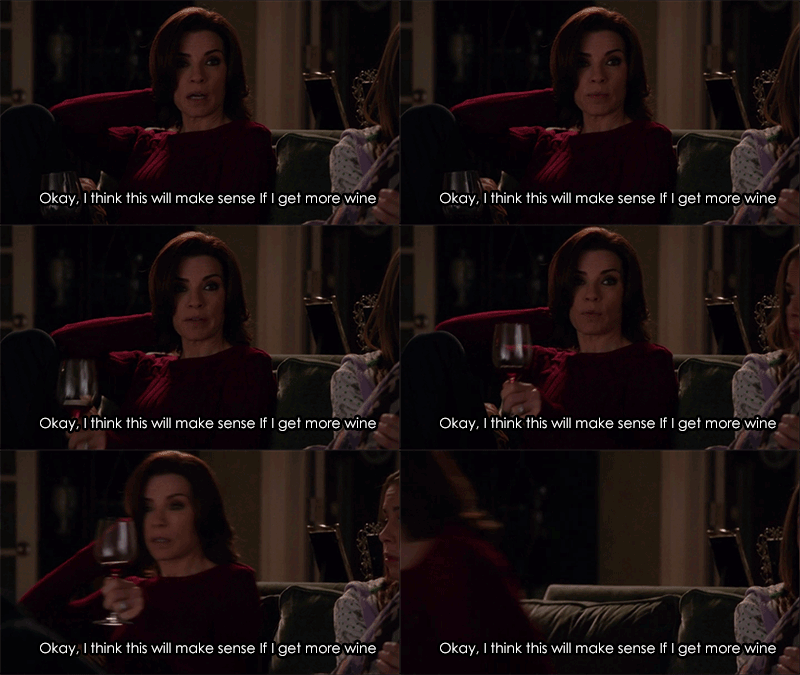
Ja feel, Alicia.
In any good film, the main character will undergo some kind of change as they progress from point A to point B. A movie with a static character is kind of just a boring movie. Television, however, is more or less the exact opposite. Apart from certain cable dramas (cough cough Breaking Bad), people watch TV shows for consistency. If Michael Scott suddenly realized that he was a gigantic doofus and wanted to change his ways halfway through season 3, there never would have been a season 4. As weird as it sounds, we want to know what we're getting into before we watch a show. I watch the Good Wife because it's an intensely dramatic show about lawyers; even though major, major changes occur during its fifth season, I continue to watch it because it's characters are consistent and awesome. It's perfectly fine to reveal new traits and things about your characters as a show goes on, but they should always have the same basic characteristics that made your viewers want to watch your show in the first place.
3. TV is faster and there's way more of it.
Whereas a feature film writer can take months (or even years!) to write a first draft of a commissioned screenplay, a television writer typically has to churn out a script that's ready for production in 5-7 days. That's less than a week to go from concept to breakdown to outline to rough draft to shooting draft, with a few extra drafts thrown in there somewhere for good measure. And don't even think of missing deadlines. Alex Epstein details the entire process in section taken from his book, Crafty Screen Writing, which can be read here. The upside to this tight production schedule, however, is that television writers are some of the most powerful people in the industry. Unlike film writers - who are typically never on set and practically thrown away after they've turned in a decent draft - television writers are often the producers and showrunners of their own productions. All of this basically just means that the actors shouldn't piss off the writers, since they could literally kill off your character at any moment.
While both television and film have their pros and cons, it almost goes without saying that writing for TV is the more difficult of the two. But if you are up to the challenge and can somehow not consistently get chronic writers block, it also may be the more rewarding.
For those of you who somehow missed it, my favorite television show of all time is Showtime's Shameless, followed by CBS's The Good Wife. My personal tagline for the show is, "The best show you're not watching." But let's get into what makes Shameless an overwhelmingly under-appreciated television drama. Here are just five of the oh so many reasons you should start watching tonight:
1) Its seamless integration of social commentary into every episode
The entire show is social commentary for poor, dysfunctional families and the way our country handles these situations. After all, Shameless takes place in the South Side of Chicago, or a world of dysfunctional families, where parents are expected to fuck up either children. Their social commentary goes deeper into specific story lines of episodes.
2) The best written gay couple on television
One of the six children in the Gallagher family is Ian Gallagher, who was touted as a “unique” gay character on television from the start. And while it’s true that Ian is a bit more rough and tumble than your
usual gay stereotype, he’s still a fairly sensitive boy. But there’s
nothing sensitive about the Mickey character, a horrifyingly violent
young thug who was as likely to punch Ian as he was to kiss him. Just
last season, Mickey delivered this heart-breaking beat down.
These are scared, oppressed boys who often kiss through broken faces.
They defy stereotypes and do not signal their sexuality with limp wrists
or theatrical gestures. Both revel in their masculinity and seem more
interested in throwing a punch than picking out flower arrangements. If for no other reason, watch Shameless for the most radical portrait of homosexuality. #TeamMilkovich
3) It handles its multiple, simultaneous, intersecting storylines masterfully
It's style of storytelling is unlike anything else on television right now. Unlike the more streamlined programs that follow careful A-story/B-story/C-story structures, it's, well, kind of a mess. The threads of the story get tangled easily. Though its frentic structure may seem untidy at first glance, it's one of the things viewers who stick with it come to love most. The frenzied, overlapping plotlines mirror and represent its characters' own hectic lifestyles.
4) The ensemble is full of incredible characters, played by incredible actors
Sex, violence, addiction, and depravity are the show’s rallying cry. But somewhere in the cracks, Shameless
has built a cast of believable, sympathetic, dirt-poor characters
struggling to escape circumstance, genetics, and self-destructive
behavior. Every character is on point in every scene. Of course, the actors who play the gay couple, Noel Fisher and Cameron Monaghan, have grown beautifully into their roles. However, Fiona Gallagher, portrayed by Emmy Rossum, and Lip Gallagher, portrayed by Jeremy White, are two of televisions great heroines and heroes. Oh, and Bill Macy. If Shameless had no other redeeming qualities besides seeing William H. Macy playing the alcoholic mess that is Frank Gallagher, it would still be worth recommending. This is undeniably one of the best performances on television right now.
5) The show's themes
No, I don't mean their theme song. Although, their title sequence is one of my favorites...
Shameless is a very complex show that focuses on the human
condition. As I said before, sex, violence, addiction, and depravity are the show’s rallying cry. And although the Gallagher’s are extremely poor, they stick
together as a family and overcome struggles.
Alright, SPOILERS FOLLOW. IF YA CAN'T HANDLE IT MOVE ON. Part three, now.
Peter
Russo dies. He doesn’t just die. Frank Underwood kills him. See, he lapsed back
into alcoholism and botched his chance at being Governor. With nothing left he
wants to atone for his crimes and come clean about all his illegal backdoor
politicking. That’d put Frank in an uncomfortable spot. So he picks up Russo
from a drunken stupor and drives him to a garage, leaves the car ignition on,
rolls down the windows and shuts the garage door. The U.S. House Majority Whip
Leader did that. When I expressed some mild reserve regarding the plausibility
of such an event to two avowed House of Cards fans, they looked at each other
and then to me.
“What
else was he gonna do?”
Anything.
Anything at all. Frank Underwood, the viewer is led to believe, is capable. A
man able to manipulate the subtle nuances and impulses of the human mind to his
advantage. He knows where every piece on the chessboard is, where they will
soon be and how they’ll get there. Five turns in advance. So he looks at this
man, a drunken wretch of a human being who’s only been talking about coming
clean while disastrously inebriated to absurd proportions and may very well
wake up the next morning and see the light and laugh off what he was saying the
night before, Underwood sees this man and believes the only solution to be
murder. And the moment’s not treated as a mistake made amidst a paranoid haze
of anxious uncertainty but a cold, deliberate decision. As if no other option
remained. I’m sorry but fuck that.
Aside
from the whole murder thing being all sorts of stupid, Frank got an emotionally
unstable alcoholic to go on a high profile, high stress election campaign that
would leave him more tempted than ever before but did not consider the possibility
that he may in fact relapse as 75% of alcoholics do within their first year of
recovery. A smart man would see that risk and not take it. If he did, he’d plan
a variety of backups to cushion the potential fallout. But Frank is surprised
as anyone else when it happens. As for the actual murder, really, what the
fuck, there were so many other possible solutions. Discredit the drunken
alcoholic as a crazy person in the press, threaten his family, bribe him with all
the money in the world, manipulate the events publicly so that he looks like
the one who masterminded it all, drug him and ship him off to Guam or
something. At least Guam would’ve been a fun sort of camp. It’s just crazy that
Frank murders Peter in order to avoid the possible legal ramifications should
Peter come forward and speak up but anticipates no apparent consequences for
fucking murder. Granted, the issue rears its head in the first episode of
season two when a reporter suspects him of the Russo murder. So he pushes the
reporter in front of a train. Then that thing is all null and void. Okay then.
It
is not as if television shows can’t explore the creative potential outside the
realm of possibility. Many of the great shows thrive off of the implausible,
often achieving their most powerful moments via batshit-when-you-think-about-it
means. But these moments all function within the boundaries the shows set for themselves
and never come at their own expense. House of Cards set the boundaries as a tell
all fictional tale of the true nature of Washington but then shits all over
them with murder. Twice. It took its carefully crafted verisimilitude and tore
it asunder. At the same time, it’s not like it’s some frivolous soap opera
where the stretching of reality does not matter either. Between the dialog and
all the interviews about commitment to reality and the episode being called
“Chapters,” as if there was a grand literary scheme to all this and the
narrative wasn’t just riding by the seat of its shit stained coat tails to an
ending.
Much
of my anger stems from the disservice the show did to Peter Russo in his final
moments. Part of it comes from the fact that everyone else thinks the show is
great and it’s not and everyone thinks that moment is great and harrowing and
it’s not and how I wished the show was great but it’s not. But most of my anger
comes from the realization of what about show is really about.
See,
the show was never about Russo. He was a narrative pawn, a character that
existed just to die and provide emotional watershed. It’s not about politics. It
just does not have enough to say about the subject. Hell, it’s not even about
Frank. It’s about his slow and often illogical ascent to power and all the
giddy kickass moment that accompany it. The entire dramatic thrust of the show,
what entertains the viewer and guides the narrative and provides catharsis, is
Frank winning. The other characters don’t complicate or challenge him in
anyway. They exist solely to be beaten and disposed of in the wake of his path.
It ends up being some high-class snuff film with flag pendants and cuff links
and C-Span. Ascent narratives are a delicate art and they botch it. Breaking
Bad, another one of the great shows, centered itself around the inherent thrills
of an ascent narrative as well. But that narrative worked in large part due to
its attention to the side characters. Their existence outside of the main
character’s was fully developed and entertaining in its own right. This gave
them the air of not obstacles but complications. So when the main character
inevitably hurt those side characters on his way up, it complicated our joy and
sympathy for the main character and the ascent itself, and at a certain point
for many viewers out right displaced the sympathy. House of Cards is too
careless with its side characters to ever pull of such a delicate balance of
thrill and empathy. But it does try and it does fail, reaching for these overly
dramatic moments that seem like needless and preposterous story beats intended
to inject stakes and emotional heft into the narrative but end up just
completely undercutting every emotional moment that proceeded them, like some
bogus shot of adrenaline bought off some shady dude in an alley that sends the user
into an even worse state, ultimately rendering them a lifeless corpse.
House
of Cards spends too much time trying to be great without doing any of the
groundwork that helped create a strong foundation the actual great shows used
to ascend into greatness. And so it ends up being a good show that thinks it’s
great. And a smart person who thinks they’re the smartest in the room will
always irritate more than a dumb one that knows he’s dumb.
People
buy into it because of the pedigree of it all. Smoke and mirrors. For me, it’s
like if everyone else in the world looked at wrestling and thought of it as a
deeply engaging narrative with a lot to say about the barbaric state of
violence in society, with out of nowhere plot twists that are really gratifying
and some nuanced, well balanced character work that meshes real well with the
visceral physicality of it all.
It's a shame because we deserve a show like this to be great. It just didn't happen. Oh well!
Alright, House of Cards essay part two. Let's go. SPOILERS GOING FORWARD
Part
of what got to me was that the dialog was not doing it for me. Now, dialog is
especially subjective. They way people talk is so varied by nature and in art
specifically it can be used to convey story, theme or character in so many
different ways that saying any particular style of dialog is bad as opposed to
you think it’s bad is a bit foolish. So let me say, I think the House of Cards
dialog is bad. See, the dialog’s rote. Very, very rote. There is an air of
importance and elegance to it, a style clearly modeled after Shakespeare and
other regal models of speaking. And there are some moments when this
pay off in dividends and the lines crackle with life and intrigue, such as:
I’ve always loathed the necessity of sleep. Like death, it
puts even the most powerful men on their backs. – US Housed Majority Whip, Frank Underwood
Spacey
really nails the dialog as Frank, taking potentially corny lines and selling
them with a Southern drawl and a slight smirk. But there are far too many
moments that leave me cringing and pretending I did not just hear what I heard,
such as when a journalist is also debating the nuances of sex with Frank
Underwood:
Time is precious;
powerful people don’t have the luxury of foreplay –
Poorly Written
Journalist Character, Zoe Barns
...or
when said journalist’s called a cunt fired by her editor and she tweets about it,
telling him why he’ll regret this:
Call me what you want, but you should remember that
these days when you’re talking to one person, you’re talking to a thousand. – Really, A Character So Bad And
Poorly Conceived I Fear The Essay’ll Descend Into Irate Babbling If I Get Into
It, Zoe Barnes
Anyway.
That
last bit right there is performed with the air and bravado of the final moments
of Braveheart while having the actual resonance and quality of
something more along the lines of my 9th grade one act play about
the President contemplating leaving his wife while in office for an old high
school flame. Dialog like this, very wordy and ornate, needs to be saying a lot
while also leaving some things off the table. But the characters are always
speaking in one off aphorisms like they’re some tear away cat calendar sitting
on somebody’s office desk that’s weirdly political. Deadwood had a similarly obtuse
sense of language but then the words fuck or cocksucker or hooplehead would be
uttered every other five seconds and that would really help to undercut the
more up-its-ass moments of linguistic brandishing. On House of Cards, the
ornate dialog comes across saying a whole lot about not that much at all just
to show they can. And Frank ends up being the only character to make any of the
dialog work. Though that may result from a more dire issue I was having with
the show.
Aside
from the alcoholic Peter Russo and Frank, no character did all that much for
me. Everybody on House of Cards wants something but that’s all most do. Work to
get what they want and then either succeed or fail. All characters in any
narrative want something, that or they want to want something. But the best
writing brings characters beyond that. The characters feel conflicted about
their wants, their wants get in the way of their own best interests, they have
multiple wants all at once and they exist in vicious conflict with one another.
All this spools out into dynamic, well-realized characters that are far more
complicated than just their goals or the plot they take part in. House of Cards
never arranges its characters in meaningful enough situations to ever pull of
half as messy a confluence of motive as its characters need to thrive. Instead
they succeed or fail and then move onto the next opportunity for success. These
characters, in their most boring insipid moments, are lifeless husks of wants.
It leaf a real sour taste in my mouth and left me thinking even worse of Washington
D.C. than I already did.
Many
people have testified to the authenticity of House of Card’s depiction of
modern day Washington D.C. And while I did not necessarily dispute these
claims, I did think the show was squandering this realistic atmosphere.
Authenticity is powerful a powerful narrative device because when the viewer is
presented with an at least a credible facsimile of reality, they are far more
open to accepting the lessons and virtues of the narrative. But House of Cards
does nothing with this. No time is spent exploring or explaining the
sociological, psychological or even ethical circumstances that birthed such a
corrupt and cynical environment as Washington D.C. It just is the way it is,
apparently. The one attempt it makes at achieving something like this is also,
not coincidentally, its most successful character, Peter Russo.
On
a show filled composed power players that only calculate and seek, Russo is
just a refreshing mess. Drunk, divorced, sleeping with employees. Underwood himself
finds him drunk driving with a hooker. He gets Russo out of jail on the
condition Russo abandons the project he’s been working on for his hometown
longshoreman. Going back on promises that got him elected torture the man, and
it becomes clear this is a good enough man who just got caught up in the fire
and fuel that corrupts all power. It’s the rare moment on House of Cards that
does not work on a “Damn that was smooth and clever,” level but an “Oh please
make this end please this hurt my soul,” one. For a moment, House of Cards says
something substantial with its narrative and I was encouraged by this plot
development. Maybe the show has secretly been about him all along. An example
of how a good heart does not get far in Washington D.C. and the choices, the
compromised he has to make along the way.
Underwood
later pays Russo for his sacrifice back by getting his name on the ticket to be
the democratic nominee for the Governor of Pennsylvania. Granted, the audience
does not know where this fits into Underwood’s plans and the writers did not
either as they later admitted but I was still pretty happy my boy Russo was
getting his shot. Watching him go back to those same longshoremen to convince
them he was worth fighting for and then winning them over with pure honesty,
that was powerful. Encouraging. Russo became a sole pulsing heart in the real
dark soul of the show. His presence both conflicted and empowered its cynical
tone.
Then
they blew it. Then they made clear what the show was really about then I
started my bile spewing. More on that next time!
No, I'm not cold-blooded. I enjoy laughing just as much as the next guy. And no, I'm not sexist. In fact, I'm quite the opposite of that. Women just choose far too often to make jokes that fit inside the box they've been placed in by our culture and media. I became so fed up with female comedians saying exactly what society expected, that I was very hesitant to watch a clip from Inside Amy Schumer, a sketch comedy show on Comedy Central. However, my sister gave me very little choice and I was presently surprised to discover that she is quite clever and hilarious.
The difference between Schumer and other comedians is that all of her sketches have an underlying feminist message, if not outwardly in your face about it. I would have to agree with Willa Paskin, who argues that "Inside Amy Schumer has become the most consistently feminist show on television, a sketch
comedy series in which nearly every bit is devoted in some capacity to
gender politics." The feminist tone in her sketches is so powerful, because she uses an on-screen satirical persona where she is the opposite of a feminist and rather an insecure, slutty, self-hating woman. This persona is what drives her feminist messages home.
Some of my favorite sketches are the ones where her and her girlfriends are talking. She uses the setting to hit hard on ridiculous habits too many women have. The following two sketches are based on real-life behavior, only blown up to insane and hilarious proportions, to accentuate the "humble" way women are encouraged to behave. Both videos also end in dramatic exaggerations of how it feels when somebody changes up the dialogue.
Not all of her sketches are about small behavioral habits. Many of them get into some serious topics of double standard. Take, for instance, her sketch "A Very Realistic Military Game," which starts with her boyfriend switching accounts, feeling confident that she would ruin his rating, followed by his scoff at her decision to play as the female character. Her boyfriend warns her that the game is a more realistic version of Call of Duty, but we don't understand what exactly that means until her character is raped by a commanding officer (which, of course, her boyfriend doesn't believe).
The last clip I'll share with you is "The Foodroom," a parody of Newsroom's creator Aaron Sorkin. This sketch is spot on in regards to many aspects, including sped-up dialogue, manufactured crises, and, most importantly, Sorkin's view on gender. As Amy so eloquently puts it in the sketch, "A woman's life is worth nothing unless she's making a great man greater."
So yes, I have finally found a comedian that inspires me. To make funny content that carries the weight of a message in a more serious piece is what I consider pure genius.