What if you could erase memories? A bad break up or traumatic event could just be wiped from your brain. Recently in my psychology class we have been discussing memories and the possibility of erasing them. There has been recent research that shows it is possible to successfully erase selective memories in lab mice. This got me thinking of one of my favorite movies, Eternal Sunshine of the Spotless Mind. This movie directed by Michel Gondry and written by Charlie Kaufman stars Jim Carrey and Kate Winslet as a couple that has each other erased from their memories. While the service offered by the company in the movie is fictional there is some science to it and the film uses a few unique techniques to show the erasing of memories.
 Try recalling a memory? It is very hard for people to recall a memory with perfect details of sound and image. In some scenes like when Joel (played by Jim Carrey) talks with his neighbor in the lobby of his building, the picture quality and sound resolution of the memory starts to slip away until it is finally gone. Sometime details simply vanish around you. When Joel goes to visit Clementine (Winslet’s character) at work the books at the store begin to gradually turn white. Even faces become forgettable and unrecognizable which is seen later on the face of Joel’s doctor as he recalls him going into the medical office to get the memory erasing procedure done. In another scene, perspective and time seem to “loop.” This can be seen when Joel is chasing Clementine down the street. Joel becomes trapped by not being able to remember further details about the memory and what happened next thus the street and sidewalk gets smaller and smaller. He tries to turn and go back but by then that part of the memory is erased too!
  At the end there is a great scene when the last memory is being erased and the memory (and literally the setting of the beach house) is falling apart. Joel realizes that he wants to stop everything and hold on to Clementine and these memories so he decides to try hide away these small fragments of memories left so he can remember them when he awakes from the procedure. A series of dark images begin to flash that symbolize snippets of his memories with details like sand from the beach entering into a different unrelated memory. Finally the movie ends with both of them finding out about the company and the procedure. They decide to give their relationship another shot even if it could end the same exact way. The last shots of the movie are the same shot played over and over as the movie goes to white perhaps symbolizing that the procedure was exercised again and again. Joel and Clementine are now in a state of constantly repeating their relationship like in a circle that never stops.

This movie is a very complicated yet smart film that cannot easily be summed up in one blog post. The production team even makes it easier on the audience of keeping track of the timelines, of what is a memory versus real life, and when the moment occurred in their relationship by the color of Clementine’s hair. This hair goes from blue, orange, red, green, and brown. If you have not seen this film go out and watch it. I promise it will be a movie and a memory you will never forget.


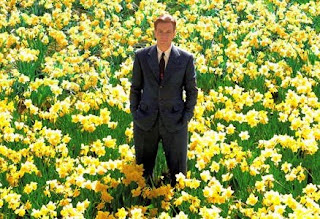 the flashback either follows that of the movie, or is flawless and almost dreamlike. For example, the movie Big Fish, which is predominantly told through the main characters flashbacks. However, whenever we do get a glimpse into his mind, it is a whole different world, mostly distinguished through the use of bright, fairytale like colors.