I was really confused after watching 8 1/2, but after reading the lecture I came to appreciate Fellini's work. I gained another perspective about movies like these which change the world of film making. The way the movie is formatted made me feel like I was in a dream. It was hard to tell the difference between reality and dreams. Fellini succeeds in creating a world in which the inner conflicts of the main character crash with his real life by the use of flashbacks and dream sequences. This takes more in depth with the essence of this character. It think was really interesting to see the way Fellini portrayed the inner conscience of a character. Putting it in context with film history, the use of stream of consciousness in this movie is really innovative. It revolutionized the way stories were told in a movie, from just watching the action, to actually get into the character's through symbolism camera movements, and editing techniques. One of the examples I would like to use to show the way Fellini's technique can bring the audience inside the character's head is in the movie "American Beauty":
We see that by breaking the continuity of the movie, the desires of this character are revealed to us. This other example from the movie "500 Days of Summer" shows us the state of emotion of Joseph Gordon Levitt's character by including a dance sequence in what in real life would be this character only walking to work.
I think it is really cool that films can make people accept these conventionalities. It is also pretty cool that we can break some of the rules in film to innovate the storytelling of a story.
Showing posts with label 8 1/2. Show all posts
Showing posts with label 8 1/2. Show all posts
Sunday, September 25, 2011


Tuesday, September 20, 2011
"8 1/2": Inspiration for Terry Gilliam's "Brazil"

While I may have not seen the entirety of Federico Fellini's 8 1/2, upon reading the chapter on it in Closely Watched Films: An Introduction to the Art of Narrative Film Technique, the first thought that popped into my head was, "I think I've seen this before." Terry Gilliam's 1985 cult classic Brazil is remarkably alike from both a stylistic and thematic standpoint.
According to its imdb.com storyline synopsis, Brazil is about the following:
Sam Lowry (Jonathan Pryce) is a harried technocrat in a futuristic society that is needlessly convoluted and inefficient. He dreams of a life where he can fly away from technology and overpowering bureaucracy, and spend eternity with the woman of his dreams. While trying to rectify the wrongful arrest of one Harry Buttle, Lowry meets the woman he is always chasing in his dreams, Jill Layton. Meanwhile, the bureaucracy has fingered him responsible for a rash of terrorist bombings, and both Sam and Jill's lives are put in danger.
While this may not sound so much like Fellini's classic, the main point of each movie is ultimately the same: a man is entangled within his dreams. Both films make use of vivid and often extensive dream sequences from the mind of the main character to illustrate his deeper desires. Guido, the star of 8 1/2, and Sam both have visions "of a beautiful girl in white [that] hold out an illusory promise of salvation and release from his mental stagnation" (Closely Watched Films, 155). The first dream sequences even bear a striking resemblance:
8 1/2 (sequence starts around 2:10)
None of this is particularly surprising, though. Gilliam has consistently cited Fellini as a tremendous source of inspiration for all of his work. The actual working title, before Brazil became "Brazil," was "1984 1/2," a reference to both Fellini and George Orwell.
This all brings me back to our class's past discussions on how Fellini's film has impacted modern movie making. His influence is clear in the case of Gilliam, but if you take a look at IMDb's movie connections for 8 1/2, the extensive and diverse list of famous films (including The Godfather, Eraserhead, All That Jazz, and Pulp Fiction) further proves its powerful place in film history.
--------------------
A short of Terry Gilliam talking about Fellini's 8 1/2:
To read more, try these links:
"Sam's Dreams-Brazil-1985" video - youtube.com
A Short Biography of Terry Gilliam - smart.co.uk
Revival House: "Has Anybody Seen Sam Lowry?" - popdose.com
Monday, September 19, 2011
The Use of Flashbacks in 8 1/2
I have never seen 8 1/2 so my first impression of the movie was what they described in chapter 9 of "Closely Watched Films". I am really interesting in seeing it now, mostly because of the way they described Fellini's unique style of editing.
By seamlessly conjoining shots through match cutting (also referred to as continuity cutting), film viewers were encouraged to become involved in the illusion that they were watching, not a film made up of multiple bits and pieces of celluloid, but an unmediated reality. (165)Fellini used the editing, not to create an objective sense of reality, but rather to inv
ite the audience into Guido's mind. He throws continuity out the window and the film becomes a actual memory, with choppy edits and changing backgrounds to symbolize the distorting process of a memory and how uncertain they may be. It mirrors the wishful thinking and dreams of Guido as well as the visions of a traumatized child. It is a psychological ploy to step directly into the mind of the character. 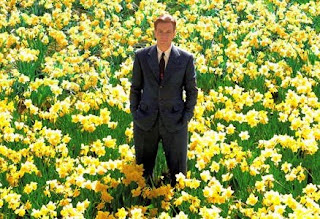 the flashback either follows that of the movie, or is flawless and almost dreamlike. For example, the movie Big Fish, which is predominantly told through the main characters flashbacks. However, whenever we do get a glimpse into his mind, it is a whole different world, mostly distinguished through the use of bright, fairytale like colors.
In many films, a fantasy or flashback is preceded by a ripple effect or a fading of the outline to distinguish the difference between reality and illusion. A look into the characters dilemmas through blurry images, harping music and an echoing subconscious. It distances the audience, rather than what Fellini intended to do in 8 1/2. It might be done by a particular repeating sound, such as in the show LOST, or maybe through a flash of lighting. But in many of these cases, the editing of
the flashback either follows that of the movie, or is flawless and almost dreamlike. For example, the movie Big Fish, which is predominantly told through the main characters flashbacks. However, whenever we do get a glimpse into his mind, it is a whole different world, mostly distinguished through the use of bright, fairytale like colors. Another example from a black and white movie would be Orson Welles, Citizen Kane. The movie alternates between the present and the past after the death of Kane and this clip shows on the first flashbacks to Kane's childhood. When the scene goes into the flashback of the main subject as a child, much as it does in 8 1/2, the shots fade into one another and the document we once saw slowly becomes a snowy day. The music also becomes louder and more involved, but the scene continues in a very cinematic manner.
Nine comes after 8 1/2

After reading chapter 9, Federico Fellini's 8 1/2, a light went off in my head like I have read or seen something like this before. I couldn't figure it out for a while, so i called my dad back at home and read some of the plot points and characters to him that the chapter described. He told me it sounded a lot like the movie Nine. So i did some research to find out that I did in fact
see the movie, and that 8 1/2 did intact have an influence on the 2009 hit movie.
Reading further into the chapter, the author kept using the term "double mirror construction," and what that refereed to was how the movie was portrayed. Unlike Hollywood films where each scene leads into the next and you can make connections, this new style of cinema took the audience into the mind of how a human really thinks, and put that on the screen. From dreams and emotions, to thoughts and ideas, you never knew what was coming and what was what. In one scene, Guido Anselmi, the director in the movie (not of the movie) would be doing something and the screen would radically change to what he was thinking of in his head. Whether it was a problem with his life, or something he didn't like in the film. Nin

e did similar cinema style, creating images of the on the screen to what the character was thinking.
As crazy as it seems, I can also relate 8 1/2 to a recent film called Inception. Both movies have similar themes finding true personal happiness in a difficult, fragmented life. In one, Guido Anselmi is trying to create the perfect film through all of his mishaps and life problems, and in the other Dominic Cobb (Leonardo DiCaprio) is trying to go through mazes and his life problems to get back to his kids. All of these movies are considered to be "second time movies" because you have to watch them twice to really understand what is going on.
If anyone has any comments or something to add, please do
steve kinslow
Sunday, September 18, 2011
8 1/2: Different Perspective Viewings
After reading about 8 1/2 for class, I could not help but realize how different of a perspective I have now. When I first watched it, I was only 17 and did not understand all the intricacies of film. Being of absorbed by confusion prevented me from comprehending the bigger picture instead of noticing little things that make this film so "genius."
The story is was really made me so confused, all I saw were random patterns of events but now after reading it from an objective perspective, it all made sense that he was running out ideas and didn't know where his life was going. The fact that he was a catholic schoolboy and then becomes a lost creative soul truly highlights what it takes to be a director or apart of the industry. You have do somethings that no one has ever thought of.
Going off of what no one has ever thought of, reading about the editing scheme contributed greatly to causing confusion inside of Guido's mind. I thoroughly enjoyed how the walls did not match to give the sense that everything is changing and his life is just one big confusion while he blames his past for not being so creative. A story is a start but the editing is where all the ideas come together to create what Fellini was trying to say the whole time.
While everyone enjoys going to the movies and seeing movies, sometimes you need to think more in depth and see the little things that bring the full picture out of confusion in Guido's thoughts.
The story is was really made me so confused, all I saw were random patterns of events but now after reading it from an objective perspective, it all made sense that he was running out ideas and didn't know where his life was going. The fact that he was a catholic schoolboy and then becomes a lost creative soul truly highlights what it takes to be a director or apart of the industry. You have do somethings that no one has ever thought of.
Going off of what no one has ever thought of, reading about the editing scheme contributed greatly to causing confusion inside of Guido's mind. I thoroughly enjoyed how the walls did not match to give the sense that everything is changing and his life is just one big confusion while he blames his past for not being so creative. A story is a start but the editing is where all the ideas come together to create what Fellini was trying to say the whole time.
While everyone enjoys going to the movies and seeing movies, sometimes you need to think more in depth and see the little things that bring the full picture out of confusion in Guido's thoughts.
8 1/2: Breaking the Rules and Paving the Way for the Future
For this week’s blog post, we were asked to read a chapter from Closely Watched Films by Marilyn Fabe. In the chapter it focuses on Federico Fellini’s film 8 ½. This unusual film broke a lot of the “rules” of cinema and helped pave a road for creative pieces of entertainment in the future. Overall after reading this chapter I came away with that certain “rules” of cinema could be broken with good reasons and intentions like how Fellini broke many of them in his strange and baffling film 8 ½.

8 ½ is a film about “director’s block” and tells the story of Guido Anselmi, a film director, who during the filming of his latest film, suddenly loses inspiration and worries he will not be able to finish and fail. One of the first “rules” Fellini “broke” was the non-linear story. The linear plot is constantly interrupted with Guido’s dreams, fantasies, and childhood memories that are triggered by present problems. This helps create a world of fantasy and makes it clear to the audience that this film is not about life but the make believe world of film. When first reading about this it reminded me of Christopher Nolan’s film Memento. That film is about Leonard Shelby who has anterograde amnesia searching for the killer of his wife. The film’s events are told in two separate narratives. One is told in chronological order in black and white and the other is told in color in reverse chronological order. As each sequence begins the audience is unaware of the preceding events just like the main character. Finally at the end the film’s narratives converge and everything makes a lot more sense. Memento in comparison seems a lot easier to understand and follow than 8 ½ and since I was confused during Memento I can’t even comprehend my level of confusion if I watched 8 ½.
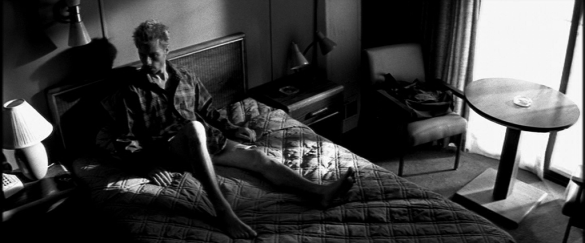


Another “rule” 8 ½ breaks is with editing. For example objects in the background and the orientation of people in the room move from shot to shot. This disrupts the viewer’s illusion of “reality” because in real life these kinds of things would not happen. However it makes perfect sense in the film because it helps capture the disoriented process of recalling memories, which the main character is doing. Try it yourself. It is hard to pinpoint the exact location of people and objects when recalling memories. In other words “rules” are meant to be broken but only with good reasons like Fellini had.

Like Memento, 8 ½ reminded me of a lot of other movies and television shows I have seen. First it reminded me of Six Feet Under when sometimes Fellini creates dream sequences or fantasies that are not really happening. Six Feet Under would use this method all the time to show what was really going on in their characters’ heads. Overall the plot of the film reminds me of two movies; Adaptation and Tropic Thunder. Adaptation is a Charlie Kaufman film about Charlie Kaufman’s difficult struggle to adapt The Orchid Thief novel into a film. It turns out it is based on upon his actual struggle when hired to write the film’s screenplay. Tropic Thunder is about a bunch of prima donna actors who are making a Vietnam War film based on the fictional novel Tropic Thunder. When their director becomes frustrated he decides to skip the script and drop them into the middle of the jungle to survive real action and danger. In the end the making of the film becomes the actual film in the film’s reality and is a worldwide smash! Sound familiar? Between these four movies and shows it is clear to see that Fellini’s movie paved the way for future strange and creative projects. It can take just one person to change the way we think and Fellini was definitely one for many people.
Subscribe to:
Posts (Atom)