Showing posts with label Alfred Hitchcock. Show all posts

Thursday, September 10, 2015

Why didn't Richard Linklater win Best Director in the Oscars?

One of the biggest surprise for me in the last Oscars was when Birdman or The Unexpected Virtue of Ignorance won best directing over Boyhood. I saw both films and they were both what I thought were one of the best films of the year. But I had the belief that Richard Linklater would win the Oscar in the "Best Director" category over Alejandro Innaritu. I understand that the one-take filming concept of Birdman was well done and creative.


But its been done before!!


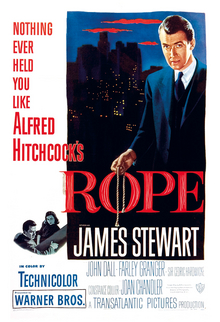
One example of a one take film is Alfred Hitchcock's "Rope"


What Richard Linklater did has never been done. For me, Boyhood was ingeniously well made and the dedication of the director to spend 12 years to make it was also astounding. What really sold me was the transitions of the characters getting older were really subtle. And the story, was relatable. I can't even imagine the careful planning that was necessary to create a film like this scheduling wise as the movie had casted actors like Patricia Arquette and Ethan Hawke who had prominent roles.


We follow a story of a 6 year old Mason and by the end of the film, he's all grown up going to college in a span of a 3 hours. This was a movie not only about the subtle rising speed of growing up and the roller coaster of ups and downs called life, but it also had an effect to the audience to reminisce about their past, their parents, and their childhood.

Why the only Oscar was given to Patricia Arquette for best supporting actress is beyond me. But I believe this movie shouldn't just be known for its nominations.

Wednesday, October 29, 2014

A tribute to horror films... just in time for Halloween!

It's that time of year again. Trick or treaters everywhere, candy by the boat loads and costumes from the elaborate and clever costumes to the put together at the last minute costumes. But to be honest my favorite part of Halloween is the movies. They can range anywhere from the family oriented movies like Hocus Pocus or the more horror style of movie like Nightmare on Elm Street.  I prefer the horror style of movie this time of year.


Now none of these films would be around if it weren't for the pioneer of horror films, Mr. Alfred Hitchcock. Many of his films are considered to have established the benchmark for horror films. Almost every horror film can have at least one of their cinematography techniques traced back to one of Hitchcock's films. During their time, movies such as Psycho and The Birds terrified audiences. With clever cinematography and editing techniques, Hitchcock was able to strike fear into the hearts of audiences all over the world. Never before has a movie been able to strike emotions into an audience quite like Hitchcock can.


But in recent years horror films have somewhat strayed away from Hitchcock's style of horror. There are still traces of the same kind of scare factor Hitchcock was known for but now horror films are aiming for what I like to call "Gross-factor." By that I mean they will do everything they can think of to absolutely disgust and shock an audience. Instead of making us jump out of our seats with fear, horror films now a days make us cringe in our seats. Some examples include, Ithaca College's own Dan Heffner's Saw series, The Hills Have Eyes series, and The Human Centipede series.  I believe that these films are redefining the horror genre. The Gross-Horror films strike fear into it's audiences by grossing them out beyond their wildest imaginations.


Lastly, scary movies have become a part of Halloween more than ever. Iconic horror film characters such as Freddy Krueger from Nightmare on Elm Street, Jason Voorhees from Friday the 13th , and Michael Myers from Halloween have all become regulars as Halloween costumes.
You can't deny the impact that horror films have on people when deciding on what they want to be for Halloween. Its amazing the influence a movie can have on people.
 

Enjoy your trick-or-treating and watch a good horror film or two with your candy this Halloween. Happy Halloween everyone! 

Friday, October 3, 2014

Alfred Hitchcock: Defining Cinema as a Visual Medium

"It must always be remembered that the primary aim of pictures is to provide entertainment. To entertain people, one must first capture their interest." - Alfred Hitchcock


The name, Alfred Hitchcock, has sort of become a cliche, which is ironic because his filmmaking broke so many cliches by changing visual storytelling, specifically for psychological thrillers. Hitchcock, born in 1899, progressed filmmaking and influenced future films.


One piece of advice he said was, "Make your audience suffer, but give them pleasure. The same pleasure they have when they wake up from a nightmare." For example, Rear Window shows the danger early but uses the entirety of the film to build suspense. It makes the audience uncomfortable as they imagine the characters getting caught or witnessing a murder. It's not until the end when Hitchcock manages a somewhat sweet ending by wrapping up all the characters. Miss Lonelyheart finds a man, the dancer's love comes home, and the couple who's dog died has a new one. Lisa, played by Grace Kelly, reads a travel magazine next to Jeff, played by Jimmy Stewart, who now has two broken legs instead of one. The audience goes through a tremendous amount of suffering and suspense in order to enjoy this somewhat happy ending.

Hitchcock implemented and created many different techniques to portray emotion and make the audience feel something. His stylistic close ups on facial expressions helps convey the characters' strong emotions. Hitchcock is also famous for his point of view shots he used to create suspense. Second-unit cameraman, Irmin Roberts, created the dolly zoom, or "Vertigo Effect," which is used in Vertigo. Watch the scene below:


Once sound was used in films, dialogue started being used really heavily. But Alfred Hitchcock defined cinema as a visual medium. He believed dialogue should only be used when the visuals can't communicate an idea. He says, "sometimes you find that a film is looked at solely for its content without any regard to the style or manner in which the story is told." He wanted to use the camera every chance he gets to reveal the story with visuals and objects.

Friday, September 19, 2014

Movies: to Score or not to Score?

The simple fact that films typically have a musical score always seems to slip right by me when I'm actually making any kind of short film or TV show myself. It's just not something that I would typically think about. Good audio? Sure. Sound effects? Yeah, why not. But never a score. This lead me to thinking, hey, who says that films need to have any kind of music or instrumentality at all? That, in turn, lead me to google, which lead me to some interesting websites, which lead me here, to this blog post.

As behind-the-scenes as they typically are, we all know the names of a few movie composers: Hans Zimmer (please click that link for your own sake), Danny Elfman, and of course, the legendary John Williams. Their scores don't just add noise to all of their respective films: they add feeling, and set a tone for any given scene or even the movie as a whole  If you need an example for a really amazing score that is spot on in terms of creating an entire atmosphere for a film, look no further Howard Shore and the Lord of the Rings trilogy. It doesn't just add tension or give scenes a certain flavor: it's music that like, I could actually see hobbits playing out on their front porches. Or whatever hobbit holes have instead of porches. Dirt clods? I don't know. 

 But what I'm curious about is if some films rely too heavily on composers and a musical score in order to fix what would otherwise be a weak script. Recently, there was a video going around the internet called "Star Wars without Williams." While it was meant to be funny, it also pointed out something pretty important: this throne room scene is super awkward without music. What was once a jovial and triumphant scene is now just echoey and weird. Don't get me wrong, I like Star Wars as much as the next guy or gal, but Audio (and script) - wise, Lucas kind of dropped the ball here. 

On the opposite side of things, however, is it possible to have a good film without any scoring at all? Sure. Just check out No Country for Old Men, The Birds, and 90% of Castaway. The key to scoring films, as I'm slowly but surely finding out, is to balance a good script with subtle yet powerful music. Emphasize certain emotions or themes that you want to have emphasized, while at the same time making sure that your film could still be successful without the music shoving those emotions down your throat. If you're looking for some more interesting info on how composers mess with our emotions, you check out a BBC article on that very topic right here.

Friday, September 5, 2014

Long takes and Louis C.K.

In the contemporary age of Hollywood, where Michael Bay's average shot length is a measly 3 seconds and the general average is only a second or two longer, it's really refreshing to see a film or TV show that has an appreciation for the long take. Obviously, Alfonso Cuaron is the first director that comes to mind - at least in this day and age - for his incredibly long takes in both Children of Men and the more recent Gravity (7 mins and 17 minutes, respectively). Also headline-worthy was Cary Fukunaga's elaborately choreographed 6 minute True Detective shot, featuring Matthew McConaughey bursting through houses and just generally kicking ass in one of the coolest TV scenes of the year.

Long takes don't have to be all violence and space-floating, though. In fact, some of the more iconic long shots are during simple (albeit equally well-choreographed) sequences. Alfred Hitchcock's 1948 thriller Rope took place in real time and was edited to appear as one extremely long take, even though it was made up of only 10 separate shots. One of the bi
ggest reasons that filmmakers use long takes is to provide exactly this sense of real time, whether to create suspense or to add an extra element of realism to a film. Cutting from shot to shot can sometimes take away these elements and can create a less fluid experience. 

One man who makes statements with long takes is Louis C.K. Going into the fourth season of his TV series 'Louie', FX has allowed him even more freedom in regards to his creative process, and he certainly took advantage of it. Forrest Wickman, a staff writer for Slate, went so far as to call Louie "the most cinematic show on TV." (read the whole article, which I'll elaborate on further, here) 

C.K., for whatever reason, loves long takes. In fact, the third episode of the most recent season ended with a shot that lasted an incredible seven and a half minutes. This isn't HBO. This isn't even an hour long drama we're talking about. This a low budget comedy on FX. A seven and a half minute shot equates to almost a full act of the story, which means that almost the whole thing is bookended by commercials. That's a big chunk of TV. The shot in question is nothing particularly special. No fights, no guns, no exploding space stations, just Louie doing what he does best: going on an awkward date and the raw, brutally honest, and beautiful conversation that ensues. People love to throw around the phrase "it's like nothing else on television," but this is literally like nothing else you will find on television, let alone in any hollywood films. 

Louis - the real Louis, not the character - uses these long takes to create an atmosphere of real, honest, everyday life. It can be awkward, sure, but it can also be close and familial (see the living room scene with Louie's two daughters and then-girlfriend Amia), odd and unexpected (a model drives up to Louie and tells him to get in her car), and beautiful and special (Louie's daughter plays the violin). C.K. has proven himself to not only be one of the funniest comedians alive today, but also one of the most adept directors and showrunners on television. Not to mention the most cinematic.