What these videos ultimately show, and has been shown many times before, is that quality filmmaking does not require an extensive budget. Shooting in a dorm room, although not the most aesthetically pleasing place, does not doom your film. Effective tricks like the one in the final video can quickly change the dynamics and feel of a film.
Showing posts with label cinematographer. Show all posts
Showing posts with label cinematographer. Show all posts
Friday, October 17, 2014
9 Tips For Cinematography And 1 Guy That Cares too Much About His Film "Drinking Games"
A man by the name of Ryan Gielen has released a series of videos made for directors and cinematographers that are filmmaking on a budget. Most of his advice just covers how to accomplish some cheap tricks, but many of them are effective cheap tricks. Anyone involved with how the camera should move and shoot it's surroundings should probably watch at least a few of these videos. There are several episodes with a wide range of content (Although he never fails to mention his fantastic film – "Drinking Games). Not all of these videos will be useful to everyone, but I've posted all nine episodes here because chances are everyone will find a different video the most useful.


Monday, September 15, 2014
Directing for Dummies
Welcome to the newest edition of "[insert random film crew position] for Dummies!" I'm you're host, Mike, and today we shall be delving into the world of the director. *Oooo ahhh* Now, I know what you're all thinking: "Duh! A director is the guy/girl that directs people!" You know what? You'd be correct in saying that. Go figure!
 I'm sure you all know the basics of a director's job. I'm here today, though, to try to teach you a little something that you may not have already known. Let's start from the beginning. Now, after a director is hired by producers for a project, the director must then work side-by-side with the producers to cast actors for the film. This can be an extremely long and tedious process, but it's one that simply must be done. Clearly. Without quality actors, you can't possibly dream to have a quality film. Well, I guess you could, but that's all it would be: a dream.
Next up on the list of things to do, the director has to organize and select shooting locations. Of course, the director has location scouts working for him to truly find the best locations for shooting, but he has creative control and authority as to which locations will appear in the film. At the same time, the director interprets--and sometimes even writes or selects--the script for the film. The director rarely ever writes the script himself, but if he's not hired by a production house to direct the film, the director will often go out and find a script he'd like to work with. The location selections are hugely dependent on the script and the way the director interprets it, so the two steps are pretty much synonymous.
 The director's next job is the last step before filming can begin. He must approve the sets, costumes, choreography (not present in most films), and music. These aspects of film are usually completely invisible to the untrained eye, or ear, because the only time most people will find them noticeable is when they are done incorrectly. If a film is set on a 1950s Japanese farm, and the actors are wearing tuxedos and sneakers with Kanye vaguely playing in the background, something went wrong...very, very wrong. It's the director's job to make sure mistakes like this never happen.
What else does the director do? Well I'm glad you asked! The rest of the director's work is pretty straight forward and most of you already know all of these things. But guess what! I'm going to tell you about it anyway! The director has a whole lot to do during production. The most obvious task is directing the actors. Whether it's explaining to actors how he wants them to portray their character in a given moment or if it's simply helping actors get into character, the director is the guy doing it. While doing this, the director also keeps the crew on track and makes sure everyone's doing what they need to be doing. Film shoots are generally tightly scheduled, so there's no time for excessive screw-ups and messing around. While doing this, the director also works with the cinematographers on shot composition and makes sure he likes what's in the frame.
Production is quite a daunting time for directors. They're basically the ringleaders for the wildest circuses on the planet. If they crack, the film is doomed to fail. The director must keep his cool so that everyone else does.
So now the film is shot. Yay! The only thing that's left for the director to do is work with the editors on creating first a rough cut and then a final cut of the film. The director gives his input throughout the process on what he thinks looks and feels better. Sometimes, this leads to reshoots of scenes or even cutting entire scenes from the film. But hey, who ever said directing was easy?
I'm sure you all know the basics of a director's job. I'm here today, though, to try to teach you a little something that you may not have already known. Let's start from the beginning. Now, after a director is hired by producers for a project, the director must then work side-by-side with the producers to cast actors for the film. This can be an extremely long and tedious process, but it's one that simply must be done. Clearly. Without quality actors, you can't possibly dream to have a quality film. Well, I guess you could, but that's all it would be: a dream.Next up on the list of things to do, the director has to organize and select shooting locations. Of course, the director has location scouts working for him to truly find the best locations for shooting, but he has creative control and authority as to which locations will appear in the film. At the same time, the director interprets--and sometimes even writes or selects--the script for the film. The director rarely ever writes the script himself, but if he's not hired by a production house to direct the film, the director will often go out and find a script he'd like to work with. The location selections are hugely dependent on the script and the way the director interprets it, so the two steps are pretty much synonymous.
The director's next job is the last step before filming can begin. He must approve the sets, costumes, choreography (not present in most films), and music. These aspects of film are usually completely invisible to the untrained eye, or ear, because the only time most people will find them noticeable is when they are done incorrectly. If a film is set on a 1950s Japanese farm, and the actors are wearing tuxedos and sneakers with Kanye vaguely playing in the background, something went wrong...very, very wrong. It's the director's job to make sure mistakes like this never happen.What else does the director do? Well I'm glad you asked! The rest of the director's work is pretty straight forward and most of you already know all of these things. But guess what! I'm going to tell you about it anyway! The director has a whole lot to do during production. The most obvious task is directing the actors. Whether it's explaining to actors how he wants them to portray their character in a given moment or if it's simply helping actors get into character, the director is the guy doing it. While doing this, the director also keeps the crew on track and makes sure everyone's doing what they need to be doing. Film shoots are generally tightly scheduled, so there's no time for excessive screw-ups and messing around. While doing this, the director also works with the cinematographers on shot composition and makes sure he likes what's in the frame.
Production is quite a daunting time for directors. They're basically the ringleaders for the wildest circuses on the planet. If they crack, the film is doomed to fail. The director must keep his cool so that everyone else does.
So now the film is shot. Yay! The only thing that's left for the director to do is work with the editors on creating first a rough cut and then a final cut of the film. The director gives his input throughout the process on what he thinks looks and feels better. Sometimes, this leads to reshoots of scenes or even cutting entire scenes from the film. But hey, who ever said directing was easy?
Thursday, September 11, 2014
Producing for Dummies
I'd like to state for the record that producing is not actually for dummies. Nor is this an attack on you, Diana. If anything, the dummy in this situation is me. I found myself sitting in my room this afternoon, and the question popped into my head: "What exactly do movie producers do?" So, I did my research and actually found that it's a whole lot more than what I originally thought.
A producer's job begins in preproduction. Psh, I knew that. What I didn't know is that the producer is the person who pretty much gets the project off the ground. First, he (or she, of course) needs to find material for his next project from either a script or a book. Then he needs to get a script in good enough shape to attract the attention of a possible director (and even a studio if a studio wasn't the one who started the project). After that, the producer's job in preproduction is pretty much done. HAH! Yeah, right.

Once the producer has a workable script and a choice of director, all he needs to do is secure financing for the film, choose a director and other members of the creative team, work with the director to cast actors, determine shooting locations and budget, decide on a cinematographer, hire the rest of the production team (including other producers), develop a shooting schedule, and create a detailed plan of action for the entirety of production. PHEW! That's one demanding job! Oh wait, the producer isn't even close to being done.
Time to begin shooting! Now it comes to the actual production; the fun part! Or at least it's fun for some people. Sorry, producer, you're on the clock. Production is when the producer offers creative suggestions to the director, handles any and all problems with the actors and creative staff, monitors the production timetable and budget, and reviews the film shot each day. Essentially, the producer has to watch over everything. If something goes wrong, the producer better find a solution, and fast.

And now it finally reaches postproduction, the time for most people to relax and wait to see what they've worked so hard on for so many months. Postproduction is really only horrible for the editors, sound, and special effects guys, right? Wrong. Believe it or not, the producer's job still isn't done. To begin the final step, the producer sits down with the director over a nice cup of tea and decides the order and selection of scenes that will appear in the final cut of the film. After that, he reviews each cut of the film until it's satisfactory. NOW all the producer's got to do is secure a distributor for the film and review the distributor's advertising campaign. After this, and only after this, is the producer's job finally complete.
Never before today did I truly appreciate the work of producers. I honestly believed they were just the piggybanks of the production team. I know it's difficult to believe, but I was wrong. Oh so wrong. Here's to you, producers!
A producer's job begins in preproduction. Psh, I knew that. What I didn't know is that the producer is the person who pretty much gets the project off the ground. First, he (or she, of course) needs to find material for his next project from either a script or a book. Then he needs to get a script in good enough shape to attract the attention of a possible director (and even a studio if a studio wasn't the one who started the project). After that, the producer's job in preproduction is pretty much done. HAH! Yeah, right.
Once the producer has a workable script and a choice of director, all he needs to do is secure financing for the film, choose a director and other members of the creative team, work with the director to cast actors, determine shooting locations and budget, decide on a cinematographer, hire the rest of the production team (including other producers), develop a shooting schedule, and create a detailed plan of action for the entirety of production. PHEW! That's one demanding job! Oh wait, the producer isn't even close to being done.
Time to begin shooting! Now it comes to the actual production; the fun part! Or at least it's fun for some people. Sorry, producer, you're on the clock. Production is when the producer offers creative suggestions to the director, handles any and all problems with the actors and creative staff, monitors the production timetable and budget, and reviews the film shot each day. Essentially, the producer has to watch over everything. If something goes wrong, the producer better find a solution, and fast.
And now it finally reaches postproduction, the time for most people to relax and wait to see what they've worked so hard on for so many months. Postproduction is really only horrible for the editors, sound, and special effects guys, right? Wrong. Believe it or not, the producer's job still isn't done. To begin the final step, the producer sits down with the director over a nice cup of tea and decides the order and selection of scenes that will appear in the final cut of the film. After that, he reviews each cut of the film until it's satisfactory. NOW all the producer's got to do is secure a distributor for the film and review the distributor's advertising campaign. After this, and only after this, is the producer's job finally complete.
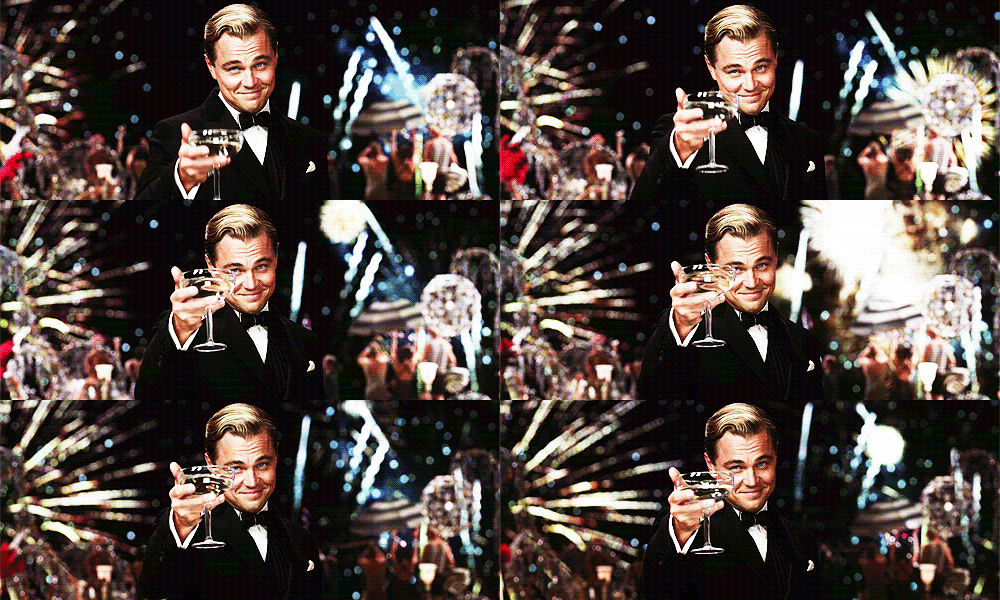
Never before today did I truly appreciate the work of producers. I honestly believed they were just the piggybanks of the production team. I know it's difficult to believe, but I was wrong. Oh so wrong. Here's to you, producers!
Subscribe to:
Posts (Atom)