For this week’s blog post, we were asked to read a chapter from Closely Watched Films by Marilyn Fabe. In the chapter it focuses on François Truffaut’s film The 400 Blows. This autobiographical film was made by Truffaut when he was twenty-seven years old and helped launched the French New Wave, a national film moment that flourished between 1959 and 1963. While I have not seen The 400 Blows or any film that is considered part of the French New Wave era, I have seen other films that reminded one of many of the principles and styles of these unique films.
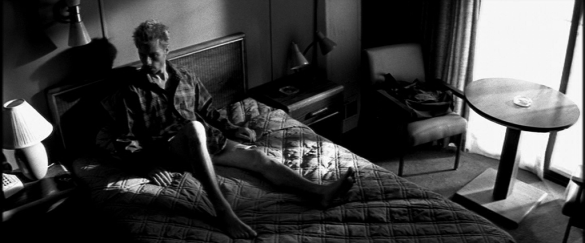
French film critic Alexandra Astruc argued that cinema was a language and could potentially be an art form as powerful as poetry or literature. Traditionally the “author” of a film is the screenwriter but New Wave theorists believe the script was only a blueprint and that the director is the artist that puts his vision into the film. However many of these New Wave films like The 400 Blows were directed by the screenwriter. This reminds me of one of my favorite writers/directors, Charlie Kaufman. While he is mostly known for his writing, his film Synecdoche, New York, which he wrote and directed, is a bizarre film about a theater struggling director attempting to create a life-size replica of New York inside a warehouse as part of his new play. This movie’s title is also similar to The 400 Blows’ title because both have double meanings. The 400 Blows not only refers to the adventures of a rebel teenager but also the actual blows dealt by his parents. Kaufman’s title not only means the city of Schenectady, where much of the film is set but also the concept of synecdoche, wherein a part of something represents the whole or vice versa. Another Kaufman film, Adaptation, is similar to this Truffaut film. While The 400 Blows was autobiographical to his life, Adaptation revolves around a screenwriter named Charlie Kaufman and his actual struggle of adapting the novel The Orchid Thief into a film. In case you could not tell it was based on Kaufman’s actual struggle from his life!

Reading about The 400 Blows also reminded me of the movie The Graduate. While not a perfect match there are some striking similarities between the films. First there is a shot in Truffaut’s film that focuses on the character of Antoine as he runs through the country toward the sea. The shot is all in one shot in order to be dramatically effective. The audience sees him running for a long time without the least indication of fatigue thus, we are able to experience the pure adrenaline-fueled sprint. In the ending of The Graduate, Dustin Hoffman’s character is seen running down the street in two long shots (the shots start 30 seconds in). He is determined to stop the wedding of his dream girl. Nothing will get in his way! Another similarity between the films is with both the film’s endings. In Truffaut’s film, as he is making his dash for freedom he runs to the sea. When he finally gets to the ocean he accomplishes his goal but he realizes he is trapped. In The Graduate, Benjamin succeeds in stopping Elaine’s wedding and both of them make it on to the bus to run away. But as the bus drives away their smiles fade (skip ahead to 3:40). Even though there is no dialogue some people interpret this quiet ending as both characters realizing what they just did and perhaps thinking they may have made a huge mistake. But the ending can be seen in two ways depending on the audience. One final similarity between the films again involves The Graduate’s end. Supposedly the “sobering” ending is actually from the directions the director Mike Nichols gave the actors in the moment. He was actually shouting at them to laugh during the scene but the actors were so scared that after the laughing they stopped, with looks of worry. He liked it so much he kept it in the final film. In The 400 Blows Truffaut wanted a certain actress for the part of the psychiatrist but since she was unavailable he decided to never show the psychiatrist but instead only hear her lines. Another decision made in the moment by the director!

While different people made these films during different times, there are very similar. This just proves that powerful and inspirational films can help influence future directors and filmmakers with their works just like Truffaut’s The 400 Blows influenced many movies to come.