Showing posts with label director. Show all posts

Thursday, November 5, 2015

All work and.. all play

Working as assistant director this semester on the ICTV show, Campus Retreat has been a really great experience. I feel like I naturally picked up the positions responsibilities because of all the time I have spent on set on other productions. You are basically the director's right hand (wo)man; you take on all the practical responsibilities so they can focus on the creative aspects.

Some of the main responsibilities include:

  • Making the call sheets for our Tuesday and Saturday shoots
  • Scheduling how long it will take to shoot scenes, episodes etc. 
  • On set - ensuring everyone is being productive and working efficiently
  • On set - keeping everyone focused so we're on time with the planned schedule
  • Safety - minimizing dangerous situations so no one gets hurt
It's not the most fun job to have since you are always the one telling people to quiet down and stop goofing around, yet it rewarding because it's an important job. With practice you find the perfect ying-yang balance of basically still allowing people to have a fun, enjoyable experience while also pushing them to get our work done. You have to be extremely organized while planning and on set. My productivity on set definitely depends on how prepared I am before hand. At the end of the night it's an awesome feeling when people are so relieved we ended on time or even early... I just want to take a bow. 

(ALSO OUR FIRST 2 EPISODES ARE ON ICTV.ORG - GO WATCH)

Speaking of assistant directors, I was so pleased with Elena's work on Stopover City. She really pushed us constantly, reworking the schedule, planning our food breaks, and was on top of her game 100%. It really helped me focus on blocking, rehearsing and working with the actors and making sure I liked the shots Josh composed. It was really great to take on the role of director. At times I felt like my head was spinning, thinking about 100 different things at once but I had an amazing hard working crew that had my back. The actors were all such sweethearts and were amazing to work with as well. It was almost surreal to finally have my own crew. (My FF1 group consisted of 3 people, to do all the work of many, many more.) I'm really happy with how we all worked on set together and am very excited to see it all come together in post. We already have a rough cut which I'm dying to get my hands on. 

I LOVED DIRECTING!


Tuesday, September 29, 2015

A Closer Look at the AD Position

After realizing and accepting my hyper-organizational tendencies last week, I realized that there are certain positions on a production that utilize these skills more often than others. As I previously mentioned, I will be working as the Assistant Director for our production of Doll House. In class Arturo challenged me to learn more about the AD position and think critically about how I could possibly apply my skill set to this position as I try it for the first time. After looking into it a bit, this is what I found. 

One of the primary duties of an AD  is maintaining order on set. This means tracking the daily progress of the production against the overall production schedule. It is imperative for the AD to stay organized and on task, they are essential to keep the shoot running smoothly. An unorganized or uninformed AD would slow production and possibly even ruin time sensitive shooting dates. The AD must have a complete understanding of the script breakdown in order to fully follow the production schedule that they help create, making sure that each scene is shot in an order that makes sense logistically. An AD must also be very good at estimating how long a particular scene will take to shoot; depending on the amount of  action or dialogue a scene that is only half a page may take hours to shoot. 

The AD is also responsible for the health and safety of the crew. As Arturo talked about in class, if someone gets hurt on set, it is the AD that will suffer the consequences. This means making sure each department is taking the necessary steps to secure the set, like ensuring that lights are stable and cords are taped down. 


The AD is also responsible for "calling the role" before filming a scene. This entails calling "Quiet on set" followed by "roll sound" and "roll camera." The call for "action" is usually called by the director, but can be called by the AD at the director's preference.

In more complicated productions, there can be many different ADs, creating a hierarchy of sorts whilst dividing up the many managerial duties that occur at any given time during a production. A production could have a First AD, Second AD,  Second Second AD, Third AD,  and Additional AD. I guess they just sort of ran out of creativity there. 

Along with being organized, a good AD needs to be able to communicate to many (all) of the departments on set, and needs to exhibit good leadership skills to keep everything rolling smoothly along. 

While I'm sure my time on set as AD for Doll House will certainly be a learning experience, I do think that I am ready to give this position a shot. It will provide me with an opportunity to really get involved in the production and put my organization skills to the test. I am looking forward to working with all of the departments and seeing how they all come together on set. 

Monday, November 10, 2014

Assistant Directing for Dummies

Hey guys. I'm going to be completely honest with you all. I'm running out of ideas. And fast. I know for a fact that I've written about directing before, but I don't believe I've ever touched on Assistant Directing. If I have, I apologize, but I'm running out of fresh topics to talk about. So, without further ado, it's time for Assistant Directing for Dummies! It's the gameshow where you don't have a ton of fun and some of the facts may be slightly inaccurate, but you leave feeling wiser nonetheless.


Today, we'll be focusing on two types of assistant directors (ADs): the first one and the second one. For those of you who don't often work on film sets, or for those of you who don't have much knowledge on the topic, my previous statement isn't as dumb as it sounds (even though it kind of is). There are in fact two assistant directors, and their positions are called 1st Assistant Director and 2nd Assistant Director. SO GET OFF MY CASE AND ENJOY THE POST. Ok? Good.

Let us begin with the first type of AD: the 1st Assistant Director. The 1st AD is very much involved in the preproduction and production processes. To best summarize their responsibilities, I turn to the handy dandy bulleted list. Once again, I apologize, but it's quite the list and I have some editing to tend to. The 1st AD's job is to:
      -Assist Unit Production Manager to prepare script breakdown and preliminary shooting schedule
      -Assist the UPM in location business
      -Check weather reports (exciting, right?)
      -Prepare daily schedules for talent and determine cast and crew calls
      -Supervise the preparation of call sheets
      -Supervise background activity and crowd control
      -Supervise the proper functioning of the set and crew

The 1st Assistant Director's job is to basically take care of everything the Director shouldn't have to worry about, allowing them to focus on making sure everything pertaining to what viewers will see is absolutely perfect.

"How does the 1st AD possibly get all of this done? It's so much stuff to get done!" You're right! It's a pretty demanding job. Luckily, though, they have a chief assistant who is in charge of conducting all the business of the set or location. This person is referred to as the 2nd Assistant Director. Go figure! How convenient is that? What exactly is the business of the set or location you ask? Well, it includes:
      -Preparing all call sheets
      -Preparing the daily production reports in collaboration with the UPM
      -Distributing all information to the cast and crew (scripts, changes, and call sheets)
      -Communicating advance scheduling to the cast and crew
      -Assisting the UPM, 1st AD, and Location Manager in location management
      -Facilitating the transportation of all equipment and personnel
      -Schedule all food, lodging, and other facilities
      -Supervise the set and location wrap
      -Maintain a liaison between the 1st Assistant Director and the Unit Production Manager
      -Assist the 1st AD with the direction of background activity and crowd control


PHEW! Glad that's over. I was beginning to just feel sorry for anyone who's a 2nd AD. I guess if you really love what you do, who's to tell you that your job is no fun. What I've gathered from this information, is that the student producers I've worked with in the past have actually been conducting the responsibilities of the Assistant Directors while the ADs have actually just been clapping the slate and keeping us on schedule. Who knew?! You do now!

Assistant Directors are wonderful people who moviegoers never really know anything about, but they're some of the most important people to have on a set. They essentially do all the things a director doesn't have time for (and probably doesn't want to do). If you're ever in the market for a career that's physically and emotionally demanding and that doesn't get much of any public recognition, Assistant Directing is the career for you!

Monday, October 20, 2014

Editing for Dummies!

I promised myself I would never do this. I told myself that I would never ever touch on this subject. Well, unfortunately, it is time. I must delve into a topic that I'd much rather leave alone. A topic that is hitting a little too close to home for my taste. A topic that would possibly tell me that I've been doing it wrong the whole time. That I haven't been doing my job. That I haven't been living to my full potential. It is indeed time...for Editing for Dummies!


I don't like to refer to myself as a "dummy," but I often am. I don't prefer to undermine myself, but I often do. I would rather not make myself, along with everyone I know, realize that I could do so much more than I already do...SO WHY START NOW?! I don't mean to toot my own horn or anything (although this is very exciting news), but it turns out that I've actually been doing [almost] everything I could possibly be doing to help the productions I've worked on in the past.

First, let's get our jobs straightened out. In the world of editors, there are two main positions: the editor, and the assistant editor(s). I say "editor(s)" because, while there can sometimes be only one assistant editor, there's more often than not multiple assistant editors. It's true (probably). Look it up (please don't). In a nutshell, the assistant editors report directly to the editor. They do what the editor tells them to do and the editor does what the director and executive producer tells him to do.

They're worked like dogs...get it? It's funny!
Let's begin with the responsibilities of the assistant editor, considering that will lead into the responsibilities of the editor. See how organized I am? The assistant editor's foremost job is to log and capture media; basically put all the files onto a hard drive and label them. After the files are logged and captured, the assistant editor organizes them in coordination with the script supervisor's log on an offline edit timeline in a rough cut format. They take the specific clips the script supervisor recommends they use and put together a very rough cut of the film without doing any detailed edits. The assistant editor also keeps a system of backups of all the files and assists the editor in compressing and the timeline and exporting it in multiple formats.

In short, the assistant editor's job is to make the editor's job as painless as possible. They gather and organize everything and even put together a rough cut of the film, pretty much just leaving the more minute, detailed edits up to the editor. Having logged at least a couple thousand files myself, it's not fun. It's definitely not fun. Hats off to you, Mr. and Ms. Assistant Editors!

Now let's move onto the editor. The chief. The head honcho. The top dog. The big cheese. Like I said, the editor is responsible for delegating responsibilities to the assistant editors. Once he/her receives the rough cuts from the assistant editors, the editor takes what they're given and cut, slice, and dice the footage into successive cuts until the final cut is reached.
An editor looking very deep in thought.

The editor doesn't only make the meticulous edits and turn the film into the masterpiece it will hopefully become, but they're also the ones who receive all the criticism. They sit down with the director and executive producer on a regular basis to receive criticism about how they can improve their work. It's pretty mentally and physically exhausting! Not only is their work ripped apart by some very important people, but they also work unimaginable hours to change their work so that these very important people like it.

Once the "final cut" is reached (I say "final cut" because, well, the final cut isn't typically reached until the day before the project's hand-in date) the editor often assists the Directory of Photography with color correction and other postproduction effects. There's more often than not other people who are specialized in these areas who are hired for color correction and special effects, but the editor gets some level of input in what is done or how it's done.

The editor's final job is to output the final cut of the film to several formats. The format can depend on who it's being sent to. This can include film festivals, theaters, online, etc. Assistant Editors and Editors have it rough. Their jobs are to basically polish and refine with the very little time and resources that's [most likely] available.

Friday, October 17, 2014

9 Tips For Cinematography And 1 Guy That Cares too Much About His Film "Drinking Games"

A man by the name of Ryan Gielen has released a series of videos made for directors and cinematographers that are filmmaking on a budget. Most of his advice just covers how to accomplish some cheap tricks, but many of them are effective cheap tricks. Anyone involved with how the camera should move and shoot it's surroundings should probably watch at least a few of these videos. There are several episodes with a wide range of content (Although he never fails to mention his fantastic film – "Drinking Games). Not all of these videos will be useful to everyone, but I've posted all nine episodes here because chances are everyone will find a different video the most useful.


What these videos ultimately show, and has been shown many times before, is that quality filmmaking does not require an extensive budget. Shooting in a dorm room, although not the most aesthetically pleasing place, does not doom your film. Effective tricks like the one in the final video can quickly change the dynamics and feel of a film. 

Monday, October 13, 2014

Director of Photography-ing(?) FOR DUMMIES

Oh hello there. Didn't see you there. No, don't go! As long as I have you here, we have a very important matter to discuss. For centuries (or at least for a little while), there has been a daunting question on people's minds. What exactly does a Director of Photography (or cinematographer) do for a film production? Hmph, that's certainly a tough question. Let's go to the expert to try to find an answer to this inquiry.
...

What's up, guys?! You know me. I'm that guy. From that thing. You know, that thing? No? Ah well, might as well just give you what you came here for. So you want to know what a director of photography does, huh? Well you're in luck! It's time for this week's "...FOR DUMMIES!"


Like quite a few other crew positions (Producer, Director, etc.) the director of photography's (or DP for short) job stretches out over all three stages of production: preproduction, production, and postproduction. They really don't get any sleep, but who needs sleep?! Let me break it down for you.

Obviously, we start with preproduction. Duh. The DP begins his/her job with discussing the director's vision for the overall film as well as scene by scene. Based on what the director is looking for, the DP determines what exactly is needed for each scene, and, following that, hires a camera crew and organizes and purchases any equipment and supplies that will be needed. When deciding what's needed for each scene, the DP works with many other departments--including sound and lighting--to coordinate production needs. In summary, the DP uses his preproduction time very wisely. He pretty much plans out every shot and gets any and all the tools he'll need to acquire these shots.

After many months of planning, the DP's job moves into production. The most essential thing the DP must do during this step of the process is to coordinate the crew while working closely with the director to make sure every scene and shot is set up to match the director's vision. If the director doesn't get what they want, may Hitchcock have mercy on your soul. Here's where the difficult stuff comes in. For each and every shot, the DP must decide on: the best combination of cameras (oh yeah, filters and lenses, too), the placement of the cameras, what the lighting should look like, AND when the best time would be to shoot. On particularly large films, the DP often oversees several cinematographers who supervise different camera set-ups. He often ALSO manages the photography budget, so the DP is kind of like a part-time production accountant.

Finally we come to postproduction (yeah right, we're not done yet). The first step of the third step of the three-step film production process begins with the DP working with the processing lab to make sure the film retains the color and the mood that he and the director were aiming for. If this part of the process gets screwed up, then a big chunk of all the hard work and planning goes right down the drain. The DP also reviews dailies as well as cuts of the film throughout the editing process. It's important for the DP to participate as a critical eye throughout postproduction.

Alongside the film director, the director of photography has some of the most creative control of the entire crew. They decide what we see and how we're going to see it. Often times, the DP is the person who makes a good film into a film that we'll never forget...

Or they can be the person who absolutely ruins it. Either way, they're really important.

Sunday, October 5, 2014

Publicizing for Dummies

Hello ladies and gentlemen. I know this early posting may come as a shock to you all, but this week's schedule is looking a bit random, so I figured I'd enlighten you all tonight! Don't worry, I'd never let anything get between us. Now you may be wondering, how would a series of blog posts become as famous as this? Well, aside from the beautifully written ideas that I've shared with the world, it's been completely due to my Publicist! Not really. But wouldn't you love to know more about publicity? Of course you would!


A production's publicist works alongside some very important people. Specifically, a publicist works closely with the executive producer, director, art director, and publicity designer. They work to promote and, well, publicize the film during every phase of production. From the beginning of preproduction to the end of postproduction, a publicist's job is definitely one of the most vital responsibilities that decides a film's success. If no one knows about it, no one goes to see it. It's as simple as that.

In the simplest form, a publicists job is to advertise the film. This can manifest itself in posters, flyers,
and other promotional advertisements. One of the responsibilities of a publicist is to secure permission for and to supervise the placement of these advertisements. This can include anything from putting up posters in theaters around town to securing radio spots nationally. This is really the most obvious of a publicists responsibilities and it's probably the job that the public notices the most. They just don't usually know who's behind those flashy ads that convince them to see the movies.

The publicist also acts as a liaison with the press. They're to go-to-guy (or girl) when it comes to dealing with the press. It may not be particularly glamorous, but hey, someone's gotta do it. Who knows, the press may be kind of cool when you're not a famous person. Probably not, but maybe. The publicist additionally supervises the generation and distribution of press releases. I'm not totally sure how that's different from the first point in this paragraph, but it was two separate bullet points on this article I'm reading, so it's got to be its own substantial point. Right? Ah, who cares?

The last main responsibility of a film publicist is to assist in fundraising activities. This can involve crowd funding (such as IndieGoGo and GoFundMe) or outreach (begging rich people for money, but with class, of course). The publicist works with the executive producers in this step of their job. So basically they work with rich people to get more money from other rich people. It's actually a pretty ingenious setup if you think about it. It seems to work pretty well, at least.


Without publicists, there would be no films. Well, there would be films, but no one would go to see them, considering no one would know anything about them...or the fact that they exist. So they may as well not exist. That's what publicists are for! (Letting us know what's out there and why we "should" see it.)

Wednesday, October 1, 2014

Script Supervising for Dummies

Welcome back! Don't know how you got here? Don't know why you're here? Me neither! As long as I have you, though, let's discuss a very important matter. Now, I don't know about you, but I've been wondering what a script supervisor does for quite some time. I understood the very basics of the job, but what in the world are the specifics?! I don't know! Or at least I didn't know. Until now! It's "Script Supervising for Dummies!"

What most people already know about being a script supervisor is that they, well, supervise the script. "But what exactly does that entail?" one may ask. The paramount job of a script supervisor is to maintain a daily log of the day's shots and their relation to the script during the production process. They act as the chief continuity person on set and act as the on-set liaison to the postproduction staff.

Essentially, the script supervisor is the editors' best friend. They're practically the only ones on set who have the postproduction staff's best interests at heart. They keep track of every shot and make sure it'll be able to be cut together later in the production process. We love our script supervisors!

Getting a little more into the details of the job, a script supervisor's foremost task is to maintain of log of all shots taken on set. This log has every bit of information an editor could possibly need. It has shot numbers that match up with the script, slated shot numbers, comments from the director or DP (usually explaining important details of what to use/not use), continuity information, the tape/reel number, camera settings, the date and time, production statistics, etc., etc., etc. Any and all questions postproduction staff may have should be answered by this log. If there are any questions left unanswered, the script supervisor didn't do his/her job and will most definitely be fired...ok, maybe not fired, but someone will definitely be slightly upset.

Along with the continuity notes on the shot log, the script supervisor must also have keen eyes on set so as to call out any errors while shooting. This can include anything from an actor's hand movements from shot to shot to a prop placement error. Clearly, they can't interrupt a shot just to point out an error, but instead will relay their notes onto one of the directors so that they can correct them in future takes. To assure for consistent prop/set placement and design from day to day (you never know what fool will decide to move something), the script supervisor cross-references with the continuity stills photographer daily. They need to make sure they'll have easy access to any continuity stills during production so they can quickly double-check anything they need to without costing the production any time.

A script supervisor who's particularly good at their job will most likely have some level of editing experience, or at least a general understanding of how it works. It makes for a much better judge of what can and what cannot be cut together (continuity). Speaking for anyone who's ever worked in postproduction, we love our script supervisors. We really, really do.

Friday, September 26, 2014

So You Want to Work with Children...

One sunny afternoon in my childhood, I was inside watching a movie (like all good little film nerds do). That movie was "Labyrinth", which I had seen at least ten times before. After it was over, instead of going outside and playing catch or whatever normal, healthy children did, I decided to watch all of the special features. I don't really remember much of it, but one thing did stick with me to this day. In one extra, Jim Henson said that he had been told to never work with children, animals or puppets. And yet, "Labyrinth" involved all three, and look how that turned out. Although Henson admitted the process had been extremely difficult, as a viewer, the end result was so worth it.


Fast forward about eight years, here I am in Fiction Field II directing a film mainly consisting of children between the ages of six and thirteen. Immediately, Jim Henson's words came back to me and panic set in. After going through the five stages of grief at the thought of working with kids,  I dried my eyes and decided it was time to buck up and prepare.


I took out my laptop and searched on the ol' Google tips for working with children. After sifting through multiple articles teaching parents with child actors how to "deal" with directors, I finally found some useful information. Here's a few things to keep in mind if you ever decide to work with tiny humans, from research and my own experience (with the assistance of hilarious gifs):

1. Safety

It's bad when anyone gets hurt on set, but when it's a kid, you're in a whole other world of trouble. This is why you should always take extra precaution and preventative measures when working with children. First, you should always have a parent or guardian on set with the kid. This way, not only will you have an extra set of eyes looking after them, you can talk to the guardian directly if you need anything or if anything goes wrong. Speaking of supervision, you should always have a member of your crew watching the children (it would be best if you hired someone specifically for this job). Legally, you are required to have at least one supervisor on set for every twenty kids, but you should make your life easier and have at least two. Make sure this person is not only comfortable with children, but is also talented at keeping them entertained and capturing their attention. Additionally, a second person can help walk the children between the waiting area and the set when it is their turn to be on camera. Next, you should ALWAYS have the parent or guardian sign a waiver and release form. This way you're less likely to lose a lawsuit if an accident does occur on set. Lastly, if your shot in any way endangers the child, forget about it. It's not worth it, and I'm pretty sure it's illegal. 


2. The Child Comes First:

This kind of goes along with safety, but I thought it deserved it's own category. When you're on set, the needs of the child comes first. If they're tired, sad, hungry, etc... it's your job to accommodate to them. Maybe you need to take a few more breaks than planned, or maybe the kid just needs a bag of skittles. It's important that the child is happy, just as it is important to keep all of your actors as happy as you can. But, don't let them bully you. Additionally, if the content makes the child uncomfortable or confused, it's a good thing to make sure they know that it's not real, especially if they're younger, or pretend that something else is going on in the scene. For example, for Black Butterfly (my Fiction Field I film), we had a scene where a young child witnesses her mother's suicide by hanging. We had our mother actress holding onto a bar as we shot her legs, then we shot the girl's reaction. Instead of telling her that it was a suicide scene, we explained to her that the actress was just doing gymnastics, which put her at ease. 

3. Directing:

All children are naturally little actors, so getting creativity out of them is usually not the problem. But when you need to give them specific direction, you're going to need to adjust how you speak so that they can understand. It's much easier to give them simple direction, "walk slowly to this spot" or "count to two Mississippi and then put your head down", than to give them motivation for their character. Or, if the child is particularly intelligent or theatrically trained, giving them simple motivation can also help. "Your mean sister just stole all of your candy, and you haven't gotten a single piece all night, how would you feel?" Putting the motivation in a question form allows them to think how they would react in the situation and give a more realistic performance. Being a director, you have to be authoritative, but not mean or scary. You have to find a happy balance between being their friend and someone they listen to. Be friendly and fun, but when it comes down to shooting, they have to be attentive and listen to what you say. When it comes to the shot, you usually can't get the same performance twice. Continuity means nothing to them, so you must plan your shots around that. Or if continuity is extremely important, make sure they know exactly what to do with their body and have a very attentive script supervisor watching their every move. 


4. Camera Angles:

Children are short. It's a thing. Unless they ate some Popeye spinach all their life, you have to account for how you're going to shoot them in relation to adults and locations. If you want to make them look weak and sad, shoot them from above. If you want to make them powerful, shoot them from below (if you can). These are basic. But, it's important to film them at eye level for normal scenes so that you can get the right mood. Shooting at the child's level adds warmth and friendliness to the scene, rather than a striking angle. Additionally, when shooting a close up on a kid, it's better to move the camera closer and use a wide lens rather than zooming in. 


Needless to say, after this weekend, my next film will star adults... But children are great. Really, they're great.


Monday, September 15, 2014

Directing for Dummies

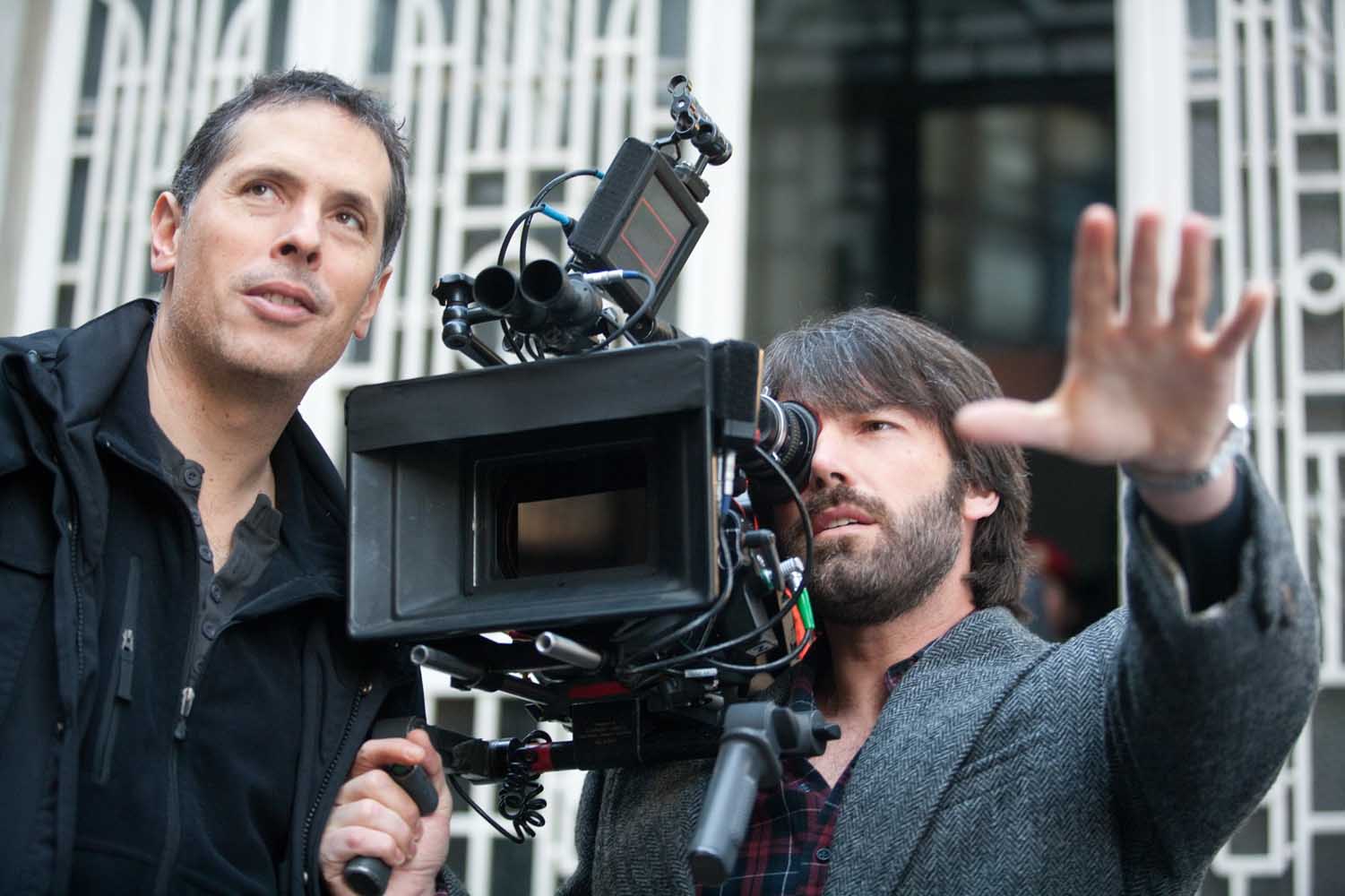
Welcome to the newest edition of "[insert random film crew position] for Dummies!" I'm you're host, Mike, and today we shall be delving into the world of the director. *Oooo ahhh* Now, I know what you're all thinking: "Duh! A director is the guy/girl that directs people!" You know what? You'd be correct in saying that. Go figure!

I'm sure you all know the basics of a director's job. I'm here today, though, to try to teach you a little something that you may not have already known. Let's start from the beginning. Now, after a director is hired by producers for a project, the director must then work side-by-side with the producers to cast actors for the film. This can be an extremely long and tedious process, but it's one that simply must be done. Clearly. Without quality actors, you can't possibly dream to have a quality film. Well, I guess you could, but that's all it would be: a dream.

Next up on the list of things to do, the director has to organize and select shooting locations. Of course, the director has location scouts working for him to truly find the best locations for shooting, but he has creative control and authority as to which locations will appear in the film. At the same time, the director interprets--and sometimes even writes or selects--the script for the film. The director rarely ever writes the script himself, but if he's not hired by a production house to direct the film, the director will often go out and find a script he'd like to work with. The location selections are hugely dependent on the script and the way the director interprets it, so the two steps are pretty much synonymous.

The director's next job is the last step before filming can begin. He must approve the sets, costumes, choreography (not present in most films), and music. These aspects of film are usually completely invisible to the untrained eye, or ear, because the only time most people will find them noticeable is when they are done incorrectly. If a film is set on a 1950s Japanese farm, and the actors are wearing tuxedos and sneakers with Kanye vaguely playing in the background, something went wrong...very, very wrong. It's the director's job to make sure mistakes like this never happen.

What else does the director do? Well I'm glad you asked! The rest of the director's work is pretty straight forward and most of you already know all of these things. But guess what! I'm going to tell you about it anyway! The director has a whole lot to do during production. The most obvious task is directing the actors. Whether it's explaining to actors how he wants them to portray their character in a given moment or if it's simply helping actors get into character, the director is the guy doing it. While doing this, the director also keeps the crew on track and makes sure everyone's doing what they need to be doing. Film shoots are generally tightly scheduled, so there's no time for excessive screw-ups and messing around. While doing this, the director also works with the cinematographers on shot composition and makes sure he likes what's in the frame.

Production is quite a daunting time for directors. They're basically the ringleaders for the wildest circuses on the planet. If they crack, the film is doomed to fail. The director must keep his cool so that everyone else does.

So now the film is shot. Yay! The only thing that's left for the director to do is work with the editors on creating first a rough cut and then a final cut of the film. The director gives his input throughout the process on what he thinks looks and feels better. Sometimes, this leads to reshoots of scenes or even cutting entire scenes from the film. But hey, who ever said directing was easy?

Thursday, September 11, 2014

Producing for Dummies

I'd like to state for the record that producing is not actually for dummies. Nor is this an attack on you, Diana. If anything, the dummy in this situation is me. I found myself sitting in my room this afternoon, and the question popped into my head: "What exactly do movie producers do?" So, I did my research and actually found that it's a whole lot more than what I originally thought.

A producer's job begins in preproduction. Psh, I knew that. What I didn't know is that the producer is the person who pretty much gets the project off the ground. First, he (or she, of course) needs to find material for his next project from either a script or a book. Then he needs to get a script in good enough shape to attract the attention of a possible director (and even a studio if a studio wasn't the one who started the project). After that, the producer's job in preproduction is pretty much done. HAH! Yeah, right.


Once the producer has a workable script and a choice of director, all he needs to do is secure financing for the film, choose a director and other members of the creative team, work with the director to cast actors, determine shooting locations and budget, decide on a cinematographer, hire the rest of the production team (including other producers), develop a shooting schedule, and create a detailed plan of action for the entirety of production. PHEW! That's one demanding job! Oh wait, the producer isn't even close to being done.

Time to begin shooting! Now it comes to the actual production; the fun part! Or at least it's fun for some people. Sorry, producer, you're on the clock. Production is when the producer offers creative suggestions to the director, handles any and all problems with the actors and creative staff, monitors the production timetable and budget, and reviews the film shot each day. Essentially, the producer has to watch over everything. If something goes wrong, the producer better find a solution, and fast.


And now it finally reaches postproduction, the time for most people to relax and wait to see what they've worked so hard on for so many months. Postproduction is really only horrible for the editors, sound, and special effects guys, right? Wrong. Believe it or not, the producer's job still isn't done. To begin the final step, the producer sits down with the director over a nice cup of tea and decides the order and selection of scenes that will appear in the final cut of the film. After that, he reviews each cut of the film until it's satisfactory. NOW all the producer's got to do is secure a distributor for the film and review the distributor's advertising campaign. After this, and only after this, is the producer's job finally complete.

Never before today did I truly appreciate the work of producers. I honestly believed they were just the piggybanks of the production team. I know it's difficult to believe, but I was wrong. Oh so wrong. Here's to you, producers!

Monday, September 1, 2014

Zumbrunnen's 5 Stages of Editing

I stumbled across an article earlier this month that's titled "How Spike Jonze's Films Come Together in Editing." When seeing the link, I thought to myself, "How convenient! I love Spike Jonze and I tolerate editing! Let's take a look." So I did. While much of the article discusses the happenings at the most recent American Cinema Editor's EditFest LA at Disney's Frank G. Wells Theatre, there was a small piece of the article which I wasn't expecting.

Eric Zumbrunnen—whose collaboration with Spike Jonze began with editing in the music video industry—joked at EditFest that there are pretty much five main steps in the editing process for any project. Whether he was actually joking or not, he hit the nail right on the head.

It's going to be amazing.

This is the first stage of the editing process. Now, it doesn't actually involve any physical editing, but more visualizing than anything. More often than not, editors are never on set when the projects are being shot; therefore, we never see what mistakes (usually continuity errors) are being made during production. This stage involves a whole lot of naïvety (Yes, that's a word. I checked.). Editors usually sign onto projects that they're excited to work on and that they have a lot of faith in. We have to. We're looking at the same film for weeks, even months on end. At this point in the process, we have the utmost confidence in the crew's ability to hand us something spectacular to get working on.

I don't know what I can do with this.

After having the mentality that he's about to help create one of the greatest films of all time, the editor is handed the first batch of footage. "What is this shit? You've got to be joking." This is when the work really begins. The footage never—I repeat—NEVER turns out the way you had imagined it in your mind. All those hours of visualizing the perfect scene, the most perfectly timed cuts an editor has ever made, gone straight down the drain with what looks to be the most horrible shots ever taken on a camera. "What were they thinking? What am I supposed to do with this garbage?" Now, it's never anywhere close to as bad as it is in your mind, but it's nothing like you imagined and it's terrifying. Sometimes you're just handed shit. It's the sad truth.

What if everyone finds out I'm a fraud?

It's getting to the point when you've been making the first cuts on the same 2-minute scene for twelve hours and there seems like there's no way out of that one horrible, horrible continuity error. There's nothing you could ever dream of doing to get around it. Jesus himself couldn't fix it. "Who would ever think I could cut this together?" This stage is pretty much the same as the previous one, but after the stress and frustration really set in. Up to this point in your career, you've been fairly confident in your skills as an editor. You started out small, but have worked your way up to some pretty notable projects. This is, however, the moment all editors have during every editing job where they feel their career is over. If this problem isn't taken care of, you're done. Finished. You'll "never work in this town again." Basically, you're screwed.

Damn the deadline.

"Is it even possible? Could anyone do this?" Where'd the time go? Well, while you were slaving away at your computer for the past few weeks, everyone else on the crew was celebrating the fact that they wrapped the film. Sure, your work probably extends over a fraction of the amount of time that the rest of the crew had to work on the project, but—as everyone believes is the case for themselves—your job is significantly more difficult than everyone else's. It's a couple days before you have to hand over your newest cut of the film to the director and you have nothing to show for it. After the endless hours of blood (not really), sweat (of course), and tears (you betcha) it seems like it's impossible for you to ever turn it in on time.

I'm a genius.

"Damn, I'm good. Like I'm really good." You just finished your nth cut of the film and it looks damn good. It probably won't be the last one, but you now have some serious proof of your skills. You're bragging to the director. "You see right here? Where he does this? Well, he actually kept doing this, so I used this to cover up that and now he does this." You can't stop smiling and basking in the glory that is this new work of art. No one will ever truly comprehend what you had to do to make the final product, but it's fine. It's totally ok. Because you'll tell each and every friend and family member about it in extreme detail after the premiere.

Thursday, October 4, 2012

One Shot Reflection

I got to do a lot this project. I did like having the 4 mini projects because I got to have many different positions. I got to experience what it is like as an actor for Maddie's film. I am never actually in any of my projects or my friends projects, so this was new. I was also in my own film, but since you couldn't see my face, it doesn't count. I got to DP for Lindsey's film, which was cool. I think that I underestimate my ability to work a camera sometimes. Besides it being a little shaky, which I feel was out of my control, it is nice to have something that you did that doesn't look like shit. (Pardon my french).  Dave made it easy on us all and had the camera on the ground, so although I did "DP" for him, I didn't have much work besides framing it, then standing back.

Directing my project was awesome. I love being director. I really didn't have too much to do with directing my actors because of the way my project was. Only feet and no real sound. It made it feel a lot more relaxed and fun. It also made shooting it really quick and simple, so we were able to do multiple takes trying different things with the flower, the hula hoop, and camera movement. I am really proud of this project. I think it is different, I got to edit it completely by myself. In the past, I have had group members that are more experienced than I am in editing, so they take full control of that aspect. But I really like to edit and to see my ideas for my final piece really come together. So it was nice to actually have full creative control and have it come out nicely!

The only issue that I had with this project was exporting it wrong. I am about to leave my apartment to go to Park and re-export it with the correct settings.

Wednesday, November 9, 2011

David Fincher and The Social Network


The Social Network is an award winning film by David Fincher. It tells the story of how the social-networking site of Facebook was founded but it is also so much more than that. It uses this story as a backdrop of friendship and betrayal. Based on the novel The Accidental Billionaires by Ben Mezrich, The Social Network is arguably one of the best films from the last few years.

David Fincher known for movies like Se7en and Fight Club is considered a visual artist. His films are very stylized in terms of color and composition. Looking past the technical side he also works well with actors. Not only does he allow and plot time for experimentation for the actors, he is also determined to get their best performances. In the opening scene between Mark and Erica, which was over eight pages of straight dialogue, he took 99 takes. He did this to break the actors and strip the acting away from them. Instead of sounding like rehearsed lines it looks and feels like two college kids simply talking as their characters. There is no acting going on. They know the lines inside and out and now Jesse Eisenberg and Rooney Mara have become Mark Zuckerberg and Erica Albright.

Fincher is also great with special effects. Actor Armie Hammer played both the Winklevoss twins but there are many people out there that think that there are two Armie Hammers in the real world. Josh Pence actually played one of the twins from the neck down and had Armie’s face digitally replaced over his. To further match each other’s movements and rapport they spent 10 months in twin boot camp together. This makes scenes like the rowing scene at the Henley Sequence possible.

My friends and I were so excited for this movie to come out that we even decided to recreate the amazing trailer shot for shot all in one 24 hour span during finals week of last year. Without telling our friend who looks like Jesse Eisenberg (so he would not know what he was doing) we ran around campus recreating the scenes from the movie. We later spent weeks editing it all together to make it match with the original trailer. If played side by side with the original they would match perfectly (which I have actually created a file doing so). Even though it is filled with inside jokes between friends it was posted online and have since received a large number of views (currently we just hit 800). A few weeks ago I was even asked to talk about the trailer on Ithaca College’s television show The Screening Room: Director’s Corner. If you are interested you can check out the interview here. I am the third and last person interviewed in episode five from the Fall 2011 season.

The Social Network is a brilliant film by David Fincher that I cannot speak more highly of. The acting, directing, writing, and soundtrack are just amazing. This film actually made me want to go back and re-watch other Fincher films and currently has me very excited for the upcoming Fincher release of The Girl with the Dragon Tattoo. If anything like Fincher’s previous work I am sure it will be spectacular.

Friday, September 30, 2011

The Graduate and its Similarities with The 400 Blows

For this week’s blog post, we were asked to read a chapter from Closely Watched Films by Marilyn Fabe. In the chapter it focuses on François Truffaut’s film The 400 Blows. This autobiographical film was made by Truffaut when he was twenty-seven years old and helped launched the French New Wave, a national film moment that flourished between 1959 and 1963. While I have not seen The 400 Blows or any film that is considered part of the French New Wave era, I have seen other films that reminded one of many of the principles and styles of these unique films.

French film critic Alexandra Astruc argued that cinema was a language and could potentially be an art form as powerful as poetry or literature. Traditionally the “author” of a film is the screenwriter but New Wave theorists believe the script was only a blueprint and that the director is the artist that puts his vision into the film. However many of these New Wave films like The 400 Blows were directed by the screenwriter. This reminds me of one of my favorite writers/directors, Charlie Kaufman. While he is mostly known for his writing, his film Synecdoche, New York, which he wrote and directed, is a bizarre film about a theater struggling director attempting to create a life-size replica of New York inside a warehouse as part of his new play. This movie’s title is also similar to The 400 Blows’ title because both have double meanings. The 400 Blows not only refers to the adventures of a rebel teenager but also the actual blows dealt by his parents. Kaufman’s title not only means the city of Schenectady, where much of the film is set but also the concept of synecdoche, wherein a part of something represents the whole or vice versa. Another Kaufman film, Adaptation, is similar to this Truffaut film. While The 400 Blows was autobiographical to his life, Adaptation revolves around a screenwriter named Charlie Kaufman and his actual struggle of adapting the novel The Orchid Thief into a film. In case you could not tell it was based on Kaufman’s actual struggle from his life!

Reading about The 400 Blows also reminded me of the movie The Graduate. While not a perfect match there are some striking similarities between the films. First there is a shot in Truffaut’s film that focuses on the character of Antoine as he runs through the country toward the sea. The shot is all in one shot in order to be dramatically effective. The audience sees him running for a long time without the least indication of fatigue thus, we are able to experience the pure adrenaline-fueled sprint. In the ending of The Graduate, Dustin Hoffman’s character is seen running down the street in two long shots (the shots start 30 seconds in). He is determined to stop the wedding of his dream girl. Nothing will get in his way! Another similarity between the films is with both the film’s endings. In Truffaut’s film, as he is making his dash for freedom he runs to the sea. When he finally gets to the ocean he accomplishes his goal but he realizes he is trapped. In The Graduate, Benjamin succeeds in stopping Elaine’s wedding and both of them make it on to the bus to run away. But as the bus drives away their smiles fade (skip ahead to 3:40). Even though there is no dialogue some people interpret this quiet ending as both characters realizing what they just did and perhaps thinking they may have made a huge mistake. But the ending can be seen in two ways depending on the audience. One final similarity between the films again involves The Graduate’s end. Supposedly the “sobering” ending is actually from the directions the director Mike Nichols gave the actors in the moment. He was actually shouting at them to laugh during the scene but the actors were so scared that after the laughing they stopped, with looks of worry. He liked it so much he kept it in the final film. In The 400 Blows Truffaut wanted a certain actress for the part of the psychiatrist but since she was unavailable he decided to never show the psychiatrist but instead only hear her lines. Another decision made in the moment by the director!

While different people made these films during different times, there are very similar. This just proves that powerful and inspirational films can help influence future directors and filmmakers with their works just like Truffaut’s The 400 Blows influenced many movies to come.

Monday, September 19, 2011

Nine comes after 8 1/2


After reading chapter 9, Federico Fellini's 8 1/2, a light went off in my head like I have read or seen something like this before. I couldn't figure it out for a while, so i called my dad back at home and read some of the plot points and characters to him that the chapter described. He told me it sounded a lot like the movie Nine. So i did some research to find out that I did in fact
see the movie, and that 8 1/2 did intact have an influence on the 2009 hit movie.

Reading further into the chapter, the author kept using the term "double mirror construction," and what that refereed to was how the movie was portrayed. Unlike Hollywood films where each scene leads into the next and you can make connections, this new style of cinema took the audience into the mind of how a human really thinks, and put that on the screen. From dreams and emotions, to thoughts and ideas, you never knew what was coming and what was what. In one scene, Guido Anselmi, the director in the movie (not of the movie) would be doing something and the screen would radically change to what he was thinking of in his head. Whether it was a problem with his life, or something he didn't like in the film. Nin
e did similar cinema style, creating images of the on the screen to what the character was thinking.

As crazy as it seems, I can also relate 8 1/2 to a recent film called Inception. Both movies have similar themes finding true personal happiness in a difficult, fragmented life. In one, Guido Anselmi is trying to create the perfect film through all of his mishaps and life problems, and in the other Dominic Cobb (Leonardo DiCaprio) is trying to go through mazes and his life problems to get back to his kids. All of these movies are considered to be "second time movies" because you have to watch them twice to really understand what is going on.

If anyone has any comments or something to add, please do

steve kinslow