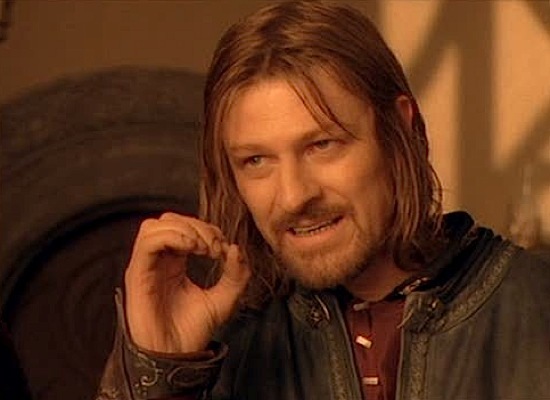
So I've never seen a Lord of the Rings movie before. I don't know, I just never really had an interest in them. I've heard they were good movies, I just never really felt like sitting through 12 hours of movies that I didn't have much of an interest in. I was going to continue living like this, until one of my roommates forced to watch them, all of them, extended editions to boot. So I figured now's as good a time as any, so I decided to sit down with a few people to watch it for the first time.
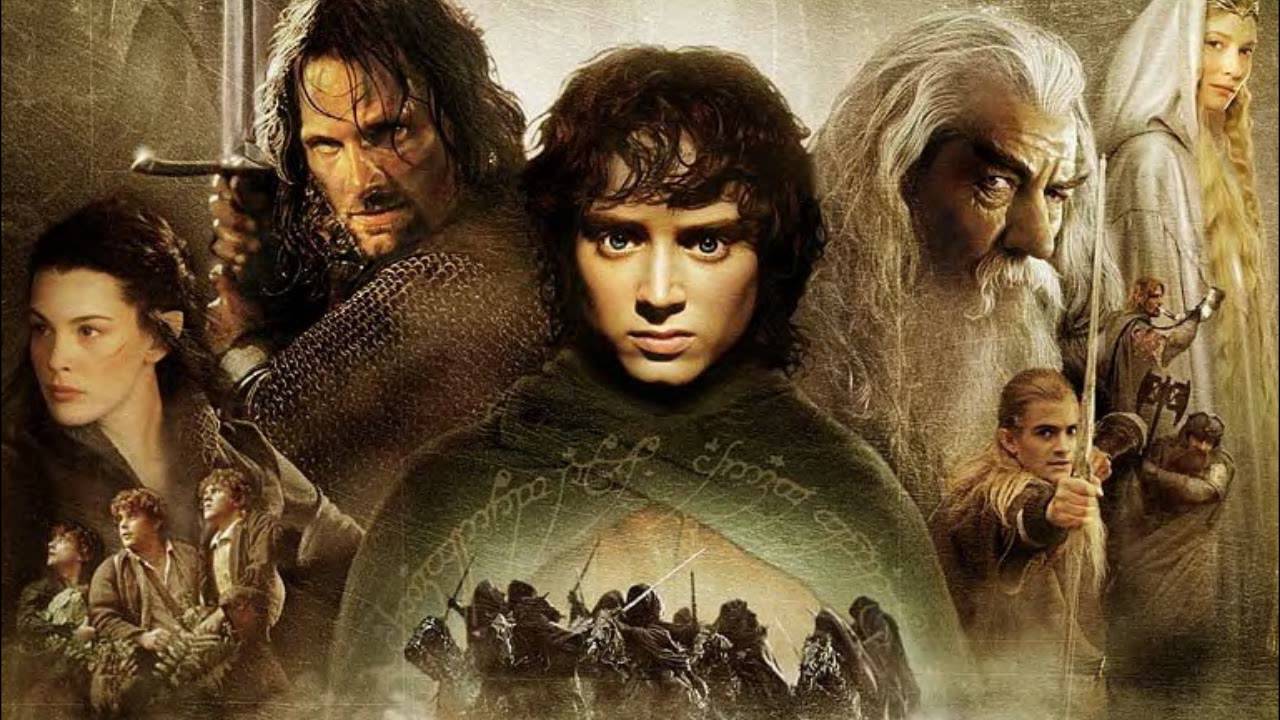
For a movie that came out in 2001, I think the film held up really well. With a good cast, believable writing and solid special effect for the time, I was pretty impressed with the first movie, Fellowship of the Rings. At some points you could definitely tell from the special effects and cgi that this wasn't a movie released within the past 5 years, but with that being said, they still got the job done and didn't take me out of the experience, plus for the time they must have looked incredible.
In addition to that, at some points the cinematography was really well done. There were a lot of sweeping shots, over head shots, and scenes with a lot going on within them, and all of it was put together really well. There were even subtle touches like certain characters having a glow around them.
Going into this movie, I really didn't think I was going to enjoy it all that much. And to be honest, it isn't toping any best of lists for me. I know that last line is borderline blasphemous in the eyes of some, but with all that being said, it was still a real solid movie and I enjoyed my time watching it. I guess there was a reason that it was included on the American Film Institute's revised 100 Greatest Movies of All Time list as one of the few films from the 21st century.
Showing posts with label fantasy. Show all posts
Thursday, October 1, 2015
Thursday, August 29, 2013
Zoe Kazan ignites her career with Ruby Sparks
I recently watched the film, Ruby Sparks (2012). This romantic comedy/fantasy is a unique story, told through charming characters and beautiful cinematography. Calvin, played by Paul Dano (actor: Little Miss Sunshine, Looper), is a well-known novelist who falls in love with a character he creates. Ruby Sparks. Then one day, Ruby shows up in his house.
It is written by Zoe Kazan (actress: It's Complicated), who also plays Ruby. Zoe is extremely talented and is becoming more famous. She received a BA in Theatre from Yale University. She's been in a few movies before this, and I find it very inspiring that she not only starred in this movie, but she wrote it. And the writing is great! It feels very real, and the story definitely tugs at the heartstrings. The relationship created between Calvin and Ruby is very relatable to me, and I'm sure other people, which is strange since it could never happen. But their personalities and the dynamic between them hits close to home.
The one criticism I have with the movie is the ending. It does not feel right to me. However, I don't even know how I would want it to end. I'm sure it was very difficult to find the right ending. Overall, I fell in love with Ruby Sparks just as much as Calvin did, and I think you would, too.
Monday, October 3, 2011
Pushing Daisies
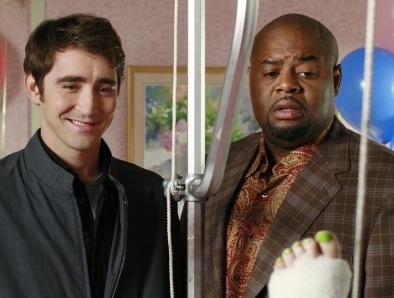
Freshman year, I took a class where we looked at different TV shows and critiqued on its aesthetics and presentation. One show that really jumped out at me was called Pushing Daisies. This Tv drama was like no other. The colors and patterns shown on screen really made an impact to the viewer. The creator of the show, Bryan Fuller, told several magazines and publishing company's that he was going for a "Tim Burton trippy" look, with bright colors and exaggerated patterns. the picture below says it all.

It gives the viewer an Alice and Wonderland look, with a twist of a cartoon fashion. Many shades of red and orange brighten the picture, and you also get a sense of symmetry in ever shot. The NY times say the show looks like a Candyland version of life. Even the plot has a fantasy feeling.
New, the town pie maker, discovered a special gift he had when he was young. He had the power to touch anything dead, whether it was a person, plant, or animal, and make it come back to life. However, the next time he touched him, her, or it, it would remain dead forever. Watching the pilot episode, I really thought this looked corny and stupid. But the characters really kept the driving the story. Ned and a detective pair up to solve murder mysteries to collect the reward for catching the killer. There is no Law and Order terms in this show, and the dialogue is funny and easy to keep up with. The music sounds like a fairy tale Disney movie, but for adults, setting the tone of every scene. This is a show I definitely recommend to all looking for something new to pick up.

It gives the viewer an Alice and Wonderland look, with a twist of a cartoon fashion. Many shades of red and orange brighten the picture, and you also get a sense of symmetry in ever shot. The NY times say the show looks like a Candyland version of life. Even the plot has a fantasy feeling.
New, the town pie maker, discovered a special gift he had when he was young. He had the power to touch anything dead, whether it was a person, plant, or animal, and make it come back to life. However, the next time he touched him, her, or it, it would remain dead forever. Watching the pilot episode, I really thought this looked corny and stupid. But the characters really kept the driving the story. Ned and a detective pair up to solve murder mysteries to collect the reward for catching the killer. There is no Law and Order terms in this show, and the dialogue is funny and easy to keep up with. The music sounds like a fairy tale Disney movie, but for adults, setting the tone of every scene. This is a show I definitely recommend to all looking for something new to pick up.
Tuesday, September 20, 2011
"8 1/2": Inspiration for Terry Gilliam's "Brazil"

While I may have not seen the entirety of Federico Fellini's 8 1/2, upon reading the chapter on it in Closely Watched Films: An Introduction to the Art of Narrative Film Technique, the first thought that popped into my head was, "I think I've seen this before." Terry Gilliam's 1985 cult classic Brazil is remarkably alike from both a stylistic and thematic standpoint.
According to its imdb.com storyline synopsis, Brazil is about the following:
Sam Lowry (Jonathan Pryce) is a harried technocrat in a futuristic society that is needlessly convoluted and inefficient. He dreams of a life where he can fly away from technology and overpowering bureaucracy, and spend eternity with the woman of his dreams. While trying to rectify the wrongful arrest of one Harry Buttle, Lowry meets the woman he is always chasing in his dreams, Jill Layton. Meanwhile, the bureaucracy has fingered him responsible for a rash of terrorist bombings, and both Sam and Jill's lives are put in danger.
While this may not sound so much like Fellini's classic, the main point of each movie is ultimately the same: a man is entangled within his dreams. Both films make use of vivid and often extensive dream sequences from the mind of the main character to illustrate his deeper desires. Guido, the star of 8 1/2, and Sam both have visions "of a beautiful girl in white [that] hold out an illusory promise of salvation and release from his mental stagnation" (Closely Watched Films, 155). The first dream sequences even bear a striking resemblance:
8 1/2 (sequence starts around 2:10)
None of this is particularly surprising, though. Gilliam has consistently cited Fellini as a tremendous source of inspiration for all of his work. The actual working title, before Brazil became "Brazil," was "1984 1/2," a reference to both Fellini and George Orwell.
This all brings me back to our class's past discussions on how Fellini's film has impacted modern movie making. His influence is clear in the case of Gilliam, but if you take a look at IMDb's movie connections for 8 1/2, the extensive and diverse list of famous films (including The Godfather, Eraserhead, All That Jazz, and Pulp Fiction) further proves its powerful place in film history.
--------------------
A short of Terry Gilliam talking about Fellini's 8 1/2:
To read more, try these links:
"Sam's Dreams-Brazil-1985" video - youtube.com
A Short Biography of Terry Gilliam - smart.co.uk
Revival House: "Has Anybody Seen Sam Lowry?" - popdose.com
Labels:
8 1/2,
Brazil,
dreams,
fantasy,
Federico Fellini,
imdb,
Jonathan Pryce,
Sam Lowry,
surrealism,
Terry Gilliam
Monday, September 19, 2011
The Use of Flashbacks in 8 1/2
I have never seen 8 1/2 so my first impression of the movie was what they described in chapter 9 of "Closely Watched Films". I am really interesting in seeing it now, mostly because of the way they described Fellini's unique style of editing.
By seamlessly conjoining shots through match cutting (also referred to as continuity cutting), film viewers were encouraged to become involved in the illusion that they were watching, not a film made up of multiple bits and pieces of celluloid, but an unmediated reality. (165)Fellini used the editing, not to create an objective sense of reality, but rather to inv
ite the audience into Guido's mind. He throws continuity out the window and the film becomes a actual memory, with choppy edits and changing backgrounds to symbolize the distorting process of a memory and how uncertain they may be. It mirrors the wishful thinking and dreams of Guido as well as the visions of a traumatized child. It is a psychological ploy to step directly into the mind of the character.
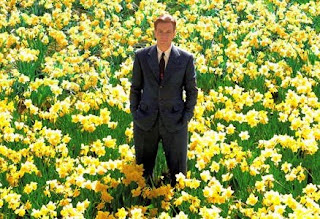
the flashback either follows that of the movie, or is flawless and almost dreamlike. For example, the movie Big Fish, which is predominantly told through the main characters flashbacks. However, whenever we do get a glimpse into his mind, it is a whole different world, mostly distinguished through the use of bright, fairytale like colors.
In many films, a fantasy or flashback is preceded by a ripple effect or a fading of the outline to distinguish the difference between reality and illusion. A look into the characters dilemmas through blurry images, harping music and an echoing subconscious. It distances the audience, rather than what Fellini intended to do in 8 1/2. It might be done by a particular repeating sound, such as in the show LOST, or maybe through a flash of lighting. But in many of these cases, the editing of
the flashback either follows that of the movie, or is flawless and almost dreamlike. For example, the movie Big Fish, which is predominantly told through the main characters flashbacks. However, whenever we do get a glimpse into his mind, it is a whole different world, mostly distinguished through the use of bright, fairytale like colors. Another example from a black and white movie would be Orson Welles, Citizen Kane. The movie alternates between the present and the past after the death of Kane and this clip shows on the first flashbacks to Kane's childhood. When the scene goes into the flashback of the main subject as a child, much as it does in 8 1/2, the shots fade into one another and the document we once saw slowly becomes a snowy day. The music also becomes louder and more involved, but the scene continues in a very cinematic manner.
Subscribe to:
Posts (Atom)