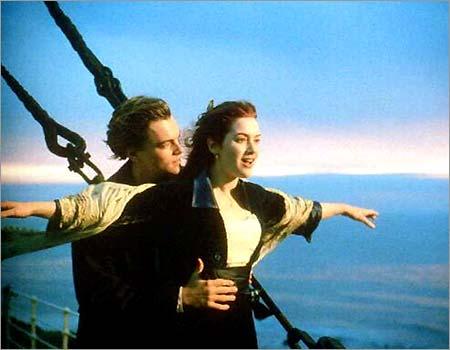
After movie stars dying of drug overdoses, murders and crime happening in Hollywood, it's no wonder people created local censorship boards and cut out parts of movies to be more suitable to watch in their communities. Hollywood studios and Will Hays joined together to form a list of "don'ts and be carefuls." As there was no punishment, official government censorship was needed. So a new code was created. "The code sets up high standards of performance for motion-picture producers," Hays proclaimed about the new code. "It states the considerations which good taste and community value make necessary in this universal form of entertainment." The full code is here. A brief overview of the code:
The major principles governing the code from 1930 onward:
No picture shall be produced which will lower the moral standards of those who see it. Hence the sympathy of the audience shall never be thrown to the side of crime, wrong-doing, evil or sin.
Correct standards of life, subject only to the requirements of drama and entertainment, shall be presented.
Law, natural or human, shall not be ridiculed, nor shall sympathy be created for its violation.
Prohibitions on:
- Nudity
- Suggestive dances
- Discussions of sexual perversity
- Nudity
- Superfluous use of liquor
- Ridicule of religion
- Miscegenation
- Lustful kissing
- Scenes of passion
The code was mandatory for filmmakers, if they wanted their film to play in theaters. "Howard Hughes threw a well-publicized fit when his western The Outlaw was kept out of theaters — not for its content alone but because the film's advertising focused attention on Jane Russell's cleavage." - Bob Mondello, NPR
Hitchcock's film, Notorious(1949), found a loophole in the Production Code. One of the rules was that an on-screen kiss could not last longer than three seconds. In Notorious, Ingrid Bergman and Cary Grant kiss, then stop, then kiss again, while staying intimately close to one another. This scene made the film known for having "the longest kiss in cinema history." Watch it below:
In 1959, the man who enforced the rules of the Production Code said that if a "moral conflict" provided "the proper frame of reference," a Code-approved film could deal with any topic except homosexuality. The next year, Some Like It Hot came out. With Jack Lemmon and Tony Curtis, disguised as women and fending off male suitors, the production code disintegrated. And the number of attendees at the theaters proved they did not mind.
About a year later, the MPA realized a rating system for audience awareness would work better than a censorship system.
So this week I thought I would talk a little bit about my love for cameo appearance, specifically the use of this technique in films directed by Hitchcock. This technique is truly a trademark for an iconic director. Hitchcock began appearing in his films at an early stage in his directing career due to a lack of extras for crowd scenes but since then it has become a medium within a medium while watching a Hitchcock film. Of course when I say it has become its own medium I mean that its like a game trying to find Hitchcock similar to finding an item, object or person in a classic I spy book. Additionally the incorporation of Hitchcock in his films sometimes foreshadows an upcoming event in the plot. The cameo appearances I am highlighting in this section of the post is how Hitchcock acts as a sort of omen. The use of cameo appearance creates a multi-puporse effect for the audience which not only can be an omen or a trademark but even a means of self promotion. Hitchcock was really the first director to capture the attention of the audience and establish a relationship by creating a persona within his films. More importantly I feel that Hitchcock makes the audience aware of the director which many other films fail to do. Here is a few examples of how the cameo appearance technique shapes the way in which we the audience perceive the film:
A quick video of Hitchcock's cameo appearance in Psycho (1960) one of my all time favorite films by him.
Another classic Alfred Hitchcock cameo in The Lodger (1927)
Lastly I will leave you with a compilation of Hitchcock cameo appearances, Enjoy!
"Film Noir is the flip side of the all-American success story. It's about people who realize that following the program will never get them what they crave. So they cross the line, commit a crime and reap the consequences. Or, they're tales about seemingly innocent people tortured by paranoia and ass-kicked by Fate. Either way, they depict a world that's merciless and unforgiving." --Eddie Muller
It's that time of year again where the weather gets chillier and the days get shorter. While many of us are sad to see the fall (and the sun) go, its the perfect time of year to curl up with a good movie. Let me present to you: Noirvember.
Noirvember is an annual month-long challenge that urges film lovers to watch a noir film every day of November and share thoughts on Twitter (#noirvember), Tumblr, and Facebook.
There is something about noir films from the 40s, 50s, and 60s that I just love: all the characters have serious style, being shot in black and white elevates the air of mystery and suspense within the story, AND some of the best filmmakers (John Huston, Alfred Hitchcock, Orson Welles) also came out of this era. This is definitely one of my favorite genres, and I plan to check at least a few classic noir films off my list this Noirvember.
Alright! Let's do some Shots! NO, not those kinds of shots, Films shots! (It's not the weekend yet kids!)
Today, in class we spoke about the importance of shots and frame. Ever since we discussed this in fiction field 1, a year ago (time flies), I've payed closer attention to the films I watch and I note the placement of the characters. Sometimes, it helps me understand a little better of what's going on in the film. Have you ever watched a film where you were completely lost? Most people at that point shut it off and never return. I try harder to understand, I like to give em' a chance! They could explain everything later! Anyways, I found sometimes I'll try to interoperate the choice of the camera position, movement or even the placement of props, or the placement of the character's themselves.
In the shot above, The camera frame shows you exactly what the character is looking at, it also shows through camera angle how much bigger this creature is in comparison to the character, possibly imposing a threat. The fact that it's raining makes it harder for the character to run and hide, it gives us a symbolic sense of nature's wrath, unfortunate events etc.
This shot is much less distressing! I would interpret this shot to mean that these character's are getting closer either as friends or as lovers. Judging by the closeness of their bodies and given other cliche shots like this, I would bet that their next action is that they look at each other intimately.
For this shot I suppose you could say the same. Again it's very close and intimate. There's a feeling of safety even in a dangerous position. The expressions of the characters are a combination of amazement and admiration.
Another concept we were touching upon when talking about the way people used to watch film and the way we progressed from where we came from, is the concept that Hitchcock called the Kuleshov effect!
There is also an importance to not letting anything foreign be in the photograph. Set decorating is VERY important. Last year on the Market our art department team made a character who was a religious freak and very uptight person with very intense secrets. We transformed a girl's room from a girly bed room in to a dark, organized, bedroom with a ton of religious symbols everywhere. It looked like an ENTIRELY different place when we got through with it and if you pick the right people to do it, it really doesn't take too long. Here's an example of a set that was designed in the french film OSS 117: Lost in Rio:
The film takes place in the 60's and as you can see, nothing here is out of place or misrepresenting even though the movie was made in 2009! Not one thing in this frame is out of context nor is it distracting. You want things (props, set dec., etc.) to be appropriate but not distracting. I think this room sets up a mood of the scene as well as being absorbing/ believable.
I have more to talk about but I'll save it for next week! Hope you all enjoy the rest of the week!
I can finally say I have seen one of Hitchcock's most iconic and important films. Yes, I am talking about "Vertigo". So a few things about this movie: At the beginning I wasn't really impressed by it. The storyline was good but nothing out of the ordinary. Also Hitchcock did take his time to set up this movie. So basically what I felt it was just an ordinary movie became into a movie of pure suspense and thrill. This movie literally had me on the edge of my seat for at least half an hour straight. I think that although the build up for this movie was pretty long it was totally worth at the end when the movie has a 180 degree twist.
One thing that Vertigo left me thinking was the impact this movie had in me even it's been more than 50 years since it was released in theaters. I can only imagine how influential this movie was for its time. I mean, for me growing up with multiple shows and movies with a similar theme, I was even more impressed with Vertigo than with most of the things I've seen in the past. I feel that this is a fantastic movie and I feel it plant the seed to create many of the shows and movies we have today. One of the techniques used by Hitchcock that has really captured my attention in many movies that I've seen recently (including Chinatown) most of the story is shot from the main character's perspective. I feel this structure adds a little bit to the element of surprise since the viewer is actually discovering most of the key points of the story at the same time as the protagonist. I did notice that Hitchcock changes this style of telling the story after Vertigo's major twist (which I will not reveal). Shot wise Vertigo is extremely well shoot. This movie is especially know for the "dolly zoom shot" which has influenced many films in the past years. An example of this shot is in this video:
I'm going to stop talking about the plot line of Vertigo really don't want to spoil this movie for anyone but I think that this movie is a "must see" for everyone in the movie business so If you haven't seen it I would definitely recommend you to get on that.
For this week's post I wanted to talk about a movie that I watched last week and that I would highly recommend. I'm talking about Alfred Hitchcock's Notorious. As with most of Hitchcock's movies, I wasn't disappointed with this one. It was the perfect combination of a romantic and suspenseful thriller. I feel that what makes Hitchcock's movies so compelling is the fact that he takes his time to set up the sequence of events that will lead to the resolution. I notice a variety of elements in this movie that we've discussed in the past. Like the key which served as a Mcguffin. I feel it was an essential element to move the story along and keep the audience enthralled.
Another Mcguffin that I noticed in Notorious was the bottles of wines in the wine cellar.
Hitchcock doesn't really expands why they were transporting this substance in the wine. He just uses the wine bottles to bring the story together. Another interesting fact about the way Hitchcock tells a story is that his story lines are very focused. Even thought this story took place in a Post-World War II setting, Hitchcock didn't emphasized this story line. He focused more on Devlin, Alicia, and Alexander's story. I feel that this helped me engage more in the story and care more about the destiny of this characters.
Reading about French New Wave we have to talk about Alfred Hitchcock you can argue that he was a main influence on Truffaunt. He had his very own directing technique and style and you can easily see it in all of his films.
Here is a famous scene from one of Hitchcock's most notable movies, Vertigo. This scene just bleeds Hitchcock you can feel his presence in every shot, especially in the dolly zoom technique.
I would not call him the grandfather of French New Wave, there are too many influences on this movement, but I would call him a strong influence.