Sometimes when I think about what I'll be doing after college, I have some doubts. (Wow, shocker.) Every time I took one of those dumb "this is what you should do for a career" tests in high school, I always got something along the lines of helping others. With my dad and stepmom working in the medical field they were also trying to push me towards that type of job. After working at a nursing home in high school I knew that wasn't an option. (One of my favorite stories from that job was when I had to take all of the silverware off the table because one resident was throwing it at another, but that could be a whole other blog post.)
Anyway, sometimes I feel like what I'll be doing with my degree won't actually matter. Does the world need another shitty commercial or reality show? But, then I remembered what got me so interested in the television-radio program in the first place: it was really my love for the show The Office. No matter what was going on in my life, that show without a doubt would always make me feel better. I think everyone has a show or film that's a go-to mood booster. To some that may sound stupid, but I think it's important to have an outlet like that.
That's what really motivates me in my field. I want to create really positive media. SoulPancake is one of my favorite production companies. They make a lot of inspirational videos, from 'A Letter to my Kid,' to making strangers meet in a ball pit to some of their more viral work like Kid President. Their videos always make me happy and make me want to just do good for the world.
He's awesome, watch his videos.
I'm definitely going to apply to intern with them in LA, because they are a company I would love to work for after college.
Because humour is so very hard to duplicate, I've found myself rewatching The Office at least 40 times. I wish I was exaggerating but, then again, with my life crumbling around me, what else is there to do than laugh at a group of people with exceedingly horribly yet funny lives. In case you don't know what this classic television show is, it's a sitcom/mockumentary according to its ever-changing wikipedia page but it follows the story of a small branch of a paper company, specifically where the sales are done. Which sounds boring as hell, but somehow it's funny? We just don't know.
Something about this show that I adore, besides it's 20 minute style which makes you feel like you are doing a shot of comedy, is its ability for comedic timing with the use of the camera as another member of the office. You honestly feel like you are in the scene with the rest of the employees and it creates a very visceral and specific kind of comedy that people have tried to recreate before and failed. Some manage to actually use it successfully and I fully recommend those shows as well. See Parks and Rec.
While the shows both sit in an office and the characters are fleshed out very realistically (yet not??), the shows tend to gather a 'love it or hate it' crowd. I assume it's because it can remind people of their own office life and people either take that as positive or negative.
Comedic timing is something that was so perfectly created in the original UK version and, personally, I think it was well recreated in the American version. After watching both more times than I wish to reveal, I've found that I almost thinking of them as two different animals even though the first few episodes have the exact same scripts, the same beats, and the same camera work. We just /don't/ know. As the series/seasons go on, the actors obviously become more in tune with how they should react with the cameras and each other and it, again in my opinion, gets better as it goes on. While that might not be true for the writing, I very much appreciate the use of the cameras for comedic effect. It's pretty rad.
If you're like me and want to be a screenwriter (which apparently applies to like, half of our class) you might assume that all scripts are more or less the same: just throw something decent in celtx and boom. Script. Film, Tv, whatever, a script is a script. However, as I'm learning very quickly in my writing for series television class, there are some major differences between writing a film (short or feature) and writing for a weekly television show. Here are just a few.
1. Television writers are more likely to get/keep jobs.
Yay jobs!
Not to say that people who write TV shows are better at their jobs than those who choose to write films; it's simply a matter of numbers. While film scripts are typically written by only one or two people as a kind of freelance project, TV scripts are made by - almost always - staff writers. Staff writers collaborate on scripts to keep episodes of any given TV show consistent with that show's tone and brand. Simply put, there are more positions available to write for TV than to write for film. To find out a bit more about the various positions and hierarchy of a television writing team, check out the Writer's Guild of America's official overview here.
2. Characters develop differently...if at all.
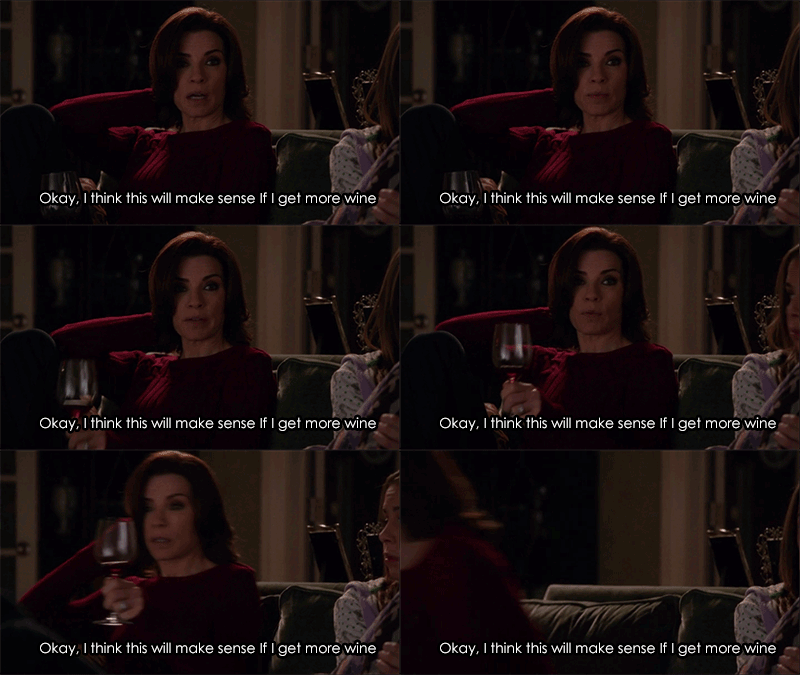
Ja feel, Alicia.
In any good film, the main character will undergo some kind of change as they progress from point A to point B. A movie with a static character is kind of just a boring movie. Television, however, is more or less the exact opposite. Apart from certain cable dramas (cough cough Breaking Bad), people watch TV shows for consistency. If Michael Scott suddenly realized that he was a gigantic doofus and wanted to change his ways halfway through season 3, there never would have been a season 4. As weird as it sounds, we want to know what we're getting into before we watch a show. I watch the Good Wife because it's an intensely dramatic show about lawyers; even though major, major changes occur during its fifth season, I continue to watch it because it's characters are consistent and awesome. It's perfectly fine to reveal new traits and things about your characters as a show goes on, but they should always have the same basic characteristics that made your viewers want to watch your show in the first place.
3. TV is faster and there's way more of it.
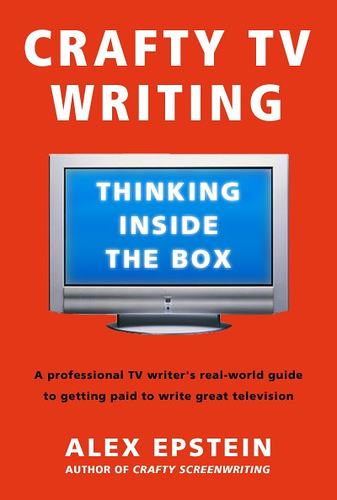
Whereas a feature film writer can take months (or even years!) to write a first draft of a commissioned screenplay, a television writer typically has to churn out a script that's ready for production in 5-7 days. That's less than a week to go from concept to breakdown to outline to rough draft to shooting draft, with a few extra drafts thrown in there somewhere for good measure. And don't even think of missing deadlines. Alex Epstein details the entire process in section taken from his book, Crafty Screen Writing, which can be read here. The upside to this tight production schedule, however, is that television writers are some of the most powerful people in the industry. Unlike film writers - who are typically never on set and practically thrown away after they've turned in a decent draft - television writers are often the producers and showrunners of their own productions. All of this basically just means that the actors shouldn't piss off the writers, since they could literally kill off your character at any moment.
While both television and film have their pros and cons, it almost goes without saying that writing for TV is the more difficult of the two. But if you are up to the challenge and can somehow not consistently get chronic writers block, it also may be the more rewarding.
One of my favorite series to ever hit primetime television is NBC’s The Office. I enjoy it for many
reasons, the humor, how relatable it is, and the way it is produced. I think the most unique part of the
production of The Office is the camera work. Because The Office is made to seem like a camera crew is
actually following the characters around, it has a much different feel than most television shows.
Since it is made to appear as a documentary, all camera angles have to be believable. For
instance, if it starts with a wide shot, then cuts to a close up, the shot they cut to cannot be from an
angle within the original wide shot. It sounds confusing, but basically for the show to be believable as
a documentary, you have to imagine it being shot with multiple cameras at the same time, in such a
way that no camera would appear in a different camera’s shot.
Most television shows try to have the highest production value possible, The Office does the
opposite, but in a unique way that works for them. Being that its shot in a documentary style, one
would not expect The Office to have a high production value. When something supposedly is
happening once and there is only one chance to capture it or it’s gone, you don’t expect beautiful long
dolly shots or a steadicam follow shot. You expect shakey, handheld shots, with lots of quick camera
movement to ensure that all the action happening is captured. In real life the camera-man would not be
prepared for action happening across the room, so to get the shot he/she would have to use quick pans
and zooms to ensure that he/she can get all the action in frame, while putting the actual framing quality
on the backburner. The use of tripods is rare, and anything you would call “beautifully cinematic,” will
not appear in The Office.
If it were truly a documentary, the characters would be aware of the cameras that are constantly
following them. Often characters will look at the camera or the crew in certain situations. For example,
in the clip below, Michael is telling a joke he looks at the cameraman as if he is going to laugh at the
joke too. At another point in the clip Michael talks directly to the camera about whether or not
something is appropriate or not.
One part of the show that makes the characters extremely relatable is the individual and small group confessionals that most of the actors partake in. These are very similar to an interview, which are often used in real documentaries, frequently with b-roll being placed over the audio from the interview. The Office does the same thing, with the confessionals, making the show appear even more similar to a documentary.
I believe that the documentary style of shooting is a significant contributing factor to The
Office’s success. Because it’s shot as a documentary the audience believes the characters are real
people and that is the real way they act. Without this style the show would appear very scripted and
precise. While the scripted and precise style works for some shows, The Office’s style of comedy
revolves around the relationship the character builds with the audience, and without the documentary
style, that relationship would be gone.
Below is another clip that I feel really displays what The Office is really about.
The characters are the heart and soul of a television show. The viewers develop real connections with the characters in their favorite shows, they care about them, and might even write some creepy fan fiction. That is why, when a character is replaced, fans will riot, and the show will usually take a turn for the worse.
The first show that comes to mind would be The Office. Steve Carrell left after a very successful six seasons and was replaced as regional manager by Ed Helms as Andy Bernard. Out of all the characters on The Office, Helm's personality and mannerisms are the most like Carrells. They share the same lovable offensive qualities and both strive for attention and acceptance from their superiors and coworkers. The sixth seasons finale featured an array of guest stars all vying for the position of manager. However, losing a newcomer and putting Andy in charge was a very safe move by the writers in order to keep up the same pace of the show.
Another example is the show Misfits, which premiered it's third season this Sunday minus one of the more memorable characters. Robert Sheehan played the witty, Irish comic relief on the show but left after the second season to pursue more movie roles. Channel 4 put out a short on their website to explain his absence and quickly introduce his replacement on the show. Again, what we experience of Rudy, the newcomer, is a glimpse of a similar character. He seems to slide into the role of comedian and troublemaker, as was his predecessor Sheehan.
The same can be said about Doctor Who, especially since that show goes through actors every two to three seasons.. Every time the doctor regenerates and is recast, there is always a divide between the fans. Mainly in the new series, there is a solid amount of people who see David Tennant as the real Doctor, even though he hasn't been on the show for two seasons, being replaced by Matt Smith. People will always have their favorites, and stand behind them as the true actor for that role.
Luckily these example happen to have an extremely good supporting cast that can easily support the show after their stars depart. A very common theme throughout this seems to be that the essence of the character remains the same, to make it easier for different actors to filter through the role.
A lot of people talk about who won the Emmy's, but I'm here to talk about some notable actors that went empty handed this year. I'd like to start with the leading actor from one of my favorite shows, Michael Hall. Hall is Dexter in the show Dexter. Connie Britton also missed out. She plays, Tami Taylor on another of my favorite shows Friday Night Lights. It was good to see Coach Taylor win but I think that Britton had a much better performance then her male counterpart. Finally, Steve Carell walked away empty handed. Carell has repeatedly put up stellar performances as Michael Scott in the Office, however he has never won. I know the people who won the Emmy's deserved it and there are others who should have won that didn't that I didn't mention but that is just my opinion on the topic.
I don't mean to keep up a streak of posts about British television but since I'm a little behind on the times, I recently heard about another popular British show getting an American makeover. I had to watch The Inbetweeners for my British Youth Culture class in London and was immediately hooked. The show features vulgar comedy as it follows four teenagers who are "inbetween" social groups, and puts an original spin on the obvious story lines of alcohol, sex and school. It has also just been made into a movie of the same name that came out inthe UK and will be out here very soon. Two years ago ABC tried and failed to give the show a pilot but now MTV is giving it a shot. However, MTV recently cancelled their last attempt at a remake after the small disaster that was Skins.
I understand that the stations are in a position to make more money if they remake these shows instead of just buying the rights to the British versions and airing them on their channels. But because the UK is much less censored when it comes to television, the shows lose a lot of their original comedy and it really simplifies the characters when they come to an American screen. British television is much more candid about sex and openly shows nudity and drug use to a somewhat young audience. But in America, I believe that parents are more involved in what their children watch on TV and seem to be more comfortable in protesting against shows that they fear are a bad influence on their children's actions. An MTV spokesman, David Janollari, is very optimistic stating, "The Inbetweeners is unique and simply hilarious. It will resonate immensely with out viewers". However, he later says that the show has a very authentic voice and in successfully adapting it to a US audience, they are making it into a "quintessentially American suburban experience" and therefore changing the show's premise.
While there have been successful remakes, such as The Office, I feel like shows that air on channels such as E4 and Channel 4 in Britain will not have a good survival rate in their American counterparts. I think it will be difficult for MTV to get around the main focus on sex and the language that is much more comfortably used in British television. I also think that the rate they are churning out remakes will hurt them more then help them. The cancellation of Skins in still fresh in everyones mind and The Inbetweeners should be out early 2012 followed by a remake of Misfits.