Showing posts with label cinematography. Show all posts

Monday, December 7, 2015

Sigur Rós - Valtari

Because it is officially finals week I figure it can't hurt to post about something a little lighter. Sigur Rós - Valtari is a beautiful work of art, the music and the music video. The dancers in the video are outstanding and the video itself is just extremely well done. From the editing to the coloring it was just outstanding. While it may be unpleasant to some people I think most can appreciate this piece for what it really is. There is so much that is told visually in this piece; with no dialogue to drive it forward it has to tell the story through the actions and the editing.


The piece is a little lengthy for what is supposed to be a music video however I would consider it a short film and not a music video. Anyway it can be a little unsettling so here are some still photos if you dont feel like looking at the whole video. There is a little bit of nudity but not much.


And for all the cool people here is the link: Valtari


Friday, September 25, 2015

360 Degree YouTube Video

Apparently I've been living under a rock at the bottom of a well for the past few months because I have only just discovered that YouTube now supports 360 videos. What does that mean you ask? It means this:

Watch it on your phone if you'd like your mind to be blown more than it currently is.

If you're like then this video probably melted your brain all over your keyboard. I had no idea that 360 degree camera's even existed let alone be a technology that would be supported by a company as colossal as google. After a bit of googling I found that there are quite a few models of 360 camera's available to the tech savvy consumer:

There's the Ricoh Theta, a device that looks as pretentious as it sounds, and costs around $350.00 which with tax included I think we can all agree is the price level equivalent of a terrible pun.
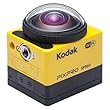
Next coming in at a bit depth of 4 pixels is the Kodak SP360. Priced at $300.00 it may look like an interesting tool to add to ones cinematic arsenal. It also looks like a muffin from the future which is all I've every wanted from a camera.

There are a few more interesting models I've found that I won't go into detail on , but I will say this: The death of the frame is neigh all hail the future muffin.


Thursday, September 17, 2015

The Perfect Guy: My first impression

Over the weekend I was persuaded by my friends to go see the film, The Perfect Guy. I was hesitant because I know how cliched these films can get, but I am a fan of Michael Ealy and Morris Chestnut! The film follows the traditional plot of a woman who breaks up with her longtime boyfriend Dave (played by Morris Chestnut), and ends up dating another man (Ealy) that seems all too good to be true. The film had a lot of promotion and I was a little surprised to see that it was rated PG-13, but then again that does explain the minimum amount of sex scenes and foul language. However, I have very mix feelings about this film.

The Bad
  • Extremely cliche and no originality or plot twist. 
    • If I fell asleep during the movie I would still know everything that happened when i woke up. 
    • Predictable climax
  • Time
    • The beginning of the movie was extremely fast paced, I wasn't able to connect with the characters or even establish an understanding of any of the relationships. 
    • The ending was too dragged out, for better words, Carter (played by Michael Ealy) could have died a lot faster, and didn't need all the suspense or hype.
  • The feeling of "I've seen this movie before..."
    • Enough starring Jennifer Lopez and directed by Michael Apted
    • Obsession directed by Brian De Palma
The Good
  • Empowered heroine, with no need of rescue
    • I appreciated that for once in a thriller the men did not do the saving, in fact it was interesting that both males died as a result of loving this woman. 
  • Cinematography
    • One thing that struck me from the beginning was how well the cinematography in the film was. It was extremely good looking and Peter Simonite (cinematographer) did a great job at highlighting the casts dark skin tones without creating shadows, even in night scenes.

  • Wardrobe 
    • deserves a credit as well because they dressed their cast in suitable colors that weren't outrageously bright or dark. The lightening has to thank wardrobe for making there job slightly easier.  
  • Casting
    • Michael Ealy (Carter) was so calm and poised throughout the film that it made him scary. To physically know how dangerous he is throughout the film and to visually witness him be calm, and tactical is enough to sends chills down your spine. So for that performance he definitely deserves credit. 
    • Sanaa Lathan (Leah) had attitude and never backed down throughout the film, I believe she embodied the character fully and may have possible recognized a familiar personality trait she and her character possessed.

Once again this film may have been cliche but it was shot beautifully.

Post Research... 

I came across an interesting article by Clayton Dillard about The Perfect Guy that really resonated with me. I do agree with the article in the essence that this film has illusions to film history(i.e. Birth of A Nation), and makes an extremely risky but daring argument- I appreciate that.  The argument is interesting and for the most part I believe of it to be true. And if the allegations that Dillard is making are true, then I commend the director David M. Rosenthal and writer Tyger Williams on creating a film that was so creative in the way they sent a message to the audience. 

Friday, September 4, 2015

If it's in the Frame, or a music hook, there is no escaping The Babadook

I've been doing a fair bit of research on horror films since I've started writing the screenplay for "Fallen Angel". Primarily watching for the atmospheric elements that pull viewers from their seats and into the cinematic clutches of the spook at hand.

I started my research by putting on Netflix and watching a film that I've had on my list for some time now "The Babadook"
Now I won't spoil anything here because it's a film that I really would highly recommend watching, but for the purposes of this post I will be pulling a few frames from various parts of the film to help me illustrate my point so if you'd rather go into the film fresh then feel free to scroll on.

Now for a little background "The Babadook" is an Australian horror/thriller in which a hardworking widow unknowingly incurs the wrath of a malevolent demon known only as "The Babadook". Throughout the film we see out hero Amelia try, and occasionally fail to keep herself from losing her mind under the stress of being a single working mother as well as the target of supernatural attacks. The story alone is really well designed but where the movie really succeeded, at least in my opinion, was in cultivating a sense of helplessness especially through it's cinematography.

Helplessness
First of all the movie shows us outright the face of our shadowy assailant:

And quite a face it is. The Babadook is not an entity that wants to be seen, rather it hides in the shadows and seeps into our psyche when we are most vulnerable. Throughout the film we see the scene illustrated above play out for us over and over.
It's dark, we are alone, and our attacker could literally come from anywhere.

If you're interested in watching the film you can find it on Netflix, or through a couple of risky stream sites online. I'd advise paying special attention to the way the babadook forces a divide between the mother and her child. There are a lot of really well thought out parallels between the Mother and the Monster that I caught, and I definitely think It's a film that requires multiple viewings to fully appreciate.

Friday, August 28, 2015

It's only after we've lost everything that we're free to do anything.

For about seven years now, my all time favorite movie has been Fight Club by the amazing director, David Fincher. From the perfected cinematography to the phenomenal acting, there are too many good things to say about it. Here is a list of why Fight Club is one of the best movies of all time:

1.     Perfected cinematography
Fight Club is probably one of the cleanest films I know. Every shot and every cut is completely intentional and flawless. Shots are well composed following the rule of thirds with a variety of angles and perspectives.


2.     Phenomenal acting
We all know that Brad Pitt is one of the most well known actors out there but his relationship to Edward Norton in this film is one-of-a-kind. Seeing the narrator’s bland personality next to Tyler Durden’s rebellious charisma is a groundbreaking performance. Not to mention the animated presentation we get from Helena Bonham Carter as Marla Singer, the two main characters’ love interest.  


3.     Insightful and thought-provoking quotes
The quotes from this movie are ones that really tend to stick with you. Tyler Durden doesn’t want to waste a second of his life away, so the words that come from his mouth are quite powerful. Here is one of my favorite examples: “You're not your job. You're not how much money you have in the bank. You're not the car you drive. You're not the contents of your wallet. You're not your fucking khakis. You're the all-singing, all-dancing crap of the world.”

4.      Subliminal messaging
There are a lot of interesting facts about this movie that many people are unaware of. For example, throughout the entire film, there is a flash frame of Tyler Durden on the screen four times before we actually meet his character.

5.     Ominous coloring and lighting
Last but not least, one of my favorite things about this film is the coloring and lighting. It is tinted blue throughout giving it an ominous effect and the lighting within every shot amplifies what’s happening.


Overall this is an amazing film. I highly recommend seeing it multiple times. Every time you watch, I guarantee you will notice something new that you never did before. It’s a movie full of surprises.

Friday, October 17, 2014

9 Tips For Cinematography And 1 Guy That Cares too Much About His Film "Drinking Games"

A man by the name of Ryan Gielen has released a series of videos made for directors and cinematographers that are filmmaking on a budget. Most of his advice just covers how to accomplish some cheap tricks, but many of them are effective cheap tricks. Anyone involved with how the camera should move and shoot it's surroundings should probably watch at least a few of these videos. There are several episodes with a wide range of content (Although he never fails to mention his fantastic film – "Drinking Games). Not all of these videos will be useful to everyone, but I've posted all nine episodes here because chances are everyone will find a different video the most useful.


What these videos ultimately show, and has been shown many times before, is that quality filmmaking does not require an extensive budget. Shooting in a dorm room, although not the most aesthetically pleasing place, does not doom your film. Effective tricks like the one in the final video can quickly change the dynamics and feel of a film. 

Friday, September 12, 2014

The Grand Budapest Hotel


I recently watched Wes Anderson’s film The Grand Budapest Hotel. It tells the advendtures of Gustave, a legendary concierge and Zero Moustafa the lobby boy who becomes his most trusted friend.


I thought it was very interesting and extremely well made. Wes Anderson’s films are known for their distinctive visual and narrative style. After watching this movie I can understand why. Every aspect of the film was planned and executed in a very specific manner. There are some great camera angles and very elaborate sets. I’ve never seen a movie with such precise camera movements. I didn’t really care for the story but the cinematography made the movie, at least for me. The movie could be paused at any point and each frame would look amazing. Every single frame is a mesmerizing and stunning composition of colors and textures. The constant flowing camera movements make you feel like you’re swimming through the hotel.  Basically, I just think it is a brilliant movie and everyone should see it.

Monday, September 8, 2014

Innovation in cinematography

In the past, cinema used to be a very small form of entertainment. It used to be that only people who have experience and access to video cameras, could be cinematographers. In addition, the only way to share those videos would be through the screens at movie theaters or on the televisions at home. As of now, that preconception of cinema is a thing of the past. Anyone and everyone can become a cinematographer thanks to the availability of high definition cameras followed by using the internet to share their videos with anyone, at anytime, anywhere in the world.
Take the GoPro camera for example. GoPro is an american corporation that manufactures high definition cameras that are durable enough to be used for extreme action cinematography. This camera alone has captured some of the most breathtaking videos anyone has ever seen.
 
Because the GoPro camera is so small, users can strap the camera onto themselves and put the viewer of video in their shoes. For example, this video puts you in the driver's seat of this BMX rider. When watching this you feel like you're riding this bike down this treacherous hill. This is called a Point Of View shot or (POV). GoPro was made for this kind of shot. 
 
Breathtaking, huh? 
Without the technology of the small GoPro camera, this stunt would be next to impossible to do with a larger camera (Think of trying to do this with an FS100 camera). Without the BMX rider being the videographer, we wouldn't have been able to get this thrilling footage. And without the help of Youtube, we as viewers would have never been able to experience something quite like this unless we did the riding ourselves. Do I have any takers to do this stunt to experience the real thing?............Didn't think so.   
My main point of this post is if it weren't for the innovations in camera technology, our cinematic experiences would be very limited. If it weren't for the innovations in cinematography, we'd still be getting our cinematic experiences through the movie theaters or the televisions in our homes.Where else would you be able to experience riding that bike in the previous video if it weren't for the BMX rider who strapped a GoPro to his helmet to give us this great POV footage? I believe cinematography is changing from something that was once so small into something so universal.  


Friday, August 29, 2014

Chris Knight's Photography Stuff Article

First, hats off to Chris Knight for writing in two fairly easy to read articles about a bunch of concepts I've been struggling to grasp for something like three years of college in an easy to digest way. Takes skill to right about all this in an articulate way that isn't dizzying to read.

He started off strong by making it clear that these are NOT rules. I mean, yes, they are, but they don't determine what makes an image resonate. Photos have to have a core to them that is worth building upon for any of these guides and tricks to mean anything. I can compose a perfectly lit pile of dog poop that abides by every single one of these rules, even some fancy use of negative space, and it would still just be dog poop. That is the most important thing to take away from this article. We're all in an institution of learning. Going in, we assume that whatever we're taking away from all this is what we'll live by day in day out. These rules MUST be binding and exact, telling, if we're paying $50,000 a year for them. This is what leads a young 20 something coming out of film school to hate Spider-Man 2 because "they didn't like the lighting." It's a real corrosive and limiting mindset and I'm glad that Chris immediately did away with it before diving deep into the article.

On the actual principles themselves? Man this was fantastic. Aside from a few instances (He just defined the golden ratio and then gave no explanation at all of how to use it, what it means or how not using it could be powerful and that was infuuuuriating. He was similarly withholding on Sinister and Baroque lines.), Chris both teaches what and how. WHAT Chiaroscuro is and why it's evocative, HOW to use complementary colors and why it can be meaningful, WHY symmetrical compositions can be both empowering and damaging to a shot. If he went a bit deeper on a few of these I would have been happy but overall he handled all these very well.

Perhaps the principle that interests me most of the lot is negative space. Just the way the mind works in that regard, where the focus of the shot isn't really the point of the shot and yet at the same time without it it would not be nearly as powerful, is really interesting. I just want to figure out the variety of ways I could use this to find some differing understandings of a scene. The idea of symmetry also interests me. What makes a good shot of symmetry stand out and what makes a bad one bore you to your iPhone. These subtle little nuances are the kind of tool I want ready at disposal in my brain to bring life to whatever I'm working on. Not the sort of thing I remember I can use but that I know on instinct to do. I suppose that'll only come from constantly employing them but reading stuff like this is the first step.

Thursday, August 28, 2014

First Reading Assignment Response

Chris Knight explains that composition is "Perhaps one of the most important parts of photography." Composition is how a photographer or filmmaker sees what he or she will be using for their project. If you can understand what good composition is, you'll know how to produce great photos or films.  Knight explains that there are multiple aspects of Composition including, Center Composition, The Rule of 3rd's, Golden Triangles, Diagonals, and Golden Ratios.
 
Center composition was as easy as it could get when it came to understanding the concept. Whatever object is in the center of your frame, that will be exactly where the viewer's eye will go. Thanks to the imaginary lines drawn in the Wes Anderson highlight reel, you are automatically drawn into the center of the frame more than you normally would.  When done properly, center composition can give a photo or film perfect symmetry, which for most of us is very, very aesthetically pleasing to the eye. "Symmetry creates equilibrium in an image."

The rule of thirds is another easy concept Knight explained very well. I think that the rule of thirds is the most important rule to composition. Without it, I don't think that you can properly frame an image. The rule of thirds has become so essential, you can't pick up a camera without seeing the rule of thirds lines on the viewfinder. Much like center composition, it makes images aesthetically pleasing to the eye.

Different from center composition and the rule of thirds, gold triangles allow photographers and cinematographers to make images seem off. Knight explains that where the lines intersect are where the viewer's eye are supposed to be drawn to. However, in the Eiffel Tower photo the photo is off centered. So could this mean that the lines could intersect somewhere else on the photo? Who's to say everyone will draw the same lines that will intersect in the exact same spot?

Diagonals I thought of as a tool to help viewers find the center of the composition.  However, Knight's explanation was a little off when he said that the viewer's eye will directly go to the ballerina dancer facing us. I understand that because she is facing us we as viewers might see her first but, isn't there a possibility that the viewers eye might be drawn to somewhere else. Perhaps the viewer might be looking at the center pillar first, or another dancer?

Lastly, golden ratios I found to be the most interesting of the composition aspect. Using mathematics to frame an image I found to be fascinating. Now if I wasn't a Park School student, I might be better at math and could potentially be a better photographer.

Aside from Knight's explanation of the aspects of composition there were some things he said that really stuck with me after reading these two articles. Knight said, "One of the best things a photographer can do is study painting and art history. Studying great painters is key to expert composition." What better way to understand the aspects of composition than to learn it from the people who first used proper composition in their work?

Another thing Knight wrote about that really stuck with me was his section about framing. Knight said, "Frame can add context, meaning or depth to a photo." Framing has such an important impact on an image. What a photographer or cinematographer decides to do with the frame can drastically change what a viewer might see or think about an image.  
-Patrick Ring

Sunday, December 8, 2013

The Painted Veil


The Painted Veil


The Painted Veil is one of my favorite movies due to its beautiful cinematography, directing, acting and  dialogue.The Painted Veil is a love story set in the 1920s that tells the story of a young English couple, Walter, a middle class doctor and Kitty, an upper-class woman, who get married for the wrong reasons and relocate to Shanghai, where she falls in love with someone else. When he uncovers her infidelity, in an act of vengeance, he accepts a job in a remote village in China ravaged by a deadly epidemic, and takes her along. Their journey brings meaning to their relationship and gives them purpose in one of the most remote and beautiful places on earth.


This film was going to be hard to film, as the production crew wanted the film to look distinctly Chinese. They had many barriers when it came to finding a place in China to shoot. As one author quoted from the director of the film, John Curran, "Location scouts covered nearly 5,000 miles all over China in about ten days looking for an area that had an ancient town in close proximity to a river and mountains. The location also had to be near modern facilities that could house cast and crew and support a production office. The scouts looked around Hunan, but settled on Guangxi Province in Southern China. “The production was centered in Gui Lin, a city in Guangxi, because we felt the area and its mountains created the right mood,” says Curran. Gui Lin, one of China’s most picturesque cities, sits along the Li River and is surrounded by majestic, verdant hills." 


This film is one of my favorites and it has such an enticing story line that is unique and inspiring. The musical score in this movie is outstanding and very beautiful. It is haunting and evokes emotion from the viewer. This movie deals with a cholera outbreak in China and it is devastating to see the people of this poor town die such a horrible death. These scenes were difficult to watch, but they were tastefully done.

 I would definitely recommend seeing this film due to the jaw dropping cinematography and the high value of production. 

Here is the trailer: