Showing posts with label production. Show all posts

Thursday, November 19, 2015

Sound Workshop

SOUND WORKSHOP 

by Josh Tomany

     I went to the sound workshop this past Sunday and I do not regret it. Even though sound isn't necessarily the field that I want to go into it is extremely important to understand it and to make sure everything is being done in a film to produce the best sound possible. What I learned from these professionals in the four hours I was there I will surely carry with me into future projects and hopefully have future connections in the industry.  
     One thing that I need to say is that the turnout was a blessing and a curse. I understand that it was Cortaca but the lack of people was truly disappointing especially knowing how much effort and time it was to get some of these working professionals to talk to us. That being said I will say that having as many professionals as students there made it an extremely hands on and personal experience, and I think the speakers were more candid and open with us then if it was a lecture type presentation. After the Q&A type portion of the group we split up into even smaller groups, some going to post sound and some going to locations sound. Knowing the challenges and experiencing first hand the devastating feeling of bad location sound I chose to go to that one to benefit myself and my future projects. Fo those who couldn't make it here are some things I gathered from the workshop in general.

1) NYC is a freelance city
2) The industry is often "Quantity over Quality" and the turnaround is extremely tight especially in Network television. 
3) Attitude, timeliness, connections, be fast, develop self discipline
4) The importance of the Union and how and why to join. 
5) Think about the environment you thrive in when picking a job to do. 
6) LISTEN

     Obviously there are many specific tricks I gained especially in the location sound portion but learning about the environment of NYC was really helpful. I didn't know if NYC would be a place I could work in and I always dreamed of LA but now I am definitely considering it an option , and seems more appealing when I consider other factors in my life. It was also really helpful after and in-between moments of "learning" to just talk with the people about the industry in general and what it's like working in the field and how to make it as a human being who wants to make a living and also live. Very helpful, and couldn't be happier that I chose to go. 


Tuesday, November 17, 2015

Some sound speed on a Saturday

I am a firm believer in that every choice you make affects the path your life will take. I sat in my bed Friday night thinking of what I wanted out of the weekend. I knew that we would be shooting the Stopover City title sequence and scootering pickups most of Sunday, and also had my 10 AM-noon WICB Best of Broadway show before all of that. So basically Saturday was my only time off; therefore I had a choice to make about how to spend my Saturday; I could either:

a.     go to the Cortaca football game and have a mediocre time whilst freezing my butt off.
b.     sleep in and regain some strength lost from overworking the whole week.
c.      attend the sound workshop held by multiple Ithaca alumni and professionals in the field.

After a fair amount of late night internal debate, I decided to attend the sound workshop. I reasoned that there are a ton of opportunities to sleep and have fun with friends, but it’s not everyday that professional location & post sound mixers come in to talk with students freely (it literally only happens once a semester). I also don’t know a ton about on-location sound mixing but would really like to improve in case I ever needed to do emergency sound mixing for a film.

So I woke up the next morning (at 7:30 AM because my roommates were blasting music in preparation for the game, *sigh*) and made my way over to Park to learn! I thought I would experience some fear of missing out (aka FOMO) but the workshop was so interesting that I forgot all about the other potential plans I had.

The workshop began with the sound mixers in a panel discussion, including both location and post-sound mixers. They spoke not only of the sound industry, but also of the overall tv/film industry workflow. The panelists had a lot of very helpful/inspirational things to say—some of which I wrote down in my handy-dandy notepad. Here’s a few pieces of advice they gave (all 8 of) us:

-it’s really important to invest in your own equipment—that way you get more practice with the equipment.
-(more audio-concentrated but) know signal flow; that helps you troubleshoot a live recording session if something isn’t working
-learn how to manipulate mics
-“it’s all about listening”
-the turnaround is a lot faster in television than in TV.
-fast problem solving is the key to making yourself irreplaceable
-if & when you’re a freelancer, you have to be accountable for yourself
-figure out what type of work you thrive in and what works for your personality*

*I found this piece of advice most significant for people of all concentrations. I am still unsure of where my “calling” is in the industry based on my personality. On the one hand I love doing art department but it is extremely difficult with little to no budget, and I am not interested in producing because I don’t enjoy bossing people around. Location sound is not something I’d like to pursue as a career but I would definitely like to get a better handle on it so I could run sound on a future documentary passion project(?). I am getting quite off topic, but that’s how most of these posts go.


the 1 picture I sniped: mama & baby mixer--SO CUTE
After the panel, we split off into location and post-sound mixing. Four people (including myself) meandered off to 269 for the location sound where Jeff Pullman and David Rosenberg worked with us on refining skills such as boom and lavaliere placement, in addition to little tips and tricks in making our location mix the best it could be. While most of the mixing stuff went right over my head, it was extremely helpful to learn about the microphone manipulation tips. It definitely inspired me to refresh on the pickup patterns of different mics to be better prepared for shoots. At the end of the workshop Jeff generously offered for any of us to shadow him on Madame Secretary in the Big Apple, which I will definitely do (hopefully) over winter break.

Overall, it was a very intriguing workshop and I feel that it was time very well spent.

Monday, November 9, 2015

Keep Calm and Let the AD Tell You About How Stressed He Is

I'm a pessimist. Or maybe a realist. Regardless, I am stressed. Of course the week we have planned to shoot Dollhouse  also turns out to be one of the busiest weeks of my semester. The existing stress of having shooting dates late in the semester is bad enough; throw in some obligations and projects from other classes and top it off with a few tests and my week from hell is in full-swing. Forget about applying for internships for the spring. I'm just trying to survive. 

I am mostly concerned about our shoot running as smoothly as possible; I know things will go wrong, and what is worse is I know I won't be able to predict those things until they happen. As a group we are trying our best to be totally prepared, and we have had a long time in pre-production to get everything ready to go. So far my experiences on set haven't been the best, so even with our extended preparation time I am still anticipating things to  not go exactly as planned. Like Arturo talked about in class today, as the AD it is my job to make sure everything goes smoothly during production, holding each department accountable and making sure everyone is on the ball. 

The shooting schedule we have come up with is very tight, but I am hoping that our work in our long pre-production stage will pay off. There are a number of things swimming around  in my head right know about what COULD go wrong: audio, shot coverage, continuity, etc. The list goes on and on. At some point I guess I just need to trust my fellow group members and know that they will come through in their respective departments. Of course I will be providing oversight on set during the shoot, but I think that there is a fine line between micro-managing- which actually slows down production- and making sure everyone is doing their job (correctly). 


I have never taken on the role of Assistant Director before. I'm a little intimidated, mostly because we are shooting so late in the semester. We will have adequate time in post; I'm fairly confident about that. But we do NOT have time for any major re-shoots or audio issues. I get it, things happen on set that are not always predictable or avoidable. I am prepared to help deal with those issues after we shoot. But I CAN control or prevent any major issues from happening in an effort to make post production go as smoothly as possible. That pressure, however, is leaving me a little stressed and anxious. I don't want to let my group down come shoot days, and I want this project to reflect all the hard work  our members have put into it and finally be something I am proud to put my name on. 


Thursday, November 5, 2015

Looking back, looking forward

Now that we have (basically) wrapped on principal photography for Stopover City I feel a huge weight off my shoulders, and have started functioning like a normal human being again???! Obviously a lot has to be done in post production (our editor already has a rough cut), but I have confidence in my team that everything will be just dandy. Now I can do things again such as: sleep, eat meals, and look ahead to future projects. I had a ton of fun doing developing Stopover, and it has inspired me to start development on my senior thesis which I'd like to create next fall. It's honestly never too early to start pre-production, so why not start now! Pretty recently I decided not to take any production classes in the spring because this semester was so intense--I'll definitely work on other people's films here and there but I need a semester-long breather from production classes. 

Being less stressed has also allowed me to think ahead to future semesters logically--I turned down the offer to produce ICTV's late night show After Hours (which I currently Assistant Produce) because I realized that producing isn't my thing. The upside to turning it down is that I was given the offer to design a new set for the spring semester. Here's the current setup of the show:
It looks nice once cameras are framed up, but the walls are super heavy and those brown beams are literally falling apart and every Tuesday I fear that one of the PA's will get hurt. Fortunately Porn: the Musical is donating 5 of their thin white walls to us, which i can manipulate any way I'd like. I'd personally like to make the set a bit wider, and 86 the bland white walls altogether. It's definitely going to take some time & careful effort to plan, but I'm hella excited to do it.
It definitely won't be as extravagant as Late Night With Jimmy Fallon, but hey, I'll do my best with what I have. 

Tuesday, October 6, 2015

GRRRRRR

Get ready for  A N G R Y   S A M.

Angry Sam
I'm generally a positive person. I'm always looking on the bright side, thinking about what I can learn from a bad situation, or figuring out how I can improve for next time. But there comes a time when a girl's gotta do what a girl's gotta do. And that is cracking the whip on my group for this project.

Normal, happy Sam
Here's the thing: I have producer experience. I think one of my best skills is the ability to communicate with all types of people and make sure they are comfortable, while increasing their productivity as individuals and the entire group as a whole. However, going into this project, I wanted to do something that would force me to learn more about something completely different. I've always been interested in sound (I'm very involved in the FM radio station at Ithaca College, 91.7 WICB-FM) and I know I won't have time for more audio production classes. :( Volunteering to be the sound girl seemed like the obvious choice to solve my problem. I also scared myself even more by joining the group doing a horror film--I can't even count on one hand the number of horror films I've seen. (Currently working on that). But I came to IC to learn and conquer challengers, so that's what I'm going to do.

Now we're at that time in the semester where I feel like everyone has gone from being super motivated about the project to not giving a sh*t about it. This may not be true, and I hope it's not true; yet through the actions of my group members, (or lack of actions) their excitement is no longer being communicated to me. People don't show up to class, the ONE TIME we're all in the same place at the same time. People are not taking the initiative when it comes to their job. People are showing up late to meetings.

IT'S TIME TO GET OUR SH*T TOGETHER, PEOPLE.

It was not my job to apply for a Pendleton Grant, but I thought that having some money to spend on our production and craft services would motivate my group and make them more comfortable when we're on set together for an entire weekend (starvation = bad!!).

I took Fiction Field II because I wanted to produce a film that I would be proud of. I wanted to go to the screening day and sit with my group and watch our film for the probably 200th time and be excited that all our hard work was finally done. I'm getting the feeling that this may not happen at all, and I'm not the type of person to just say "Ah, well. Whatever." and give up. I cannot do that. I'm gonna whip my group into shape, even if I end up as co-producer.

If any members of my group are reading this, I'm not trying to start a fight with you. I'm trying to get us to work together more quickly and efficiently. We only have nine and a half weeks to produce our film. It's time to step it up.

Tuesday, September 29, 2015

A Closer Look at the AD Position

After realizing and accepting my hyper-organizational tendencies last week, I realized that there are certain positions on a production that utilize these skills more often than others. As I previously mentioned, I will be working as the Assistant Director for our production of Doll House. In class Arturo challenged me to learn more about the AD position and think critically about how I could possibly apply my skill set to this position as I try it for the first time. After looking into it a bit, this is what I found. 

One of the primary duties of an AD  is maintaining order on set. This means tracking the daily progress of the production against the overall production schedule. It is imperative for the AD to stay organized and on task, they are essential to keep the shoot running smoothly. An unorganized or uninformed AD would slow production and possibly even ruin time sensitive shooting dates. The AD must have a complete understanding of the script breakdown in order to fully follow the production schedule that they help create, making sure that each scene is shot in an order that makes sense logistically. An AD must also be very good at estimating how long a particular scene will take to shoot; depending on the amount of  action or dialogue a scene that is only half a page may take hours to shoot. 

The AD is also responsible for the health and safety of the crew. As Arturo talked about in class, if someone gets hurt on set, it is the AD that will suffer the consequences. This means making sure each department is taking the necessary steps to secure the set, like ensuring that lights are stable and cords are taped down. 


The AD is also responsible for "calling the role" before filming a scene. This entails calling "Quiet on set" followed by "roll sound" and "roll camera." The call for "action" is usually called by the director, but can be called by the AD at the director's preference.

In more complicated productions, there can be many different ADs, creating a hierarchy of sorts whilst dividing up the many managerial duties that occur at any given time during a production. A production could have a First AD, Second AD,  Second Second AD, Third AD,  and Additional AD. I guess they just sort of ran out of creativity there. 

Along with being organized, a good AD needs to be able to communicate to many (all) of the departments on set, and needs to exhibit good leadership skills to keep everything rolling smoothly along. 

While I'm sure my time on set as AD for Doll House will certainly be a learning experience, I do think that I am ready to give this position a shot. It will provide me with an opportunity to really get involved in the production and put my organization skills to the test. I am looking forward to working with all of the departments and seeing how they all come together on set. 

Tuesday, September 22, 2015

Binception: The Post Production Struggle.

I am a very organized person. My room is impeccable, my backpack is laboriously and strategically packed to optimize convenience, my calendar is color-coded, and I always know what is on my schedule for at least the next few days in advance. This organization carries over into my post production work, which is one of the reasons I think I initially gravitated towards the post process. 

I edit out of Premiere, which allows for an immense amount of organization as well as customization. You can arrange the window panels in any conceivable way, customizing the size and location of every window and tool imaginable. and don't even get me started on the bins. I LOVE bins. I have bins for everything. I have bins for my clips. I have bins for my sequences. I have bins for my bins. My Premiere projects are complete Binception.


So far, I have only found use for my obsessive organization within the post production process, however, in this class I am trying to push myself and  be involved more with the pre prodoction and production aspects of our projects. At first I wasn't sure if I could find a role that suited my organizational skill set, however, on Monday we watched a short interview that described the Script Supervisor/Continuity position, and I think I found what I've been looking for. Having never been a script supervisor on a project before, I cannot say whether I would actually  like this position, but just from the short clip we watched, I could see a lot of overlap from my post production skills.

Notes from a 'scripty'


Basically, the script supervisor is responsible for keeping the project alive during the production process, which involves a significant amount of work in pre production through script breakdowns, which ensures that the production, which is often filmed out-of-sequence, always makes verbal and visual sense. It also requires an intense attention to detail, making sure that actors motion and wardrobe stay continuous throughout different shots, ensuring nothing will break the moment of the film. The script supervisor gets to work with many different departments on set, making sure each is doing their job correctly and consistently between takes. 


 That being said, I will be working as the Assistant Director during our project for this class, but I still think my organization and attention to detail will certainly come into play, whether it is from script breakdowns,scheduling, or general on set management. Either way, I am excited to take a step out of the dark editing room and into the light during the production process.

Thursday, August 27, 2015

One Group to Rule them All

I recently returned to the U.S. after studying abroad at the Ithaca College London Center last spring. It was an amazing experience, but I'm glad to be back in Ithaca for an entire year. I'm especially excited to be taking production classes again.

It really has been a while. Usually I try to balance my schedule with half of my classes in Park, and half out of Park. However, there are no production classes offered in London so I can't help but feel a little behind. This summer I interned for the Elvis Duran and the Morning Show and it was awesome, but I wasn't doing video production there either.

Woah. What a crazy flashback.
Arturo said we could choose our own groups or work in one huge group and I immediately had a flash back to when I took Fiction Field I last fall.

~It was a dark and stormy night~

Kidding. It was probably 2:00 in the afternoon and there were no windows in the classroom so I have no idea what the weather was like. Anyway, for our final project (we only did two projects total) we divided ourselves into three groups. At first, each group was super motivated. But then came The Dark Days.


#tbt to when we pulled our hair out. <3

Okay. I know that I'm being dramatic, but the fact of the matter is, even a short film (one that is ten minutes or less) requires a ton of hard work. When people started feeling the pressure and stress that comes along with a huge project, they would argue, freak out, and soon we were all on the verge of pulling out our own hair as well as every other group member's hair.

It was extremely difficult and when we eventually screened our projects in class, I didn't feel like it was my best work. I had this feeling of "well this is the best we could do given the circumstances." I don't want to have that feeling. That feeling is the worst feeling.

Arturo said we could work in one huge group. I don't know if it's this one experience or just a feeling in my gut, but something is telling me that one group might be the best option for all of us.


Yes, actually.
Pre-production, production, and post-production groups could work together and independently, potentially eliminating the need for all of us to meet at the same time. There would also be no need to run around Park, trying to fill crew positions if everyone has a specific job. For those of you in my class, please just consider it for a day. You know, let it marinate in your brain.

Obviously, this will take one great idea that everyone can get behind and coming up with said idea might be the hardest part of all. Yet I have confidence that if we combine our skills, we can make something truly spectacular.


Perhaps, as Arturo said, something that can be submitted to festivals.


Tips for set PA's on professional shoots

During my summer in Ithaca I was given the chance to be a production assistant on a documentary in Watkins Glen. This was the first time I had ever been on a shoot with a professional/adult/small crew, and in the period I worked with them I learned a lot of valuable lessons. Since the other crew members were all adult, very experienced, and from NYC, there was a large amount of pressure for me to do well in my few days there. So here are my ten helpful tips to follow when you are a production assistant (some of these specific to documentary, but most are malleable to any set).

1. Bring a pocket-sized notebook and a pencil.

People on the crew will ask you to do tasks for them, so write the instruction down so they don't have to repeat themselves in 5 minutes. This was especially helpful when the sound recordist needed someone to log timecodes for really good sound bytes.

2. Acquire a fanny pack. Fill the fanny pack. Wear the fanny pack (with pride).

Even though it ~screams~ "the 90's are alive!!!!" I am a big fan of fanny packs. Pockets in shorts are too small, and purses are too clunky, especially when you're running around a church/huge farmer's market. I wore a smaller one under my tshirt and placed a notebook, pencil, and business cards inside just in case anyone was curious about our film.

3. Always have some sort of snack on hand.

We're only human. And when humans get hungry, they don't perform as well. Keep a small, quick snack in your bag (see previous tip for bag alternatives) in case you become so ravenous that you may pass out.

4. Set legs!!!!! 

Especially with documentaries, you can't re-do a take. Sometimes you only have one chance to get that perfect shot or get the good sound byte. So if the sound recordist's needs you to get another memory card, you run like the wind and hope nothing amazing happens in the time spent running back to the car.

5. Wear sunscreen. 

This is more of a summer shoot tip, but I know people that have gotten burnt on set in the middle of March. The sun is stronger than you think! The worst sunburn I got all summer was on set because I was a silly goon who didn't think to wear sunscreen. Lather it on before you leave in the morning because you never know where your doc subjects may take you.

6. If you're early you're on time, if you're on time, you're late.

I made sure to show up at least 20 minutes early each day just in case the crew needed anything extra before we started filming. It's just a good habit to get into--producers will see that you're responsible, and will want to hire you again. Even if the crew isn't ready it will give you time to wake up and/or get into the mind set of filming.

7. Don't trust the internet - print out directions as well!

There were points in my drive that my phone's signal came in and out, and if I had not printed the directions beforehand, I would have been quite screwed. Use google maps, mapquest, or even one of those maps you can get at AAA. Just have some sort of back up for your phone!

8. Keep a case of water in your vehicle. 

On a hot summer's day when you're running around like a chicken with their head cut off, it's easy to get dehydrated. Some may say, 'hey, it's all for the craft!' but who wants to spend the following days feeling ill? So I got one of those 24 water bottle packs from the store just in case any of the crew got thirsty. And, when the producer asked me to go fetch a large pack of water from the store she was thrilled to hear I already got one!

9. Go with the flow.

At around 9 PM on the night before I was needed on set I got an email from the producer asking if I knew where to purchase a free range chicken in the area. After a few minutes of confusion, followed by rushed internet searches and calls to the local organic market I went on my quest to find the free range chicken. I finally acquired one and then brought that tiny, organic chicken over to Watkins Glen and they were very happy to receive it. They hired me to work for them so of course I would go to the trouble of finding it. Basically, do what they tell you to do no matter how random and confusing it is.

10. Have fun!

Being the set PA can definitely be tough, but it is so worth it because you learn little tricks on how a professional production process works. Most crew members are also really interesting to talk to and can give helpful advice on where to take your career. Really take any opportunity that comes your way, because you never know where it might lead you!

These are just my tips from personal experience, but there's more great sites that give you additional advice!

Wednesday, December 3, 2014

Teaching Filmmaking for Dummies!

It's finally here. After three consecutive semesters of blog posts, this is my final post. First Fiction Field Production 1, then Motion Graphics & Animation, and now Fiction Field Production 2, my journey is finally coming to an end. It's not that I haven't enjoyed writing dozens of posts about the fascinating things we all ought to know about the film industry--I have, mostly--but, nonetheless, every good thing must come to an end. That's why deciding what to write for my last post was such an easy decision. What's the point of it all? Why are we even here? The answer is simple: we want to make the best films we possibly can.

I've spent the last few months informing you all about the responsibilities of each and every one of the most prominent positions on a film crew. That's great and all, but what about those of you who don't quite know what you want to do with your life? What about those of you, like myself, who are still learning the basics of filmmaking? Don't fret! Because this week, I'll be focusing on Teaching Filmmaking for Dummies!


Everyone has had good teachers, professors, and mentors. Everyone has had bad ones as well. When it comes to filmmaking, there are very precise guidelines a teacher must follow to be good. Their methods may differ immensely, but the range of information must always be the same. Thankfully, it's only taken me three semesters to realize this. Here we go...

Preproduction.
It's easy enough, isn't it? Nope. Writing a script. Creating a production schedule. Finding a crew. Visualizing the film's look. Finding and securing locations. Casting actors. Putting together the production design. Making a floorplan. Breaking down the script. Creating the storyboards. Making a shooting schedule. And that's it! I'm joking. That's a lot of stuff to get done in a reasonably short amount of time, so you've better do it right the first time. A good teacher (I say teacher because a person who furthers your knowledge doesn't necessarily have to be a professor) will help their students understand the importance of this preparation, and the students will usually ignore the teacher's recommendations and consequently realize its importance after they fail to give it the proper attention. A good teacher will say "oh well, hopefully you'll do better next time." And they'll tell you how to do better next time.

Production.
The concept is easy enough to understand. It's the part of the filmmaking process when you actually make the film. It's when all of your preparation pays off and you finally see your baby coming to life. Depending on the level of preparation, this step of the process can either go smoothly (or as smoothly as possible) or terribly. While things such as lighting and shot listing are often not prepared properly in student film productions, a good teacher will give you the knowledge to think on the fly. They will pass on all the information they posses on lighting, blocking, directing, shooting, etc. If they do a good enough job (and if you're paying enough attention), you'll have no problem having a good shoot despite your ill-preparation. A good teacher will make sure you know how to light a scene to give it the proper look. They'll teach you to frame a shot so that everything has meaning and nothing is where it shouldn't be.

Postproduction.
We finally get to the part of the process when everything starts coming together. You take the "what the heck are we gonna do with this" and make it into the "I can't believe we made this." A good film teacher will make sure of this. They'll teach you the importance of coloring, sound, and each and every edit. After learning from this person, you'll comprehend the meaning of each of these aspects and how the slight alteration of just one of them can change the entire meaning of a scene. Most importantly, as a wise man once said, "Cut, cut, cut, cut, cut." What he meant by this is that anything that's not of absolute importance to the film should not be there. If it doesn't contribute to the progression of the story, get rid of it. Even when you think something may be important, try taking it out and see if the story changes without it. Chances are, it can often be thrown out. The leaner the film, the better it usually ends up being.

"Who could possibly meet these standards? A semester simply isn't enough time to get across all of this information to students without having their heads explode." You're not wrong. Well, not completely, anyway. Students' heads will most definitely explode, but it's more than possible to successfully cram all the necessary information into a short amount of time. Including typical information, a good teacher needs to hold certain characteristics...

Be blunt.
A good teacher won't make their students cry, but they tell them how they feel about the students' work. Nobody wants a film teacher who will coddle them. They'll never learn that way. They tell students what they did wrong and how they can fix it. How else will they learn?

Be demanding.
Set high standards. If a teacher expects a lot out of their students or protégés, the students will give better work. Nothing will hurt students more than low expectations, because they'll have nothing to aim for. Students don't want to disappoint their teachers, so they will try to meet those high expectations.

Be inspirational.
The hardest working students are the most inspired students. Fact. The most inspired students come from teachers who connect with them and who explain how their success began right where they are. Those who believe they can achieve success, will.


"Ok, this is simply ridiculous. How can you be blunt, demanding, and inspirational?" Well, I'm not the one to ask. It's a tricky equation that somehow makes total sense. If you'd really like to understand, I recommend you take a class with Arturo Sinclair. In the past year of my life, I've learned more about filmmaking than I ever imagined learning over the entire course of my college career. For that, I say 'thank you', Arturo. Thank you for [attempting] to teach me everything you know. Thank you for teaching me to think [way] outside the box. Most importantly, thank you for always having faith in me. I can't wait to put all the knowledge you've given me to work. After everything, one thing's for certain: you're certainly no dummy, Arturo.

Tuesday, October 28, 2014

Feeding the Crew for Dummies

FOOD.
Great! Now that I have your attention, I'd like to discuss an important matter with you all. For years, film crews have been going hunger. Whether they're not being properly fed on set or if they simply forgot their granola bar at home as they were running out the door to make call time, film crew members are hungry. Heck, I'm hungry right now! Imagine how the people working feel! With the poor, malnourished souls in mind, I think it's time. It's time to learn how to feed these hard workers. It's time to learn how to keep your crew happy. It's time for "Feeding the Crew for Dummies!"

Now, everyone knows that a person with a full stomach is a happy person. It's a fact of life. If you don't agree with me, get out. Leave. Don't ever come back here again. If you do agree with me, or if you simply don't care enough to leave, then join me as we explore the inner workings of the film food business. Essentially, the business includes three branches: craft services, caterers, and food stylists. These wonderful people have a lot on their plate...get it? Let's see what their exact responsibilities are...

Craft Services.
Sounds simple enough, right? Craft services, which is a separate entity from catering, encompasses all of the wonderfully assorted snacks and beverages provided to the film crew. The godsend in charge of craft service sets and maintains a station near the production that makes these snacks and beverages available to all the hardworking folk on the crew. A budget is given to the craft service person prior to attaining all the refreshments. I guess Costco just isn't good enough for some people. Personally, I'd be fine with some Cheez-Its and juice boxes.

Caterers.
The caterer takes care of the main meals for a production. While craft services prepares the snacks, the caterer plans, organizes, and prepares all the substantial nourishment for everyone. Having a caterer on location is a serious convenience. On one hand, the crew can be more efficient. The food is right there for them to grab on a thirty-minute lunch break. On the other hand, you save extremely valuable production time and money without the need to transport the crew to and from meals. Caterers have been known to serve small crews from ten people to enormous crews of hundreds of people. "But what can I eat? I'm vegan?" "What about me? I can't eat gluten!" No worries! These are fairly common requests for production caterers. They'll cater to your personal needs! (I'm on fire today with these puns).

Food Stylists.
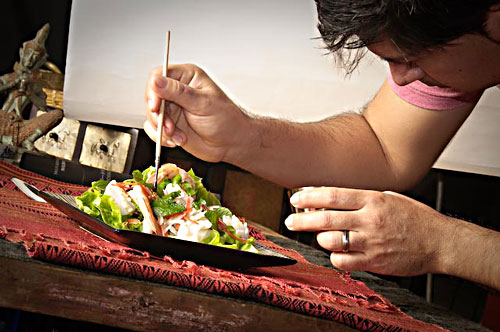
But what if you want your food to look nice? Let's be honest, we ALL want our food to look as good as it [hopefully] tastes. This is where the food stylist comes in. Their job is to prepare and arrange food in a particularly appealing way. They typically have an extensive background in cooking, recipe development, and the ability to make food look its best. Oh yeah, I almost forgot to tell you that the food stylist doesn't actually help out the crew. Not really, anyway. Their job is aimed at food used in photographs, commercials, or movies. So they're making sure the food looks good on camera, not on your plate. Sorry I didn't mention that sooner.

It's often a crew member's first question when walking on set (or at least it's mine) to ask what's being served for lunch. It turns out that it's not actually the producers' job to take care of it, although that's how we've been doing it on our student films. Food service workers are, in my personal opinion, some of the most spectacular people on a production. And if you don't agree with that, well, you can just keep that to yourself.

Monday, October 13, 2014

Director of Photography-ing(?) FOR DUMMIES

Oh hello there. Didn't see you there. No, don't go! As long as I have you here, we have a very important matter to discuss. For centuries (or at least for a little while), there has been a daunting question on people's minds. What exactly does a Director of Photography (or cinematographer) do for a film production? Hmph, that's certainly a tough question. Let's go to the expert to try to find an answer to this inquiry.
...

What's up, guys?! You know me. I'm that guy. From that thing. You know, that thing? No? Ah well, might as well just give you what you came here for. So you want to know what a director of photography does, huh? Well you're in luck! It's time for this week's "...FOR DUMMIES!"


Like quite a few other crew positions (Producer, Director, etc.) the director of photography's (or DP for short) job stretches out over all three stages of production: preproduction, production, and postproduction. They really don't get any sleep, but who needs sleep?! Let me break it down for you.

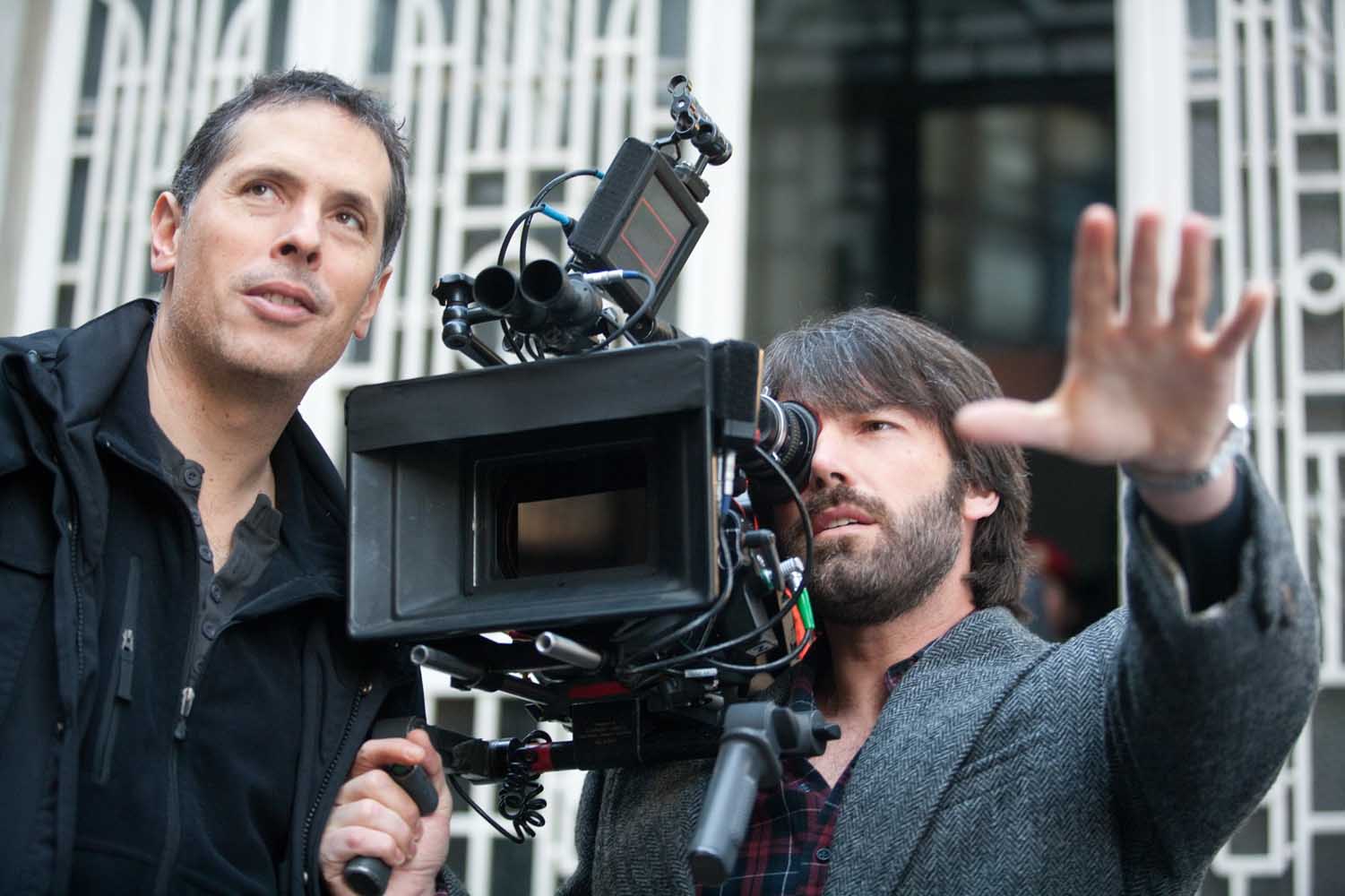
Obviously, we start with preproduction. Duh. The DP begins his/her job with discussing the director's vision for the overall film as well as scene by scene. Based on what the director is looking for, the DP determines what exactly is needed for each scene, and, following that, hires a camera crew and organizes and purchases any equipment and supplies that will be needed. When deciding what's needed for each scene, the DP works with many other departments--including sound and lighting--to coordinate production needs. In summary, the DP uses his preproduction time very wisely. He pretty much plans out every shot and gets any and all the tools he'll need to acquire these shots.

After many months of planning, the DP's job moves into production. The most essential thing the DP must do during this step of the process is to coordinate the crew while working closely with the director to make sure every scene and shot is set up to match the director's vision. If the director doesn't get what they want, may Hitchcock have mercy on your soul. Here's where the difficult stuff comes in. For each and every shot, the DP must decide on: the best combination of cameras (oh yeah, filters and lenses, too), the placement of the cameras, what the lighting should look like, AND when the best time would be to shoot. On particularly large films, the DP often oversees several cinematographers who supervise different camera set-ups. He often ALSO manages the photography budget, so the DP is kind of like a part-time production accountant.

Finally we come to postproduction (yeah right, we're not done yet). The first step of the third step of the three-step film production process begins with the DP working with the processing lab to make sure the film retains the color and the mood that he and the director were aiming for. If this part of the process gets screwed up, then a big chunk of all the hard work and planning goes right down the drain. The DP also reviews dailies as well as cuts of the film throughout the editing process. It's important for the DP to participate as a critical eye throughout postproduction.

Alongside the film director, the director of photography has some of the most creative control of the entire crew. They decide what we see and how we're going to see it. Often times, the DP is the person who makes a good film into a film that we'll never forget...

Or they can be the person who absolutely ruins it. Either way, they're really important.

Sunday, October 5, 2014

Publicizing for Dummies

Hello ladies and gentlemen. I know this early posting may come as a shock to you all, but this week's schedule is looking a bit random, so I figured I'd enlighten you all tonight! Don't worry, I'd never let anything get between us. Now you may be wondering, how would a series of blog posts become as famous as this? Well, aside from the beautifully written ideas that I've shared with the world, it's been completely due to my Publicist! Not really. But wouldn't you love to know more about publicity? Of course you would!


A production's publicist works alongside some very important people. Specifically, a publicist works closely with the executive producer, director, art director, and publicity designer. They work to promote and, well, publicize the film during every phase of production. From the beginning of preproduction to the end of postproduction, a publicist's job is definitely one of the most vital responsibilities that decides a film's success. If no one knows about it, no one goes to see it. It's as simple as that.

In the simplest form, a publicists job is to advertise the film. This can manifest itself in posters, flyers,
and other promotional advertisements. One of the responsibilities of a publicist is to secure permission for and to supervise the placement of these advertisements. This can include anything from putting up posters in theaters around town to securing radio spots nationally. This is really the most obvious of a publicists responsibilities and it's probably the job that the public notices the most. They just don't usually know who's behind those flashy ads that convince them to see the movies.

The publicist also acts as a liaison with the press. They're to go-to-guy (or girl) when it comes to dealing with the press. It may not be particularly glamorous, but hey, someone's gotta do it. Who knows, the press may be kind of cool when you're not a famous person. Probably not, but maybe. The publicist additionally supervises the generation and distribution of press releases. I'm not totally sure how that's different from the first point in this paragraph, but it was two separate bullet points on this article I'm reading, so it's got to be its own substantial point. Right? Ah, who cares?

The last main responsibility of a film publicist is to assist in fundraising activities. This can involve crowd funding (such as IndieGoGo and GoFundMe) or outreach (begging rich people for money, but with class, of course). The publicist works with the executive producers in this step of their job. So basically they work with rich people to get more money from other rich people. It's actually a pretty ingenious setup if you think about it. It seems to work pretty well, at least.


Without publicists, there would be no films. Well, there would be films, but no one would go to see them, considering no one would know anything about them...or the fact that they exist. So they may as well not exist. That's what publicists are for! (Letting us know what's out there and why we "should" see it.)

Wednesday, October 1, 2014

Script Supervising for Dummies

Welcome back! Don't know how you got here? Don't know why you're here? Me neither! As long as I have you, though, let's discuss a very important matter. Now, I don't know about you, but I've been wondering what a script supervisor does for quite some time. I understood the very basics of the job, but what in the world are the specifics?! I don't know! Or at least I didn't know. Until now! It's "Script Supervising for Dummies!"

What most people already know about being a script supervisor is that they, well, supervise the script. "But what exactly does that entail?" one may ask. The paramount job of a script supervisor is to maintain a daily log of the day's shots and their relation to the script during the production process. They act as the chief continuity person on set and act as the on-set liaison to the postproduction staff.

Essentially, the script supervisor is the editors' best friend. They're practically the only ones on set who have the postproduction staff's best interests at heart. They keep track of every shot and make sure it'll be able to be cut together later in the production process. We love our script supervisors!

Getting a little more into the details of the job, a script supervisor's foremost task is to maintain of log of all shots taken on set. This log has every bit of information an editor could possibly need. It has shot numbers that match up with the script, slated shot numbers, comments from the director or DP (usually explaining important details of what to use/not use), continuity information, the tape/reel number, camera settings, the date and time, production statistics, etc., etc., etc. Any and all questions postproduction staff may have should be answered by this log. If there are any questions left unanswered, the script supervisor didn't do his/her job and will most definitely be fired...ok, maybe not fired, but someone will definitely be slightly upset.

Along with the continuity notes on the shot log, the script supervisor must also have keen eyes on set so as to call out any errors while shooting. This can include anything from an actor's hand movements from shot to shot to a prop placement error. Clearly, they can't interrupt a shot just to point out an error, but instead will relay their notes onto one of the directors so that they can correct them in future takes. To assure for consistent prop/set placement and design from day to day (you never know what fool will decide to move something), the script supervisor cross-references with the continuity stills photographer daily. They need to make sure they'll have easy access to any continuity stills during production so they can quickly double-check anything they need to without costing the production any time.

A script supervisor who's particularly good at their job will most likely have some level of editing experience, or at least a general understanding of how it works. It makes for a much better judge of what can and what cannot be cut together (continuity). Speaking for anyone who's ever worked in postproduction, we love our script supervisors. We really, really do.

Thursday, September 11, 2014

Producing for Dummies

I'd like to state for the record that producing is not actually for dummies. Nor is this an attack on you, Diana. If anything, the dummy in this situation is me. I found myself sitting in my room this afternoon, and the question popped into my head: "What exactly do movie producers do?" So, I did my research and actually found that it's a whole lot more than what I originally thought.

A producer's job begins in preproduction. Psh, I knew that. What I didn't know is that the producer is the person who pretty much gets the project off the ground. First, he (or she, of course) needs to find material for his next project from either a script or a book. Then he needs to get a script in good enough shape to attract the attention of a possible director (and even a studio if a studio wasn't the one who started the project). After that, the producer's job in preproduction is pretty much done. HAH! Yeah, right.


Once the producer has a workable script and a choice of director, all he needs to do is secure financing for the film, choose a director and other members of the creative team, work with the director to cast actors, determine shooting locations and budget, decide on a cinematographer, hire the rest of the production team (including other producers), develop a shooting schedule, and create a detailed plan of action for the entirety of production. PHEW! That's one demanding job! Oh wait, the producer isn't even close to being done.

Time to begin shooting! Now it comes to the actual production; the fun part! Or at least it's fun for some people. Sorry, producer, you're on the clock. Production is when the producer offers creative suggestions to the director, handles any and all problems with the actors and creative staff, monitors the production timetable and budget, and reviews the film shot each day. Essentially, the producer has to watch over everything. If something goes wrong, the producer better find a solution, and fast.


And now it finally reaches postproduction, the time for most people to relax and wait to see what they've worked so hard on for so many months. Postproduction is really only horrible for the editors, sound, and special effects guys, right? Wrong. Believe it or not, the producer's job still isn't done. To begin the final step, the producer sits down with the director over a nice cup of tea and decides the order and selection of scenes that will appear in the final cut of the film. After that, he reviews each cut of the film until it's satisfactory. NOW all the producer's got to do is secure a distributor for the film and review the distributor's advertising campaign. After this, and only after this, is the producer's job finally complete.

Never before today did I truly appreciate the work of producers. I honestly believed they were just the piggybanks of the production team. I know it's difficult to believe, but I was wrong. Oh so wrong. Here's to you, producers!

Monday, September 8, 2014

How to complete a proper equipment checkout

We all for sure will be working with equipment this semester, whether is is checking it out from PPECS, on set, or something else, knowing that the equipment is functioning properly and will continue to function properly is a must.

The first step to ensuring that your equipment won't fail out on you is when you're checking it out. You need to check and set up EVERY piece of equipment you are checking out. This doesn't mean just setting up the camera and turning it on. It means checking every filter and making sure they're all clean and not broken, as well as setting up and fully extending every level on each C-Stand and so on for every piece of equipment.

While this seems like an extremely tedious process, especially when the technicians at PPECS tell you that all the equipment is working properly, mistakes have been made, and they will be made again, and one little mistake may be the difference between getting the shot while still leaving the location by your hard out time. I work at PPECS, and we always check the equipment to the best of our abilities to ensure it will continue working, but sometimes we miss things, or equipment fails suddenly. Another set of eyes, specifically your  own eyes, will help make sure there is no faults.

Upon checkout you can always request an order form with the list of all the equipment you checked out with the specific numbers of each item, which I highly recommend. Give a copy to this list of each department head on your production so during any company moves you can make sure no equipment is left behind.

When checking out equipment to student productions I often notice it is only 1 or 2 people there for checkouts, and most often those are people in positions that won't be working closely with the equipment (director, producer). I strongly encourage productions to bring as many people as they can to PPECS upon time of checkout and checkin, not only to make the process go as fast as possible, but also to get more people to look at the equipment before it goes on set.

At PPECS we have counters lining all of the walls with outlets right on the counter tops. We encourage you to use this space to make checking all of your equipment easier. Checkout is a great time to become more familiar with the equipment you'll be using on set before you have to perform in a high stress environment. If you have any questions about how a piece of gear works or what its function is, I'm sure the counter workers will be more than happy to answer.

Here's a video from David Elkins, author of The Camera Assistant's Manual, on how to prep a camera package.


And always remember to have PPECS number in your phone in case anything goes wrong or you have any questions!

Here it is just in case: (607) 274-3636


*All views and opinions reflected in this blog post are my own and do not reflect the views and opinions of PPECS, it's employees, or any other members associated with PPECS or the Park School of Communications.*

Sunday, December 15, 2013

On To The Next One

We are finally done. This whole semester has been a whirlwind of stress, sleeplessness, and getting equipment from PPECS. However, it has been the best semester of my life. Fiction Field 1 was a completely different world compared to Intro to Field. I went from making 1-3 minute videos to making 20 minute short films in a years time. I learned so much about everything film and media involved this semester and I am so happy for it.

I have always been one to learn from my mistakes and Arturo will definitely make sure you know if you have made a mistake. While during class you are stressing out, waiting for him to call out the next error that will increase the number butterflies flapping in your stomach, afterwards you realize "hey, that was really stupid of me but, I will never make that mistake again, and I'm a better filmmaker because of it."

My editing skills have had the most progression out of all my skills, after major critiques from lots of people I have really started to settle into my editing niche. I just started editing the Fall Semester of my Freshmen year and I have really found a love for it. Actually compiling the story that you captured is a very rewarding experience. I also believe being a good editor will help me down the road with directing films because thinking about post during production is better then fixing something in post.

As a director I really wished I had been more forward with the actors then I had been. I believe this would have solved some problems with not liking the delivery of certain lines, and ending up with a take that was acceptable but not the most desired take. I let the actors interpret their character too much rather then really breakdown the character individually with them.

I look forward to continuing in this amazing industry. The key is just to keep shooting and I believe if I do this I will really find my style of cinematography. I loved being on set, and I loved hearing all of Arturos crazy stories, and ingenious methods of problem solving. This was my favorite class and I learned so much as well as got an awesome starter film for my demo reel.