Showing posts with label Michael Bay. Show all posts

Friday, September 5, 2014

The Neverending Shot Story

1982. A year of big hair, The Rolling Stones, and a lack of child services intervention. Kidding... kind of. Jeremy Breslau's latest award-winning short film gives us a look into a man's memories of his troubled childhood, and the result is incredible.

From the detailed production design to the flawless camera work, what you get is an astonishing piece of visual art. The film starts in the modern day, with a father putting to bed his scared son in the middle of a thunder storm. From there, we dip into a montage of the father's childhood, where the true filmmaking magic happens.

The camera never stops moving. The entire flashback feels like on long sequence, with seamless transitions and barely any cuts during each memory. I was floored, pausing and replaying each scene, wondering how and where each transition took place. The flashback takes up most of the ten minutes, but you won't be disappointed with any second of it. Here's Jeremy Breslau's "1982":


                                                        1982 from Gina Breslau on Vimeo.

Does the camera work look familiar to you? If you've ever seen the film "Children of Men", that's why. Cinematographer Frank Buono was the man who designed and shot the infamous four minute long, one shot car scene. Here's the clip of the scene, plus a behind the scenes look at the making of it.


Besides Alfonso Cuarón, Buono has worked with filmmakers such as Spike Jonze, Steven Spielberg and Michael Bay, and now, with 1982, has obviously proved himself as an accomplished cinematographer. 

The editing, done by Alan Edward Bell, also stood out to me in cooperation with the cinematography. The transitions were fluid and basically seamless. Additionally, although shot with a "real time" feel, Patrick M. Sullivan Jr.'s work on the production design brought a real sense of change, which really drove home the "montage-ness" of the scene. 

Finally, the small, subtle attention to detail truly amazed me. From the scar on the boy's hand to the quick moment where the father lingers his hand on his neighbor's for a second too long, it all seemed natural and not in your face. This only attributed to the "real time" feel, as there were no cuts to exaggerate or emphasize a particular moment in time, which I felt was an excellent decision.

Brasleau is currently in development of his next short film, "The Chaplain". If you want to learn more, you can check it out on his Kickstarter page here.

Long takes and Louis C.K.

In the contemporary age of Hollywood, where Michael Bay's average shot length is a measly 3 seconds and the general average is only a second or two longer, it's really refreshing to see a film or TV show that has an appreciation for the long take. Obviously, Alfonso Cuaron is the first director that comes to mind - at least in this day and age - for his incredibly long takes in both Children of Men and the more recent Gravity (7 mins and 17 minutes, respectively). Also headline-worthy was Cary Fukunaga's elaborately choreographed 6 minute True Detective shot, featuring Matthew McConaughey bursting through houses and just generally kicking ass in one of the coolest TV scenes of the year.

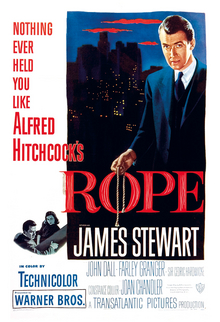
Long takes don't have to be all violence and space-floating, though. In fact, some of the more iconic long shots are during simple (albeit equally well-choreographed) sequences. Alfred Hitchcock's 1948 thriller Rope took place in real time and was edited to appear as one extremely long take, even though it was made up of only 10 separate shots. One of the bi
ggest reasons that filmmakers use long takes is to provide exactly this sense of real time, whether to create suspense or to add an extra element of realism to a film. Cutting from shot to shot can sometimes take away these elements and can create a less fluid experience. 

One man who makes statements with long takes is Louis C.K. Going into the fourth season of his TV series 'Louie', FX has allowed him even more freedom in regards to his creative process, and he certainly took advantage of it. Forrest Wickman, a staff writer for Slate, went so far as to call Louie "the most cinematic show on TV." (read the whole article, which I'll elaborate on further, here

C.K., for whatever reason, loves long takes. In fact, the third episode of the most recent season ended with a shot that lasted an incredible seven and a half minutes. This isn't HBO. This isn't even an hour long drama we're talking about. This a low budget comedy on FX. A seven and a half minute shot equates to almost a full act of the story, which means that almost the whole thing is bookended by commercials. That's a big chunk of TV. The shot in question is nothing particularly special. No fights, no guns, no exploding space stations, just Louie doing what he does best: going on an awkward date and the raw, brutally honest, and beautiful conversation that ensues. People love to throw around the phrase "it's like nothing else on television," but this is literally like nothing else you will find on television, let alone in any hollywood films. 

Louis - the real Louis, not the character - uses these long takes to create an atmosphere of real, honest, everyday life. It can be awkward, sure, but it can also be close and familial (see the living room scene with Louie's two daughters and then-girlfriend Amia), odd and unexpected (a model drives up to Louie and tells him to get in her car), and beautiful and special (Louie's daughter plays the violin). C.K. has proven himself to not only be one of the funniest comedians alive today, but also one of the most adept directors and showrunners on television. Not to mention the most cinematic.