Showing posts with label slate. Show all posts

Tuesday, October 28, 2014

Alien

When I made the impulse decision to re-watch Ridley Scott's Alien for the first time in a long time, I thought I'd be able to admire a few shots, see some cool aliens, and just generally enjoy a nice, classic horror film before Halloween.

Ha. Nope.

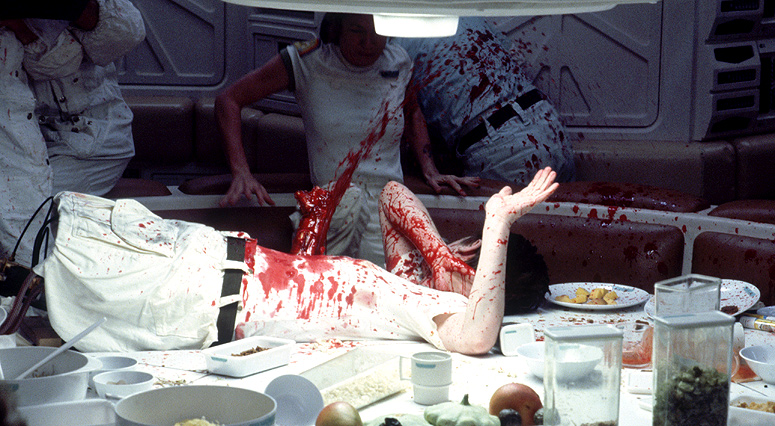
The scene that haunted my childhood
Somehow, I found some theories that claim that Alien is about feminist views, anti-feminist views, rape, Freud, parasitism, and how the facehugger acts as "payback for the many horror films in which sexually vulnerable women are attacked by male monsters. Wow. Scott, however, has a much more simple view on the matter: "...It's only point is terror, and more terror. It has absolutely no message." So, what's one to make of this weird, scary, possibly hyper-sexualized film? In my opinion... not a whole lot. Call it a cop-out, but I'm going to go ahead and say - others may disagree, but whatever - that we can take a lot of things away from Alien, but deep meanings and hidden messages are not a major part of this film.

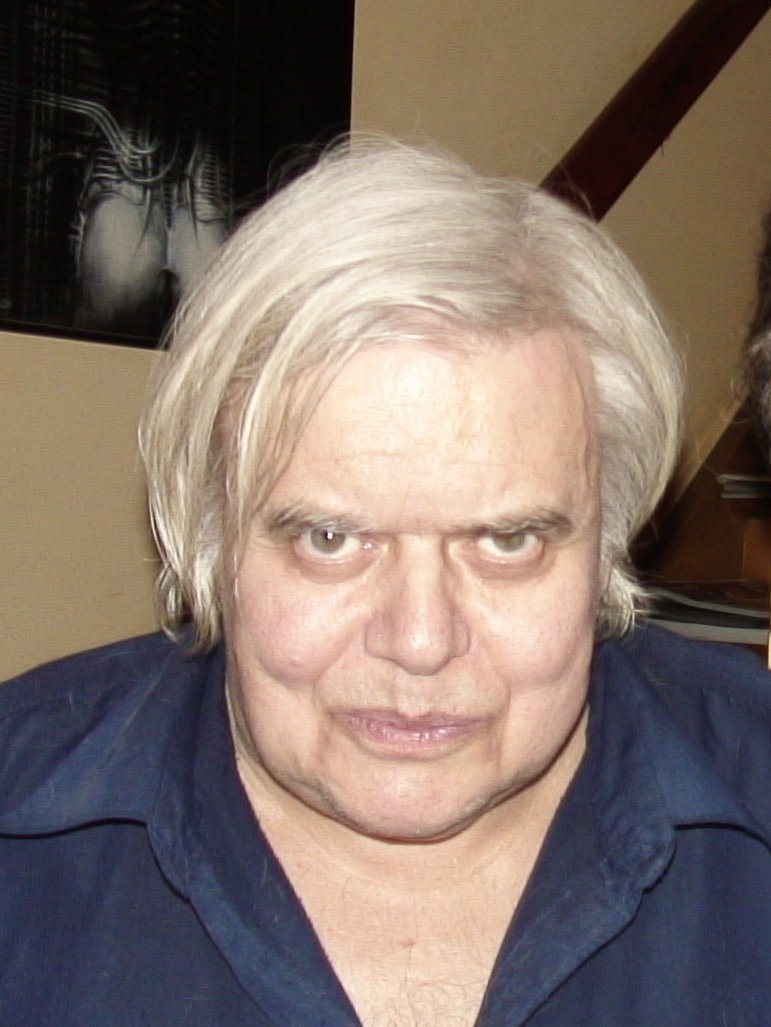
This is H.R. Giger, the guy who
made the alien costume. I don't
want to talk about him, just
point out how creepy he is.
Alien has a lot good things going on: minimal dialogue, a convincing cast, and special effects that - for the most part - really stand the test of time. Seeing that little baby alien squirm around inside it's egg was getting me grossed out like no other, and some of the alien-planet shots, with Kane and the other members donning their spacesuit/headlamp combo, were almost indistinguishable from the same type of shots done in Prometheus (Scott's 2012 sequel/prequel that I think is unjustifiably underrated). The film is beautifully shot, and I can honestly say it's been one of the first movies I've seen where I could really say "ok, yeah, now I understand how important and badass set design can be." The combination of the close camera angles, long takes, and general claustrophobic atmosphere of the spaceship Nostromos really gives the whole film a sense of immediacy and tension, which only gets worse when a freaking alien is let loose on board.

The Alien itself is - ok, here's one of the only places I'll give in to the theory; his head looks like a dick - iconic. Scott crafted the film so that you would never see the full alien until the very end of the movie. Instead, he reveals it in different stages (egg, facehugger, coming out of John Hurt's chest) before slowly showing different bits and pieces of the fully grown thing. There were no special effects involved in the making of the alien, apart from the obvious practical effects, and there was actually an actor inside the costume of the full-grown adult. Now that I mention it, there was only ever one shot done on a bluescreen; the rest of the film - including many of the space scenes, were done with scaled-down models of the spaceships "flying' over a purely black background. Stars were later added in with double exposure.

All of the cinematography and effects aside, however, the thing that stood out the most to me was the combination of the dialogue and the lack thereof. I had never realized how profoundly quiet the whole movie really was. There's practically no dialogue at all for the last 20-30 minutes of the film, but unless you're really stopping to think about it (as I was. Thanks Arturo, you've ruined movies for me) it's not something that would ever stand out to you since so much else is going on. According to somewhere in this Wikipedia article, Scott encouraged his actors to improvise their lines, and he liked their improvisations so much that he decided to keep them in the film. As a result, the film feels much more gritty and realistic, without any unnecessary rants or monologuing that this type of movie might fall victim to. For a science-fiction/horror movie, I think it's the perfect balance of giving exposition through dialogue and simultaneously telling a very visual story.

Friday, September 5, 2014

Long takes and Louis C.K.

In the contemporary age of Hollywood, where Michael Bay's average shot length is a measly 3 seconds and the general average is only a second or two longer, it's really refreshing to see a film or TV show that has an appreciation for the long take. Obviously, Alfonso Cuaron is the first director that comes to mind - at least in this day and age - for his incredibly long takes in both Children of Men and the more recent Gravity (7 mins and 17 minutes, respectively). Also headline-worthy was Cary Fukunaga's elaborately choreographed 6 minute True Detective shot, featuring Matthew McConaughey bursting through houses and just generally kicking ass in one of the coolest TV scenes of the year.

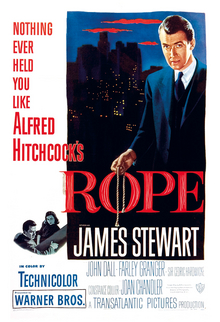
Long takes don't have to be all violence and space-floating, though. In fact, some of the more iconic long shots are during simple (albeit equally well-choreographed) sequences. Alfred Hitchcock's 1948 thriller Rope took place in real time and was edited to appear as one extremely long take, even though it was made up of only 10 separate shots. One of the bi
ggest reasons that filmmakers use long takes is to provide exactly this sense of real time, whether to create suspense or to add an extra element of realism to a film. Cutting from shot to shot can sometimes take away these elements and can create a less fluid experience. 

One man who makes statements with long takes is Louis C.K. Going into the fourth season of his TV series 'Louie', FX has allowed him even more freedom in regards to his creative process, and he certainly took advantage of it. Forrest Wickman, a staff writer for Slate, went so far as to call Louie "the most cinematic show on TV." (read the whole article, which I'll elaborate on further, here

C.K., for whatever reason, loves long takes. In fact, the third episode of the most recent season ended with a shot that lasted an incredible seven and a half minutes. This isn't HBO. This isn't even an hour long drama we're talking about. This a low budget comedy on FX. A seven and a half minute shot equates to almost a full act of the story, which means that almost the whole thing is bookended by commercials. That's a big chunk of TV. The shot in question is nothing particularly special. No fights, no guns, no exploding space stations, just Louie doing what he does best: going on an awkward date and the raw, brutally honest, and beautiful conversation that ensues. People love to throw around the phrase "it's like nothing else on television," but this is literally like nothing else you will find on television, let alone in any hollywood films. 

Louis - the real Louis, not the character - uses these long takes to create an atmosphere of real, honest, everyday life. It can be awkward, sure, but it can also be close and familial (see the living room scene with Louie's two daughters and then-girlfriend Amia), odd and unexpected (a model drives up to Louie and tells him to get in her car), and beautiful and special (Louie's daughter plays the violin). C.K. has proven himself to not only be one of the funniest comedians alive today, but also one of the most adept directors and showrunners on television. Not to mention the most cinematic. 

Friday, December 6, 2013

Editing

For our film since I am an editor I've faced a lot of difficulties going through this process. Before college I had only edited one short ski video that I made with a crappy JVC camcorder I had gotten for my birthday. It had an amazing zoom so that was the sole reason I bought it. That movie was cut on     I-movie and I thought I was the best in the world. Little did I know what I had in store when I came to Ithaca college. I started editing on Avid Media Composer last year in Intro to Field Production. I picked up very quickly but I am still learning a lot tricks of the trade and workflow technique.

This semester I started to use Final Cut Pro for an ICTV show "Life and Death" and Adobe Premiere CC for Fiction Field Production. Last year in Intro we always recorded audio right onto the camera so there was no worries about syncing up audio. This year for Falling High syncing audio up was somewhat of a challenge sometimes the camera audio was turned off and I had to go off of the way the actors mouth was moving and other times we had no slate. In the editing software, I learned to use the wave lengths to sync the audio up and this seemed to speed the process up. The labeling process of clips was also a very frustrating thing when the shot didn't start with the slate or there was no slate at all however I learned to work around these obstacles eventually.


This is my editing set up in premiere. For the most part I used the arrow tool and drag the clips to their desired lengths and used the blade to cut off the access fat. In the top corner you can see my project tab and numerous sequences. Every time I opened and started to edit again I would create a new sequence so that if a mistake was made I could go back to a clean slate without any trouble. This was a useful technique to use and it took a load off of my back stress wise. I hope to start learning more shortcuts on the keyboard so that the editing process happens with a bit more ease. 

There are still hundreds of things I need to learn in the realm of editing but this project really helped me hone in on some skills that will help me in the future. I hope to use Avid more next semester for my Non-Fiction project since Avid is the media standard for now I will continue to use the easy program of Premiere.

Friday, November 15, 2013

The Importance of Slating

After our first weekend of shooting, I am very pleased overall with the footage. Although we did not finish all the shots we were planning, we did a good amount, and I'm happy with how it looks. One thing we definitely need to improve upon for this weekend is using the slate more. In order to keep our editor sane, we really need to use the slate for every take.

I've been reading articles about slating, and it is a very crucial part of filming. Not only does it help organize the shots, it makes it so much easier for the editor to synchronize the audio and video. It will keep an accurate account of which shot is which to go along with our shot sheets, and make editing so much easier and more efficient. It's going to be difficult and time consuming for our editor (sorry Skyler...) to put everything together because we did not slate for every shot. Without the slate, he will have to do trial and error to synch the visuals with the audio. It will be a big waste of time.

A tip for everyone, in case you don't know: the best way to ensure the slate is in frame is to slate on the actor's mark with the slate at eye-level.

Another interesting tip: sometimes there are shots that using a slate before would not be advisable. For example, a shot that requires spontaneous action or a shot that may distract the actor in a very crucial moment. So what should be done in these situations? You use an end slate. Once the shot is recorded, the slate is placed upside-down (to signify an end slate) in front of the camera, the voice slate is said, the clap is made, and the director yells, "Cut!"

And here is a funny article about slating by Evan Luzi: The 10 Commandments of Slating
Another great article about what words to say when slating: Slating the Alphabet from Apple to X-Ray


Here is a behind the scenes look of the clapper/loader, Cameron Matheson, from Van Diemen's Land:


And here is a montage of all the fun slates Geraldine Brezca did on Tarantino's Inglourious Basterds:


Wednesday, November 13, 2013

4 Ways to Keep You From Saying "Fix it in Post"

In an article found on theblackandblue.com, were some advice geared toward the camera department that I find very convenient. These tips can really save the editor a lot of time in post production. On most sets, saving the editor time is not really on the top of their priorities, but it is something that can make post production occur with less mistakes. The first tip that Evan Luzi gives is to keep a camera report.


A camera report connects what is happening on set back to the editor. It gives the post production visual effects editor information such as the focal length of the lens used, to match its depth of field. It also makes it very convenient if you need to reshoot a shot. You know what focal length lens and f stop was used along with other vital information. 

The second tip given has to do with transferring all production footage to a computer. Just transferring the files is not enough, but always make sure to back them up on one or even two separate hard drives to be safe. Be sure to get every single bit of data on to the various computers and hard drives. Don't ever trust that your computer storage is enough and just wont crash. That is not safe enough. 

Most problems with data management come from human error. With that being said, make sure all memory cards are labeled correctly during production in order for things to go smoothly in post. Also make sure all hard drives are labeled and filed systematically. Name clips accordingly and keep things as organized and simple as possible.

The third tip mentioned to keep post production smooth is to make accurate slating a priority. Editing without slates means playing various clips to see what scene it was. When you have hours of footage and hundreds of clips, it is nearly impossible to edit without slates. All slates must be correctly labeled. Some may even include, frame rates, which special filters are unique to that scene, and lots of other important info. 


The last tip that Evan has for film sets is to work closely with visual effects supervisor during filming. Any information that he or she can get about the shot they are manipulating will be very worth while during the editing process. It may not seem like a priority but it should be. Use tracking markers. Tracking markers are markers that you put with the scene that give the visual effects coordinator a reference point when it is on the computer. These few things may seem unnecessary but they will ensure that post production can go smoothly and flawlessly.