Tonight is the final premiere of the last few episodes of Campus Retreat. Actually it's happening right now... and I unfortunately, am home. I'm heading to NYC early tomorrow morning and had to drive home today after my last class to bring my dog to the kennel. It's kind of really upsetting that I can't make it to the premiere or the wrap party.
It's always a really nice closure to be able to watch the final product of all your semesters long work with the people who worked by you. I've worked on 8 different ICTV shows during my 4 years here and it's sad that for me it's coming to a very uneventful end. I wish I could be there to laugh with everyone tonight and to celebrate our success.
I'm trying hard not to think too negatively about my experiences this semester. I think I am mostly just very ready to get out of Ithaca. I worked on Fake Out for several semesters and my last one really wasn't what I expected. I only got to be on for 2 episodes, no halloween or last episode for me either. As much as I loved all of the cast and crew of Campus Retreat (I can't stress that enough) sometimes it honestly made me upset to be on set. As assistant director you don't have the most fun on set because you're the one making sure we're actually getting work done. The last time I was on set one of the actors (granted he did get eliminated earlier) asked me what my job actually was and joked if I was just a "professional yeller." He should realize the only reason I had to literally yell was because after the third time calling 'quiet on set' it gets really frustrating when people just blantaly do not listen. I know he was joking but it's a matter of respect.
This sounds like a really sad and depressing post, but I really have loved every show I've had the honor of working on. ICTV is where I gained the majority of my field and studio experience. Also, I'm going to nyc for a concert so I'm really pumped to jam out and see all the cute Christmas lights.
I'm just glad it's time for me to move on. I'm excited to work on professional sets. I'm excited for LA. I'm excited to graduate. I'm excited for a fresh start.
Anyway don't forget to watch ALL episodes (WOO!) of Campus Retreat on ictv.org. I'm really proud of all the cast and crew.
Showing posts with label ICTV. Show all posts
Showing posts with label ICTV. Show all posts
Thursday, December 3, 2015


Thursday, November 19, 2015
That Other News Show
Hey guys, when trying to think up a topic to write about this week, I couldn't really think of anything. But then I thought "Hey, I can shamelessly plug the show I worked on this semester!" and all became right in the world. So That Other News Show is an ICTV show which just began this semester and provides the news, along with sketches and field packages, and delivers them in a humorous way.

Think something along the lines of The Colbert Report or any of the various late night shows with (insert host's name here). I was actually recruited onto the show last semester when it was still being planned, and went through this season as the head editor. I don't mind editing, some people do, but I don't and I have gotten pretty alright at it, so for this semester I became head editor on two shows and it's been pretty cool. The only issue with editing this show? Our turnaround time was seriously tight, having it due at noon on Monday and only being able to begin editing at 3 on Sunday. Since I didn't want to throw my Sundays away every week, I typically started editing after midnight and would stay up all night to finish it. Due to this, there are a few slip-ups here and there that with a little bit more time, I could've ironed out. Anyway, I got off track.
Now that the season is done and everything is up on the website, I recommend checking it out, everyone pull a lot of heart into it and I think it's come out pretty good. Plus, it'll give you the chance to see what some of the people in our class worked on.

Think something along the lines of The Colbert Report or any of the various late night shows with (insert host's name here). I was actually recruited onto the show last semester when it was still being planned, and went through this season as the head editor. I don't mind editing, some people do, but I don't and I have gotten pretty alright at it, so for this semester I became head editor on two shows and it's been pretty cool. The only issue with editing this show? Our turnaround time was seriously tight, having it due at noon on Monday and only being able to begin editing at 3 on Sunday. Since I didn't want to throw my Sundays away every week, I typically started editing after midnight and would stay up all night to finish it. Due to this, there are a few slip-ups here and there that with a little bit more time, I could've ironed out. Anyway, I got off track.
Now that the season is done and everything is up on the website, I recommend checking it out, everyone pull a lot of heart into it and I think it's come out pretty good. Plus, it'll give you the chance to see what some of the people in our class worked on.
Thursday, November 5, 2015
Looking back, looking forward
Now that we have (basically) wrapped on principal photography for Stopover City I feel a huge weight off my shoulders, and have started functioning like a normal human being again???! Obviously a lot has to be done in post production (our editor already has a rough cut), but I have confidence in my team that everything will be just dandy. Now I can do things again such as: sleep, eat meals, and look ahead to future projects. I had a ton of fun doing developing Stopover, and it has inspired me to start development on my senior thesis which I'd like to create next fall. It's honestly never too early to start pre-production, so why not start now! Pretty recently I decided not to take any production classes in the spring because this semester was so intense--I'll definitely work on other people's films here and there but I need a semester-long breather from production classes.

Being less stressed has also allowed me to think ahead to future semesters logically--I turned down the offer to produce ICTV's late night show After Hours (which I currently Assistant Produce) because I realized that producing isn't my thing. The upside to turning it down is that I was given the offer to design a new set for the spring semester. Here's the current setup of the show:

It looks nice once cameras are framed up, but the walls are super heavy and those brown beams are literally falling apart and every Tuesday I fear that one of the PA's will get hurt. Fortunately Porn: the Musical is donating 5 of their thin white walls to us, which i can manipulate any way I'd like. I'd personally like to make the set a bit wider, and 86 the bland white walls altogether. It's definitely going to take some time & careful effort to plan, but I'm hella excited to do it.
It definitely won't be as extravagant as Late Night With Jimmy Fallon, but hey, I'll do my best with what I have.
Friday, October 10, 2014
What's the Point?
At a certain point during the 4 hour Prerequisites shoot last night (in which we forced Canon to dress up as a clown and pull 3 takes worth of colored paper out of his mouth), I paused for a moment and asked myself what I was doing there. Why would I voluntarily put myself in the position of organizing, directing, and otherwise running a six-episode ICTV production when I was already taking 16 credits worth of classes? What kind of masochistic, deranged person would do that to themselves? And, come to think of it, why did I want to be a part of the film/TV industry in the first place? Everyone that I've talked to, all the advice that I've been given up to this point, has all more or less warned me about the difficult and relentless pace of Hollywood. It sounds, to be blunt, fucking awful.
It was kind of a dark place.
So then I got into a little bit of a funk, barraging myself with self-criticisms and convincing myself that my show, which I've spent a good 9 months on, would turn out to be a piece of shit, with a cast and crew who hates me for wasting their time and who will never voluntarily work with me again.
 |
| This post is not about Bob's Burgers. |
That, in turn, lead me to ask this question: does film matter? Is the source of 90% of my stress something that I should be stressing about at all? I could be studying medicine right now, or physics, or literally anything else that would allow me to contribute to the world more than I already am. I watch episodes of Bob's Burgers and call that "studying." So. What's the point of it all?
I'd love to say that I have a definitive answer to that question, but that's not really the case. However, since a purely whiny blog post would kind of suck, I did a little googling and found a really cool collection of quotes about why film matters. And it was actually pretty inspiring. The full study/article can be found here. (It's got lots of pictures, it's definitely worth a read)
The study is basically a collection of interviews with prolific filmmakers giving their opinions on why film actually matters. The answers range from the inevitably annoying (film is art, and like, without art, what are we really) to the thought provoking (my favorite quote being "as long as we continue to enjoy the peculiar sensation of gathering with a bunch of strangers in a darkened theatre, film will still matter.")
The biggest thing this article reminded me of, however, was that film is entertainment, and human beings actually yearn to be entertained. It's a form of escapism: as Gabriel Solomons says, "film matters because it has the power to connect us to a world outside of our own, even if the only traveling we do is from our sofa." Film, like any good novel or piece of artwork, allows us to escape from our every day lives and just be entertained. There's no effort, no immense amount of concentration required. Films can do something as simple as make us laugh or fascinate us visually, or they can present us with ideas and concepts that stick with us for the rest of our lives. A good film will do all of these things simultaneously.

So maybe this whole post was for my own self-satisfying benefit, but long story short, that's why film matters. If you ever find yourself in my position, desperate for some sense that what you're doing is actually somewhat important, don't give up hope. Take a deep breath, step off-set for a minute (or a week) and have faith that what you're doing matters. Movies are always there for you when you need a break, and hey: someone's gotta make them.
The biggest thing this article reminded me of, however, was that film is entertainment, and human beings actually yearn to be entertained. It's a form of escapism: as Gabriel Solomons says, "film matters because it has the power to connect us to a world outside of our own, even if the only traveling we do is from our sofa." Film, like any good novel or piece of artwork, allows us to escape from our every day lives and just be entertained. There's no effort, no immense amount of concentration required. Films can do something as simple as make us laugh or fascinate us visually, or they can present us with ideas and concepts that stick with us for the rest of our lives. A good film will do all of these things simultaneously.
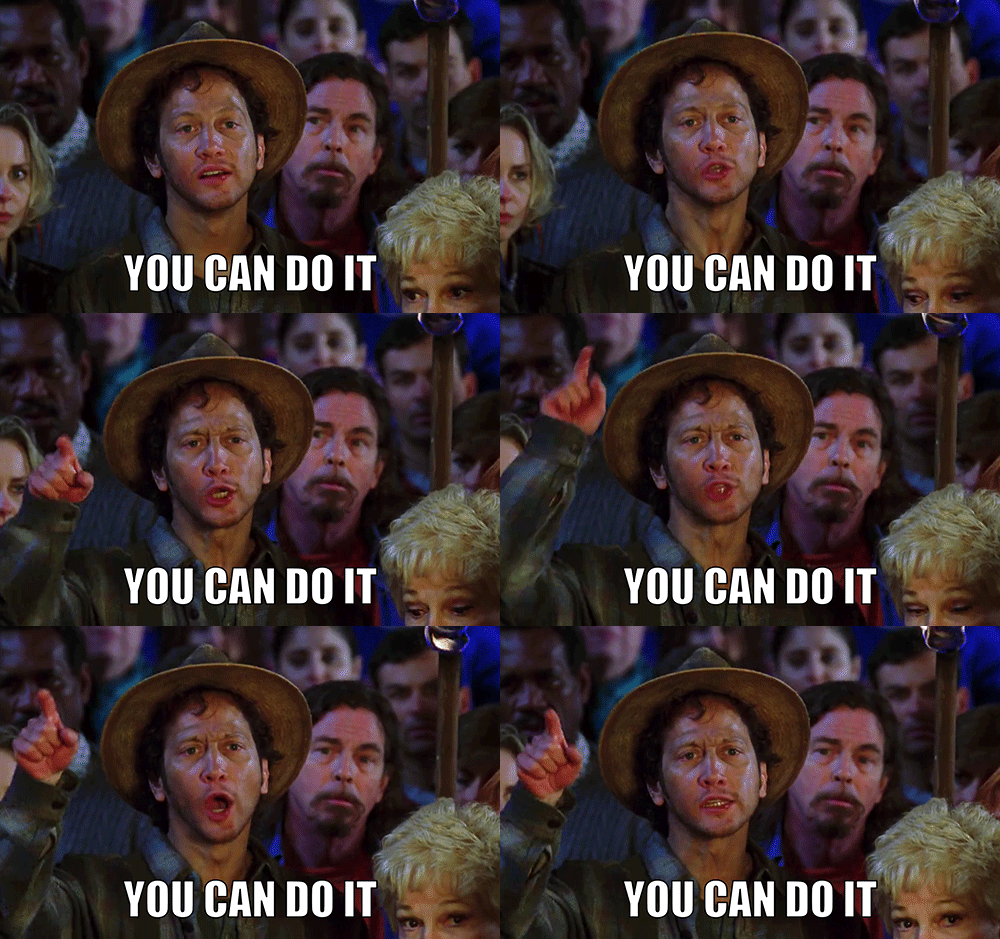
So maybe this whole post was for my own self-satisfying benefit, but long story short, that's why film matters. If you ever find yourself in my position, desperate for some sense that what you're doing is actually somewhat important, don't give up hope. Take a deep breath, step off-set for a minute (or a week) and have faith that what you're doing matters. Movies are always there for you when you need a break, and hey: someone's gotta make them.
Friday, September 26, 2014
Handling Pressure and Staying Positive on Set
By the time Arturo gets around to reading this post, I will have been on a set 5 times in the span of 8 days. Two of those times (both of our group shoots for fiction 2) were for 6 hours, and the other three (for my ICTV show, Prerequisites) should each last a minimum of 4 hours. If I did my math right - and hey, there's a good chance I didn't - then I will have been on set either directing, producing, or script supervising for at least a total of 24 hours in the past week. With so much time spent planning, organizing, and figuring out who does what and when they do it, I've found that's it's pretty easy to lose focus on why you're really there.

 I found an article that I really liked, written by Evan Luzi, that talks about five ways to "handle pressure and perform better on set." Most of his suggestions are for ACs, but I think they can be applied to pretty much any on-set position. Case in point: the first step is to be prepared. Probably the most important thing that I've learned over the past few week/few years is that preparation, as annoying as it can be, is by far the most important thing you can do regarding filming. If you're on set and don't have a shot list, you're screwed. If you don't know where your lights are going to go or how your actors are going to block out a scene, you're screwed. Being prepared is by far the easiest way to save yourself from being frustrated on set, and it will also give you a better overall product in the long run.

Sets, generally, are pretty stressful places to be, particularly if you're in a high up position and have a lot riding on whatever it is that you're filming. I think that sucks. I can't speak for everyone else in the TVR/Film program here at Park, but I know I'm here because I love making films and television. There's nothing else I'd rather be doing. What I'm slowly learning - mostly from working for ICTV - is that when you spend so much time on writing and shot listing and scheduling and everything else that goes into preproduction, when it comes time to be on set, you can tend to get frustrated when things don't go exactly as you planned. I wanted to find ways to help deal with that pressure, and hopefully make it easier for myself - and anyone else - to stay cool and have fun on set.
 I found an article that I really liked, written by Evan Luzi, that talks about five ways to "handle pressure and perform better on set." Most of his suggestions are for ACs, but I think they can be applied to pretty much any on-set position. Case in point: the first step is to be prepared. Probably the most important thing that I've learned over the past few week/few years is that preparation, as annoying as it can be, is by far the most important thing you can do regarding filming. If you're on set and don't have a shot list, you're screwed. If you don't know where your lights are going to go or how your actors are going to block out a scene, you're screwed. Being prepared is by far the easiest way to save yourself from being frustrated on set, and it will also give you a better overall product in the long run.
Luzi's next two steps are to be confident and relax. These are way harder than they sound. However, confidence comes with experience and preparation, so as long as you stay on top of everything and have faith in yourself, other people will have faith in you as well. Relaxation, on the other hand, is different for everyone. Whether it means leaving set for five minutes to go get a snack and drink of water or just taking a deep breath in between takes, it's really important to not let the stress get to you. People work better when they're relaxed: I think that's a fact or something.

Above everything else, though, is perspective. It doesn't matter if you're Steven Spielberg or a PA on the set of a CP2 film: all we're doing is making movies here. The worst thing that can happen to you in this industry is that you get fired. In college, the stakes are even lower. We're not making any big, world-altering decisions here (although some people beg to differ). For the most part, we're making movies (or TV, film, art, whatever you want to call it) for the entertainment of others and for our own self-gratification. It's ok if things aren't perfect. Take a break. Go for a hike. Call your mom. As fun/awful/stressful/amazing as it can be to make things, there will always be things that are more important, both for your well being and the well being of those around you.
Now if you'll excuse me, I have to go make a shot list.
Friday, September 12, 2014
Directing Voice Actors
Between the voiceover work that I'm planning on doing for my ICTV show Prerequisites and the bizarre kitchen appliance voices that our group needs for our short film, I thought it would be useful to figure out techniques on how to direct voice actors.
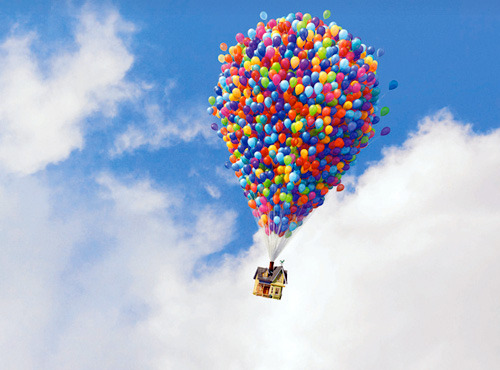
Well as it turns out, directing voices isn't a whole lot different from directing normal actions. More often than not, the most compelling performances are produced by the most unorthodox forms of directing. One my favorite examples of this (sorry if this is something Arturo showed before, but it just really stuck with me) is how the directors of Up had Jordan Nagai perform his lines as Russell. Whereas other studios may have brought in a more "theatrical" kid for the part - or even a professional adult voice actor, as so many cartoons now resort to doing - Pixar took a risk and banked on a totally inexperienced kid. To make him read the lines as a child would really speak, they made him do laps around the room, hang on to bars hung over his head, etc. It was a creative approach, one that I would imagine was comfortable for Jordan to work with and which ultimately ended in a better voice for the character.
 A few other tips I like, curtesy of the Timbuktoons.com article you can find here, include going deep, not forgetting to record the incidentals, and always doing multiple takes. When you give an actor a line to read, it's going to be almost meaningless if they don't know the context. You need to give their character a backstory - as goofy as it sounds - and help the actor be able to identify with their character. Even if they're playing something that they have nothing in common with, a good director should be able to find that common ground and make actors see their characters in a different light.
Also, from a more technical standpoint, it's important to keep the mic running a bit both before and after each take, to catch some stuff that you may otherwise miss and want to keep in. At the same time, one take is never sufficient to know whether or not you have the content that you want (plus it's easier to lose), so you want to have your actors read their lines a variety of ways to make sure that you've covered all your bases.
So long story short, the next time you find yourself in need of some casual voice actors, make them do some weird things help them both A) Get their inflection right and B) get them in character. Canon and Diana (or whoever is directing producing our group's film) take note, and go cast an awesome blender.
A few other tips I like, curtesy of the Timbuktoons.com article you can find here, include going deep, not forgetting to record the incidentals, and always doing multiple takes. When you give an actor a line to read, it's going to be almost meaningless if they don't know the context. You need to give their character a backstory - as goofy as it sounds - and help the actor be able to identify with their character. Even if they're playing something that they have nothing in common with, a good director should be able to find that common ground and make actors see their characters in a different light.Also, from a more technical standpoint, it's important to keep the mic running a bit both before and after each take, to catch some stuff that you may otherwise miss and want to keep in. At the same time, one take is never sufficient to know whether or not you have the content that you want (plus it's easier to lose), so you want to have your actors read their lines a variety of ways to make sure that you've covered all your bases.
So long story short, the next time you find yourself in need of some casual voice actors, make them do some weird things help them both A) Get their inflection right and B) get them in character. Canon and Diana (or whoever is directing producing our group's film) take note, and go cast an awesome blender.
Friday, December 6, 2013
Editing
For our film since I am an editor I've faced a lot of difficulties going through this process. Before college I had only edited one short ski video that I made with a crappy JVC camcorder I had gotten for my birthday. It had an amazing zoom so that was the sole reason I bought it. That movie was cut on I-movie and I thought I was the best in the world. Little did I know what I had in store when I came to Ithaca college. I started editing on Avid Media Composer last year in Intro to Field Production. I picked up very quickly but I am still learning a lot tricks of the trade and workflow technique.
This semester I started to use Final Cut Pro for an ICTV show "Life and Death" and Adobe Premiere CC for Fiction Field Production. Last year in Intro we always recorded audio right onto the camera so there was no worries about syncing up audio. This year for Falling High syncing audio up was somewhat of a challenge sometimes the camera audio was turned off and I had to go off of the way the actors mouth was moving and other times we had no slate. In the editing software, I learned to use the wave lengths to sync the audio up and this seemed to speed the process up. The labeling process of clips was also a very frustrating thing when the shot didn't start with the slate or there was no slate at all however I learned to work around these obstacles eventually.

This semester I started to use Final Cut Pro for an ICTV show "Life and Death" and Adobe Premiere CC for Fiction Field Production. Last year in Intro we always recorded audio right onto the camera so there was no worries about syncing up audio. This year for Falling High syncing audio up was somewhat of a challenge sometimes the camera audio was turned off and I had to go off of the way the actors mouth was moving and other times we had no slate. In the editing software, I learned to use the wave lengths to sync the audio up and this seemed to speed the process up. The labeling process of clips was also a very frustrating thing when the shot didn't start with the slate or there was no slate at all however I learned to work around these obstacles eventually.

This is my editing set up in premiere. For the most part I used the arrow tool and drag the clips to their desired lengths and used the blade to cut off the access fat. In the top corner you can see my project tab and numerous sequences. Every time I opened and started to edit again I would create a new sequence so that if a mistake was made I could go back to a clean slate without any trouble. This was a useful technique to use and it took a load off of my back stress wise. I hope to start learning more shortcuts on the keyboard so that the editing process happens with a bit more ease.
There are still hundreds of things I need to learn in the realm of editing but this project really helped me hone in on some skills that will help me in the future. I hope to use Avid more next semester for my Non-Fiction project since Avid is the media standard for now I will continue to use the easy program of Premiere.
Subscribe to:
Posts (Atom)