I was really confused after watching 8 1/2, but after reading the lecture I came to appreciate Fellini's work. I gained another perspective about movies like these which change the world of film making. The way the movie is formatted made me feel like I was in a dream. It was hard to tell the difference between reality and dreams. Fellini succeeds in creating a world in which the inner conflicts of the main character crash with his real life by the use of flashbacks and dream sequences. This takes more in depth with the essence of this character. It think was really interesting to see the way Fellini portrayed the inner conscience of a character. Putting it in context with film history, the use of stream of consciousness in this movie is really innovative. It revolutionized the way stories were told in a movie, from just watching the action, to actually get into the character's through symbolism camera movements, and editing techniques. One of the examples I would like to use to show the way Fellini's technique can bring the audience inside the character's head is in the movie "American Beauty":
We see that by breaking the continuity of the movie, the desires of this character are revealed to us. This other example from the movie "500 Days of Summer" shows us the state of emotion of Joseph Gordon Levitt's character by including a dance sequence in what in real life would be this character only walking to work.
I think it is really cool that films can make people accept these conventionalities. It is also pretty cool that we can break some of the rules in film to innovate the storytelling of a story.
Sunday, September 25, 2011


Contagion and Filming
This past Wednesday I saw the movie Contagion in theaters. So often we are consumed by fears of alien invasion or a tremendous cataclysm like 2012 with whole cities falling into the ground that we forget about the real threat of epidemic and I feel as though Contagion showcased this threat well. Whole montages of shots at door handle height with populations displayed in text at the bottom of the frame caused me to shiver as I thought about how quickly a deadly virus could be spread as our population continues to boom. Combine this with the fear mongering of news stations about Swine Flu and you have a psychological that deals with many real world things. One concept of the movie I found interesting was a blogger character who served as a fairly good villain. Alan Krumwiede played by Jude Law spreads misinformation and conspiracy theories on his blog "Truth Serum" as the disease spreads, and also urges his readers to not take a vaccine, a direct jab at Alex Jones and other anti-government bloggers.
Contagion also did a good job at showing very little but also getting the point across. Some examples I liked were a shot of monkeys in a lab immediately followed by hundreds of biohazard body bags being carted away. Later in the movie there is looting and violence as fear consumed the population and u see a shot from an upstairs window looking into another house. You see 2 masked men run in and then flashes of light that were obviously gun shots.
In other news my group filmed our scene in the campus center. It turned out pretty well and we were able to accomplish our scene in under an hour. All 8 of our actors had clothes very similar to the original subjects and followed direction very well. Because it is a wide shot the most difficult thing was timing while having multiple actors in the frame. It was very obvious if one person was on time and another was not so it took many takes to get everything down. The way we rehearsed was to train two actors at a time and build onto the scene in 4 parts. We also had 2 team members outside letting actors know when to go and also blocking off the doors which was another issue. As everyone knows those stairs have a good amount of traffic. I was happy with the way the scene turned out.
Saturday, September 24, 2011
8 1/2
I have not watched 8 1/2 but I have been searching youtube for videos of the movie. I have noticed, just like everyone else, similarities to this movie. One of the movies that really stuck out to me was Woody Allen's Stardust Memories. It is a movie that Woody Allen made that parodies Federico's 8 1/2. Woody Allen is no stranger to existentialism and and mocking other films. However he does a job paying homage to the original films he mocks. Take a look at the the openings to both of the films.
You can easily see the similarities in both of these openings.
Also an added bonus
Friday, September 23, 2011
Moneyball Behind Scenes Fan Footage
So the movie Moneyball came out today, which I have been waiting for since I first saw the trailer. The film takes place in 2002 about the Oakland A's having the lowest payroll in all of baseball but still managed to win 100 games in the season with a bunch of washed up players.
I found this footage and was astounded at the sparse amounts of people at the stadium and how long they were there for. Granted getting multiple angles and having visual effects teams, I could understand why there was a small crowd there. Since they are reenacting one of the most famous games of that season when they beat the Royals to win their one hundredth game, it had to be a night game it was going to take a long time for set up and shooting. This game was shot from the beginning of dark hours to the crack of dawn, making sure that all time was put to use.
The movie is based of a book and it is an excellent read, short and sweet. Even if you're not a baseball player, you don't need to be to understand the principle of not judging a book by it's cover. This is a miraculous story that I have been waiting to see on the big screen because it stands for a lot of my beliefs. You don't have to look amazing to be considered the best, you just have to show you can by your numbers or even your awards. Each individual player from that 2002 team got on base more than they struck out, allowing to produce more runs. Same thing goes in life, if you can be patient and get on base, you'll need someone to bring you in to complete your dreams.
Thursday, September 22, 2011
The God Complex
After a big, emotional episode like last week's "The Girl Who Waited," it seems like "The God Complex" was in a bit of a lower key. The story was okay, but it seems like Toby Whithouse and Steven Moffat cobbled it together in order to lead up to the end, which is a major plot point in the story arc. This series has had its fair share of standalone episodes, where the story has nothing to do with the overarching plot; and that's fine. That's what Doctor Who is famous for, little science fiction diatribes that all link together.
But this story seems forgettable, if not for the ending and the look deeper into the Doctor's and Amy's characters. The technical work was, of course, beautiful; camera shots looking straight down a spiral staircase, a giant minotaur roaring down a hotel hallway, special effects giving the illusion of a creepy 80s hotel. But that's obvious from the show at this point. Technical brilliance has become a staple, much unlike the show's classic years as a low budget production.
Where the show really shines is in the subtleties of its writing. The ending and the way this episode ties into the arc is pretty brilliant, if heartbreaking. There's also a scene where the Doctor finds what scares him most; and although we don't see it, we know that it's someone whom the Doctor fears. "Of course it's you," he says, as the TARDIS cloister bell rings. This small detail blew the door open for fan speculation, and provide a piece of great writing and camera work in an otherwise average episode.
Not much else to say this week. Next time, the Cybermen make a return as well as an old friend. From the preview, it looks like it'll be a good one. See you then.
Wednesday, September 21, 2011
"Breaking Bad" Should Be Called "Breaking Great"
 Breaking Bad is a drama on AMC about Walter White, a high school chemistry teacher from Albuquerque, New Mexico, played by Bryan Cranston. After White is diagnosed with advanced lung cancer, he turns to a life of crime producing and selling methamphetamine (crystal meth) with a former student named Jesse Pinkman. It has been nominated for numerous awards including winning three consecutive Emmy Awards for Lead Actor in a Drama Series for Cranston. Now in it’s fourth season it is less about Walt and his cancer for he is in a way the cancer in other people’s lives. He is bringing them down with him and putting them in danger as well.

Breaking Bad is one of the most suspenseful shows in television. Most shows play it safe and never put their lead in to much danger. Walter White’s brother-in-law even works for the Drug Enforcement Agency and is at times unbeknownst to him looking for his own brother-in-law, Mr. White. Breaking Bad creator Vince Gilligan said in an interview that they try to paint themselves into corners that seem impossible to get out of. This forces them to be creative and new. Some of their creativity comes from editing. From the time lapse cutaways to actual unusual cuts during the scene, Breaking Bad is willing to take chances and break a lot of the “rules” to help show the effects of drugs or to make a symbolic point. A great example was in a recent episode from the latest season where Jesse is playing a violent video game and is getting haunting memories from when he had to shoot an innocent man named Gale to protect himself and Mr. White from dying.


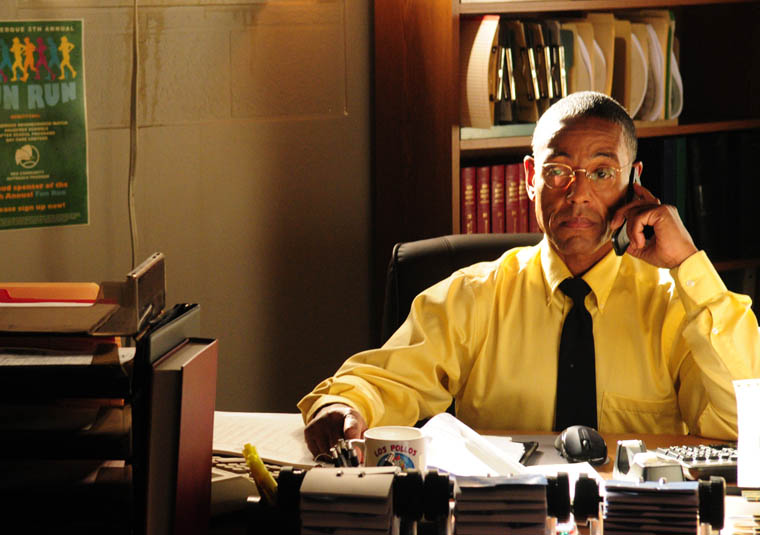
The show also forces you to pay attention to every detail. This show is not most shows where if they want the audience to see something they will make it blatantly obvious with a cut of a close up or a musical cue. Breaking Bad is more of a puzzle. For instance in last Sunday’s episode Gus, who doubles as Mr. White’s boss and an owner of Los Pollos Hermanos, a fast food chain, attempted to poison the entire cartel in Mexico by poisoning their alcohol he gave them as a gift. To not drawn suspicious he was forced to drink to. However we did not know he poisoned it. In a scene afterwards we see him seemingly throw food or something in his mouth (it was an anti-dote) and then minutes later the cartel started dropping like flies. There is also suspicion and many freeze frames online that think that Mike, one of Gus’ men, was going to surprise and shoot Jesse in the back before he was shot himself from an alive member of the cartel. A lot of this I did not catch the first time and I can’t wait to watch episodes again and catch new things I never saw before.


Finally, there is a conspiracy online about Breaking Bad and its connections to color. My friend and I have noticed this but we went online to see if we were not crazy in thinking this. Others agree but are not quite sure yet what it all means. For example Mr. WHITE wore a lot of green and there was a lot of green in the set when he was cooking the original meth product, which omits a green gas. However after a new type of chemical was added and changed their product to blue he has wore a lot of blue and the set pieces became very blue. His wife Skylar and sister-in-law wear colors off of blue (light blue and purple respectively). Gus wears a lot of gold and forces his employees to wear a lot of gold either at Los Pollos Hermanos or even when Walt and Jesse cook meth for him. They trade in their colors for Gus’ as if Gus then owns them in those scenes. Even Jesse’s last name of PINKman is about a color. Only time will tell if this is just is fans conspiring or a deliberate detail in the genius show that is Breaking Bad.


Tuesday, September 20, 2011
Catch the "Big C"
If you are a fan of anything on Showtime—especially “Weeds” then you should definitely be watching “The Big C.”

“The Big C,” currently on its second season is about 40-something Cathy Jamison, played by the lovely and Emmy nominated actress, Laura Linney who is diagnosed with terminal cancer. Sounds depressing, doesn’t it? Well, if you tune in you can expect just as many, if not more laughs than tears. Although the show deals with a heavy subject and themes of life and loss, the writers skillfully turn most of the tear-jerker scenes into something you can smile about. Cathy is far from a victim—she responds to cancer with nothing but her strong-no-bullshit-attitude that makes her healthy from within—no matter how sick she actually is. Her character is what gives the show its edge—she doesn’t want to die and so she is using all of her strength to fight for her life.
The series, still relatively new, follows Cathy from the beginning of her diagnosis, to finally informing her family and friends about her illness to her actual treatments and everything in between.
Oliver Platt plays her quirky and concerned husband, Paul with whom she has marital issues in the first season, while newcomer Gabriel Brasso plays her troublesome and temperamental teenage son, Adam. John Benjamin Hickey plays Sean, Cathy’s bipolar, homeless and radical brother who chooses to “live of the land.” While Cynthia Nixon and Hugh Dancy guest star for several episodes, Gabourey Sidibe, the Oscar-nominated actress plays Andrea, one of Cathy’s students.
The writers of the show are outrageous—consistently creating crazy situations that no cancer patient should ever have to deal with, keeping the audience emotionally involved and entertained simultaneously (without overly sentimental.)The characters create their own dilemmas and they often find themselves faced with unfortunate yet hilarious circumstances such as an unexpected pregnancy, racy love affairs and even several deaths. The storylines not only moving the story forward but challenge the characters’ outlooks on life.
The show explores what it means to really live and enjoy your life while you are still lucky enough to have it. And while you all have time, I would highly recommend watching this fantastiC show!
The second season's finale airs Monday, September 26th at 10:30pm on Showtime.
"8 1/2": Inspiration for Terry Gilliam's "Brazil"

While I may have not seen the entirety of Federico Fellini's 8 1/2, upon reading the chapter on it in Closely Watched Films: An Introduction to the Art of Narrative Film Technique, the first thought that popped into my head was, "I think I've seen this before." Terry Gilliam's 1985 cult classic Brazil is remarkably alike from both a stylistic and thematic standpoint.
According to its imdb.com storyline synopsis, Brazil is about the following:
Sam Lowry (Jonathan Pryce) is a harried technocrat in a futuristic society that is needlessly convoluted and inefficient. He dreams of a life where he can fly away from technology and overpowering bureaucracy, and spend eternity with the woman of his dreams. While trying to rectify the wrongful arrest of one Harry Buttle, Lowry meets the woman he is always chasing in his dreams, Jill Layton. Meanwhile, the bureaucracy has fingered him responsible for a rash of terrorist bombings, and both Sam and Jill's lives are put in danger.
While this may not sound so much like Fellini's classic, the main point of each movie is ultimately the same: a man is entangled within his dreams. Both films make use of vivid and often extensive dream sequences from the mind of the main character to illustrate his deeper desires. Guido, the star of 8 1/2, and Sam both have visions "of a beautiful girl in white [that] hold out an illusory promise of salvation and release from his mental stagnation" (Closely Watched Films, 155). The first dream sequences even bear a striking resemblance:
8 1/2 (sequence starts around 2:10)
None of this is particularly surprising, though. Gilliam has consistently cited Fellini as a tremendous source of inspiration for all of his work. The actual working title, before Brazil became "Brazil," was "1984 1/2," a reference to both Fellini and George Orwell.
This all brings me back to our class's past discussions on how Fellini's film has impacted modern movie making. His influence is clear in the case of Gilliam, but if you take a look at IMDb's movie connections for 8 1/2, the extensive and diverse list of famous films (including The Godfather, Eraserhead, All That Jazz, and Pulp Fiction) further proves its powerful place in film history.
--------------------
A short of Terry Gilliam talking about Fellini's 8 1/2:
To read more, try these links:
"Sam's Dreams-Brazil-1985" video - youtube.com
A Short Biography of Terry Gilliam - smart.co.uk
Revival House: "Has Anybody Seen Sam Lowry?" - popdose.com
Awkward.....a real-ish high school story

Their new high school drama, Awkward. is about an average-ish girl navigating the awkward terrain that is high school. It is surprisingly funny and more accurate then most shows set in high school. One of the things that adds to their believability is that they have a you cast (in comparison to most shows that are based in high school). Though the cast is not actually of high school age, they are the youngest cast portraying high schoolers on tv today. Many shows now a day cast people in the mid to late 20's or even in the their ealy 30's to play high school characters. These actors aren't too far separated from those awkward years of discovering themselves and making mistakes in the hell-ish place people call high school.
The show is seen through the eyes of the main character Jenna sharing her life with her blog readers (MTV actually goes the extra length to publish the blog as a form of interaction with the audience to add to it's growing sense of reliability). The show starts off when Jenna has sex with the popular guy days before school starts but he wants to keep his feelings for her secret from the world. Later that night she has an accident that makes the world think she tried to commit suicide and the rest of the show is the comic incidences that follow after she gains her new title of "That Girl".

Monday, September 19, 2011
The Emmy Losers
A lot of people talk about who won the Emmy's, but I'm here to talk about some notable actors that went empty handed this year. I'd like to start with the leading actor from one of my favorite shows, Michael Hall. Hall is Dexter in the show Dexter. Connie Britton also missed out. She plays, Tami Taylor on another of my favorite shows Friday Night Lights. It was good to see Coach Taylor win but I think that Britton had a much better performance then her male counterpart. Finally, Steve Carell walked away empty handed. Carell has repeatedly put up stellar performances as Michael Scott in the Office, however he has never won. I know the people who won the Emmy's deserved it and there are others who should have won that didn't that I didn't mention but that is just my opinion on the topic.
The Use of Flashbacks in 8 1/2
I have never seen 8 1/2 so my first impression of the movie was what they described in chapter 9 of "Closely Watched Films". I am really interesting in seeing it now, mostly because of the way they described Fellini's unique style of editing.
By seamlessly conjoining shots through match cutting (also referred to as continuity cutting), film viewers were encouraged to become involved in the illusion that they were watching, not a film made up of multiple bits and pieces of celluloid, but an unmediated reality. (165)Fellini used the editing, not to create an objective sense of reality, but rather to inv
ite the audience into Guido's mind. He throws continuity out the window and the film becomes a actual memory, with choppy edits and changing backgrounds to symbolize the distorting process of a memory and how uncertain they may be. It mirrors the wishful thinking and dreams of Guido as well as the visions of a traumatized child. It is a psychological ploy to step directly into the mind of the character. 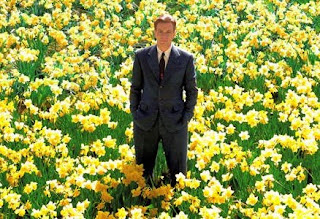 the flashback either follows that of the movie, or is flawless and almost dreamlike. For example, the movie Big Fish, which is predominantly told through the main characters flashbacks. However, whenever we do get a glimpse into his mind, it is a whole different world, mostly distinguished through the use of bright, fairytale like colors.
In many films, a fantasy or flashback is preceded by a ripple effect or a fading of the outline to distinguish the difference between reality and illusion. A look into the characters dilemmas through blurry images, harping music and an echoing subconscious. It distances the audience, rather than what Fellini intended to do in 8 1/2. It might be done by a particular repeating sound, such as in the show LOST, or maybe through a flash of lighting. But in many of these cases, the editing of
the flashback either follows that of the movie, or is flawless and almost dreamlike. For example, the movie Big Fish, which is predominantly told through the main characters flashbacks. However, whenever we do get a glimpse into his mind, it is a whole different world, mostly distinguished through the use of bright, fairytale like colors. Another example from a black and white movie would be Orson Welles, Citizen Kane. The movie alternates between the present and the past after the death of Kane and this clip shows on the first flashbacks to Kane's childhood. When the scene goes into the flashback of the main subject as a child, much as it does in 8 1/2, the shots fade into one another and the document we once saw slowly becomes a snowy day. The music also becomes louder and more involved, but the scene continues in a very cinematic manner.
Nine comes after 8 1/2

After reading chapter 9, Federico Fellini's 8 1/2, a light went off in my head like I have read or seen something like this before. I couldn't figure it out for a while, so i called my dad back at home and read some of the plot points and characters to him that the chapter described. He told me it sounded a lot like the movie Nine. So i did some research to find out that I did in fact
see the movie, and that 8 1/2 did intact have an influence on the 2009 hit movie.
Reading further into the chapter, the author kept using the term "double mirror construction," and what that refereed to was how the movie was portrayed. Unlike Hollywood films where each scene leads into the next and you can make connections, this new style of cinema took the audience into the mind of how a human really thinks, and put that on the screen. From dreams and emotions, to thoughts and ideas, you never knew what was coming and what was what. In one scene, Guido Anselmi, the director in the movie (not of the movie) would be doing something and the screen would radically change to what he was thinking of in his head. Whether it was a problem with his life, or something he didn't like in the film. Nin

e did similar cinema style, creating images of the on the screen to what the character was thinking.
As crazy as it seems, I can also relate 8 1/2 to a recent film called Inception. Both movies have similar themes finding true personal happiness in a difficult, fragmented life. In one, Guido Anselmi is trying to create the perfect film through all of his mishaps and life problems, and in the other Dominic Cobb (Leonardo DiCaprio) is trying to go through mazes and his life problems to get back to his kids. All of these movies are considered to be "second time movies" because you have to watch them twice to really understand what is going on.
If anyone has any comments or something to add, please do
steve kinslow
Sunday, September 18, 2011
Manson's Music Videos
So, I have a confession to make: I am a complete music video junkie...and my latest obsession is Marilyn Manson videos. While I realize that he might not be the most loved person in the music industry, I have immense amounts of respect for him for speaking his mind, and the combination of shocking (but most often, true) lyrics and images in his videos. His videos always manage to be incredibly interesting, often not only telling the story of the lyrics, but somehow managing to tie in commentary about current issues, and past issues that he himself has dealt with.
My personal favorite has to be, "I Don't Like The Drugs (But The Drugs Like Me)." The first time we see Manson, he is pinned up on a cross made of televisions, dressed in all white, in between shots of people with huge eyes peering out of falling-apart buildings. This is all going on while he sings the lyrics:
"Norm life baby,
We're white and oh so heater
And our sex is missionary...
Norm life baby,
We're quitters and we're sober
Our confessions will be televised..."
Next, the camera switches between Manson on the cross and the people inside, huddled around a television and learning simple words from flashcards, indicating societies isolation of children and teaching them a narrow range of subjects. This is all while these lyrics are said:
"You and I are underdosed and we're ready to fall,
Raised to be stupid, taught to be nothing at all,
We're taught to be nothing at all..."
At this point, Manson finally gets off the cross, and is being chased by headless police officers, portraying that the law has become less about what is right and wrong, and more about doing as you are told. He runs from the officers into an emergency room, complaining of a hurt arm, while he sings:
"Norm life baby,
Our God is white and unforgiving
and we're piss tested and we're praying...
Norm life baby,
I'm just a sample of a soul
made to look just like a human being..."
While he continuously talks about "norm life," the video shows flashes of different scenes, all in white. Two more verses of "norm life" later, Manson finds himself armless, trying to represent being forced to live without an essential part of himself. He runs into a Jerry Springer-ish talk show set, where looking around, he sees the madness of the entertainment industry, touching on everything from doe-eyed pageant girls being primped by their mothers to the sexualized fights that occur nowadays on "trash TV." In the midst of all of the chaos, the lyric, "Raised to be stupid, taught to be nothing at all," in sung.
As the video concludes, Manson finally "escapes" from the insanity, only to find himself wandering around aimlessly, all while still being chased by the headless officers. Law enforcement seems to be a common subject in almost every Manson video, which could be attributed to the amount of issues he has had with it in real life. Just like he has said in many interviews, at the end of the video, Manson is faced with a decision to surrender himself and face silence, or death. In the end, he chooses death over silence, and jumps off the building that he has been cornered on top of.
Once again, I realize that Marilyn Manson's music may not be everyones cup of tea, but I encourage you to at least check out some of his videos. They all hold a staggering amount of symbolism pertaining to not only the lyrics and the tone of his music, but issues that he (and many other people) are facing in everyday life. Below is the link for, "I Don't Like The Drugs (But The Drugs Like Me)," be sure to check it out!
Molly Boekenheide
Editing and Acting!
Given that this week we have gotten really in depth into acting and ways actors should express emotion in front of a camera, I decided to make my post on the Kuleshow effect. Over the summer I decided to watch 2001 Space Odyssey again (last time I watched it I was 13, of course I didn't like it) because I felt that analyzing this movie would be really beneficial for me. After watching the movie I decided to research more about it, and this is when I found out about the Kuleshov effect. This effect was "discovered" by russian director Lev Kuleshov (hence the name). It is basically a technique of editing in which he alternated an emotionless shot of famous russian actor, Ivan Mozzhukhin, with three other different shots. After showing the same different montages with the same shot of Mozzhukhin to different audiences, Kuleshov demonstrated that in film acting the audience is the one to attributes an emotion to character, depending on the different shots the director decides to cut to.
According to the different audiences, in the first shot Mozzhukhin looks hungry when he the shots cuts to the plate of soup. on the second shot he looks sad, and on the third one they said he had desire for this woman.
Here is Alfred Hitchcock explaining the effect. I feel he makes a better job trying to explain the effect.
I think it is really interesting how this effect has influenced the acting and direction in the history of films. Going back to 2001 Space Odyssey, we found the effect in most of the shots of the computer Hal. Given that he is a computer he cannot show any kind of emotion, but the audience gives the computer human emotions by the way Kubrick intercuts between him and the crew members of the Discovery one.
The last part this video reveals to us that Hal feels betrayed and angry with the crew members just by the way it was edited. The shot of Hal is just a red dot, We don't even see any facial expression, but when it is intercut by Hal reading the crew members lips, the shot of Hal is more powerful. I feel that we can take this kind of editing in mind when we direct our actors during a scene.
The Mile High Club comes to Prime Time Television
As the cold weather has reached us here in upstate New York and night is getting sooner everyday, I found myself wondering what new show would peak my interest during the cold nights of an Ithaca winter. Last year it was The Office. This year I am excited to see what the first season of Pan Am brings.

Ever since I viewed the movie Catch Me If You Can, I have been intrigued with the "Jet Age" of the 1960's. It was a world that is so foreign to me and I have found myself wondering what it would be like to be a part of it.

The show started as an idea from the producer Nancy Hult Ganis, who was a Pan Am stewardess during the Jet Age. She wanted to exploit this time period and turn into a show that would be watched by the masses.
This show has really peaked my interest personally because it has a similar motif that many of my favorite movies share. The world of the stewardess during this time was one filled with drugs, corruption, sex, and more.
In Goodfellas, this was a central motif because the way the drug sales were completed were through stewardess's and staff on the plane. This is the same idea in the movie Blow. This show has picked a topic that is interesting to many audience types. However if the show doesn't follow an interesting storyline, it could really tank and not make it through this first season. I hope for the best.
8 1/2: Different Perspective Viewings
After reading about 8 1/2 for class, I could not help but realize how different of a perspective I have now. When I first watched it, I was only 17 and did not understand all the intricacies of film. Being of absorbed by confusion prevented me from comprehending the bigger picture instead of noticing little things that make this film so "genius."
The story is was really made me so confused, all I saw were random patterns of events but now after reading it from an objective perspective, it all made sense that he was running out ideas and didn't know where his life was going. The fact that he was a catholic schoolboy and then becomes a lost creative soul truly highlights what it takes to be a director or apart of the industry. You have do somethings that no one has ever thought of.
Going off of what no one has ever thought of, reading about the editing scheme contributed greatly to causing confusion inside of Guido's mind. I thoroughly enjoyed how the walls did not match to give the sense that everything is changing and his life is just one big confusion while he blames his past for not being so creative. A story is a start but the editing is where all the ideas come together to create what Fellini was trying to say the whole time.
While everyone enjoys going to the movies and seeing movies, sometimes you need to think more in depth and see the little things that bring the full picture out of confusion in Guido's thoughts.
Boo.
Fear has always been a mystery for humans. What causes fear and why are we so interested in this? Fear is a negative sensation from a perceived threat. It is hardwired in our brain with the "Fight or Flight" response. Fear has been within the human condition as long as any other emotion.

This is a really odd reference but I like it anyway.
As much as we claim we hate being scared we still go to the movies to watch these heart wrenching films. It may be because of our morbid fascination to these things, our curiosity to the grotesque and the unknown. Stephen King explained that we love horror movies because it gives into our cruel impulsions.
We know why we find horror movies interesting but why are they scary to begin with? What makes a guy in a rubber suit scary or someone's arm being ripped off a hair raising experience? Instead of searching the internet for an answer I am going to try my best with my own explanation. Horror movies show us something that we usually do not see everyday, and sometimes shows us things we never want to see. The idea that a creature can enter your house at night while you sleep to drain all of your blood is terrifying. However even though the emotional side of our brain is paralyzed with fear our logical side can ease our mind with a rational explanation that vampires and werewolves do not ex
ist. That is why I think the more recent horror films do a better job with causing us fear. Movies like Hostel are scary because of a strong chance of them happening...well stronger chance than zombies knocking on your door for tea and cerebellum. What is scarier, a creature that can not physically survive in the real world due to scientific reasons or getting kidnapped in a foreign country then tortured to death?

Travel the world they said...
Just like anything else in our world, horror movies have evolved in order to keep up with viewers today. Our concept of fear has changed. Or maybe we have just become desensitized by traditional horror due to its over use. I think a crucial element of horror is the shock factor of some of the scenes, and the frankenstein monster can only be created only a certain amount of times before it becomes stale. As I stated earlier these new grotesque horror movies like Hostel or Saw show the viewers what they normally do not see, people getting tortured in sick ways. Thanks to special effects we can see a more realistic and brutal gore scene now without hiding in shadows and claymation.
Horror movies scare me for more than one reason, besides me being easily scared the future of horror movies can take an interesting turn. If what I said is true about the desensitization of fear than in the future we will see movies that will make Saw look like Nosferatu.
Now that's a scary thought.
8 1/2: Breaking the Rules and Paving the Way for the Future
For this week’s blog post, we were asked to read a chapter from Closely Watched Films by Marilyn Fabe. In the chapter it focuses on Federico Fellini’s film 8 ½. This unusual film broke a lot of the “rules” of cinema and helped pave a road for creative pieces of entertainment in the future. Overall after reading this chapter I came away with that certain “rules” of cinema could be broken with good reasons and intentions like how Fellini broke many of them in his strange and baffling film 8 ½.

8 ½ is a film about “director’s block” and tells the story of Guido Anselmi, a film director, who during the filming of his latest film, suddenly loses inspiration and worries he will not be able to finish and fail. One of the first “rules” Fellini “broke” was the non-linear story. The linear plot is constantly interrupted with Guido’s dreams, fantasies, and childhood memories that are triggered by present problems. This helps create a world of fantasy and makes it clear to the audience that this film is not about life but the make believe world of film. When first reading about this it reminded me of Christopher Nolan’s film Memento. That film is about Leonard Shelby who has anterograde amnesia searching for the killer of his wife. The film’s events are told in two separate narratives. One is told in chronological order in black and white and the other is told in color in reverse chronological order. As each sequence begins the audience is unaware of the preceding events just like the main character. Finally at the end the film’s narratives converge and everything makes a lot more sense. Memento in comparison seems a lot easier to understand and follow than 8 ½ and since I was confused during Memento I can’t even comprehend my level of confusion if I watched 8 ½.
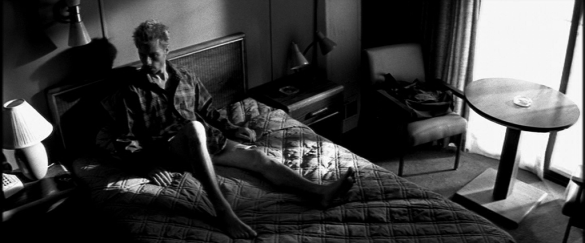


Another “rule” 8 ½ breaks is with editing. For example objects in the background and the orientation of people in the room move from shot to shot. This disrupts the viewer’s illusion of “reality” because in real life these kinds of things would not happen. However it makes perfect sense in the film because it helps capture the disoriented process of recalling memories, which the main character is doing. Try it yourself. It is hard to pinpoint the exact location of people and objects when recalling memories. In other words “rules” are meant to be broken but only with good reasons like Fellini had.

Like Memento, 8 ½ reminded me of a lot of other movies and television shows I have seen. First it reminded me of Six Feet Under when sometimes Fellini creates dream sequences or fantasies that are not really happening. Six Feet Under would use this method all the time to show what was really going on in their characters’ heads. Overall the plot of the film reminds me of two movies; Adaptation and Tropic Thunder. Adaptation is a Charlie Kaufman film about Charlie Kaufman’s difficult struggle to adapt The Orchid Thief novel into a film. It turns out it is based on upon his actual struggle when hired to write the film’s screenplay. Tropic Thunder is about a bunch of prima donna actors who are making a Vietnam War film based on the fictional novel Tropic Thunder. When their director becomes frustrated he decides to skip the script and drop them into the middle of the jungle to survive real action and danger. In the end the making of the film becomes the actual film in the film’s reality and is a worldwide smash! Sound familiar? Between these four movies and shows it is clear to see that Fellini’s movie paved the way for future strange and creative projects. It can take just one person to change the way we think and Fellini was definitely one for many people.
The Beauty of Soap Operas
In an industry where Showtime and HBO television series get all of the spotlight (with good reason), sometimes we forget how to appreciate all of the “bad” television there is out there. More specifically, I am talking about soap operas. Yes, you read correctly.
Now, I am not an avid soap opera watcher, in fact, I think I may have seen only one episode of General Hospital and that was because James Franco was on it—but I must admit that over the summer, I became obsessed with a Spanish soap, una novella called “La Casa de al Lado.”
This is not an entry about the differences between Spanish and English soap operas, but rather about soap operas themselves. With so much fantastic television out there, soap operas get the short end of the stick and don’t get as much recognition—particularly by us students who are preparing to enter this industry or some variation of it. I believe it’s important to take a close look at soap operas and see why sometimes they’re so good, and sometimes why they’re just so darn awful.
Here is what stands out to me:
1. One of the best things about soap operas, in fact the most admirable—is the short amount of time that it takes to put on the production of one episode. Usually, it’s one day per one episode. Now that is just crazy! When you think about it in context, it is quite impressive. After all, how long does it take us to shoot a scene that is merely five minutes?
This creates an atmosphere of constant pressure because of the lack of time. This is the reason that a lot of soap operas aren't that visually exciting or impressive. A lot of their scenes are shot once, using three cameras so the lighting has to be able to work for all three angles simultaneously. Also as a result of the quick production time, the settings aren't always as believable as they could be if it were a production on a larger budget. Take a look below at the hospital scene and awful car crash in La Casa de al Lado.
2. The actors on soaps of course may not be the most groundbreaking actors to ever have been on television, but, they are very good at what they do. Since soaps have such a short production time, the actors are usually in the position of having to memorize their lines in an incredibly short amount of time-sometimes a day before the actual episode or scene is shot. This presents a huge challenge to the actors and it is highly respectable that they take their craft so seriously. After all, how many times do we hear of “serious” actors in Hollywood showing up to sets and not having their lines memorized?
Also, soaps feature up and coming actors quite frequently, usually giving a completely new actor their first role. Many times, great actors have had their start acting in a soap opera. Some examples include: Demi Moore who worked on General Hospital, Meg Ryan (As the World Turns), Christopher Reeve (Love of Life) and Susan Sarandon (A World Apart) – all of these actors have had successful careers after their initial soap-spot. They are just a few of many.
3. The best aspect of soap operas in my opinion is the writing (yes, I really did just write that.) Now, let me explain myself. When I say writing, I am well aware that there is far better writing on television than what ends up on One Life to Live, but that’s not my point. Soap opera have absolutely no limitations. None whatsoever. There is nothing impossible within the realms of a soap opera. Characters can die and come back from the dead because in fact, they were never really dead at all. Characters have shady pasts and can end up being evil even when they’ve been pretending to be good. It must be pretty fun to work in a writers room for a soap opera. Anything you suggest or think of can actually happen.
Granted, not much of it might logically make sense but that’s why it’s fun—it’s creative.
Like I mentioned before, I do not watch soap operas, however, I think it’s important to take a look at the shows that we truly admire and the kind of series that we don’t because we can learn a lot from both. Soap operas are extremely popular all over the world, with even their own award shows (Daytime Emmys). They last for years, even decades so even if it’s not something that you ever want to get into, it’s still interesting to know their production process.
Thursday, September 15, 2011
101 Acting
After watching the video today, I realized that acting is not so much a talent, but more of an art. Michael Cane went on to talk about how simple you have to look in front of the camera and that less is more, especially on close ups. I did some researching of my own and found some other helpful tips that might help the rest of the class with their replication project.

1. If your scene has dialogue, tell your actor/actress to make sure he/she knows the character they are playing. if the character is serious, then the dialogue shouldn't come across funny or sarcastic. IF your having trouble keeping your actors from laughing, go through the scene a couple times until the laughter dies out. It is too easy to spot out on screen actors holding in their laugher, and it only ruined the shot.
2. If you have characters in the background or just simply not speaking, give them something to do while on camera. What I mean by
that is to make sure he/she isn't doing something to just get T/V time. They should have a purpose to the shot and should be doing every day kind of things.
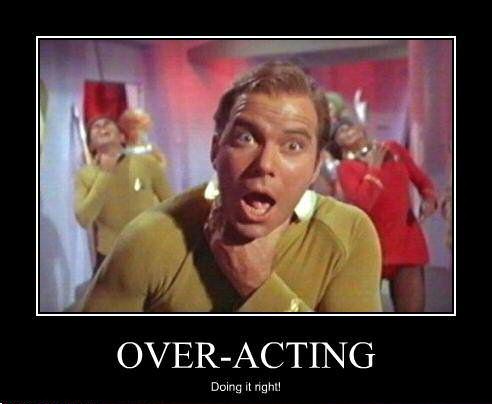
3. Last, be aware of overacting. Make sure you understand what the scene's purpose is and that you don't exceed or miss the point. A lot of the time, beginner acts feel like they need to stand out from the others so they feel obligated to try and make more of what they are suppose to do. This mistake is easily avoideable and shouldn't be seen in any of our projects.
I hope this helps to all that read. Give me any feedback you got or anything else that I should maybe add to the list.
Steve Kinslow
Subscribe to:
Posts (Atom)