Showing posts with label special effects. Show all posts

Monday, November 16, 2015

Goals: Learning Adobe After Effects


Adobe After effects is an amazing program. As its name implies, it lets you add visual effects to a project, ranging anywhere from stabilizing footage to a complete 3D render of a car or a building. The potential of this program is almost literally endless, and that is why it is an essential skills to possess in the field of media production. 

I've been wanting to learn Adobe After Effects since high school. I've been working with Premiere for a few years now, and I feel moderately proficient at it. After Effects is a different story. On multiple occasions I've tried to tackle this intense program, and each time I've turned away frustrated and discouraged. I was convinced that organized instruction in a classroom was the way to go. My high school didn't have any advanced production classes to expose me to this software, so I was basically on my own.  I have been trying to take Motion Graphics and Animation with Arturo for the past 4 semesters, but I've never been able to get a seat in the class (Thanks, Ithaca). On to of that, Arturo won't be teaching when I return from LA next fall, which has me extremely worried. I've heard great things about the class as it is, but I'm nervous that I might have missed my chance for quality AE instruction. 


Like I said, I've tried several times to teach myself. Most of the tutorials I've found online are either 3 hours of a monotone voice spouting out instructions, or some pre-pubescent 12 year-old filming his computer screen. Both are equally frustrating and discouraging. 


However, today in class Arturo showed me a tutorial website, video copilot.net, that may be the answer to my After Effects woes. This comprehensive website has over 150 video tutorials on everything After Effects; from the basic layout to tools to effects, this website looks like it is everything I've been looking for in one place. Oh, and did I mention it is free? The videos are funny and entertaining, its not just commands and data be dumped into your ears. On the other hand, the videos are actually helpful, its not just someone trying to boost their Youtube subscribers.  I haven't had a chance to really dig into it yet (you know, because school), but I imagine "After Effects 101" is the perfect place for me to start. The website also provides you with project files for EACH VIDEO so that you can follow along and literally practice on the same files showcased in the video. There is also a tab to download various plugins and 3D packages, some for free and some at cost. 


After Effects has sort of intimidated me up to this point, but it really is the next weapon I want to add to my arsenal as I get closer to joining the *shudders* adult, professional world. It is an incredibly powerful program that allows for an immense amount of creativity. It is going to take time to learn just the basics, and I don't see myself doing an full 3D renders of cars anytime soon, but my plan is to slowly work my way through videocopilot.net and try to gain an understanding of the program and its nuances. You gotta start somewhere. 


Tuesday, September 15, 2015

The Green Screen: Just fix it in post (but really)

Not to sound like an old person, but technology absolutely amazes me these days. I was just recently shown the new Snapchat update, which includes new features like being able to put crazy animated features on your picture that track and move with your face on the screen. If you really take the time to think about it, that's pretty freakin' cool. How long would someone have worked to create that effect on a moving picture only fifteen years ago?

Almost every major production involves green screen, or chroma key, in some capacity. Whether it is creating a fantasy land, or making a slight change to the background, green screen technology gives filmmakers the power to manipulate the onscreen world in more ways than one. So, how did we get here?


The first use of a green screen, or at least the idea behind it, came from Georges Méliès. Ol' Georges didn't use a green screen, or any screen at all for that matter. He used a 'matte shot' by actually painting (matting) parts of the frame black, which would stop it from getting exposed. He would then rewind the frame and matte our every ELSE in the frame, and only expose what was originally matted, resulting in two 'different' shots in one frame via double exposure. And thus "green screen" technology was born:


As on screen trickery evolved, another more direct technique was developed. Filmmakers would actually have a piece of glass painted, and then place it between the subject and the camera. Kind of the ultimate perspective manipulation. This technique was perfected by early filmmaker Norman Dawn. 


To solve the problem of motion in film, both primary and secondary, the "black screen" was born, the ancestor of todays green screen. This allowed a entire background to be matted, and also eliminated any matte "line" that actors would have to avoid crossing or else ruin the effect. It was most famously used in The Invisible Man.
As technology advanced, several different colors emerged in efforts to perfect the matte process, but in the digital age green has emerged as the industry standard. 

It seems like each year some new, visual stunning film comes out that totally blows us away. From Jurassic Park to Avatar, Gravity to Interstellar, Alice in Wonderland to The Hobbit,  green screen digital effects seem to be taking over cinema. They allow a surreal escape into fantastic worlds, or, as technology continues to advance, it just might be easier to "green screen it" and literally fix it in post.


Some interesting examples:


Friday, October 24, 2014

Car Crashes and the Art of Green Screen

So we've got this car crash scene.

At first I was thinking of filming myself run through a red light in downtown Ithaca and see what happens, but as it turns out there are far safer and cost efficient ways to do this.

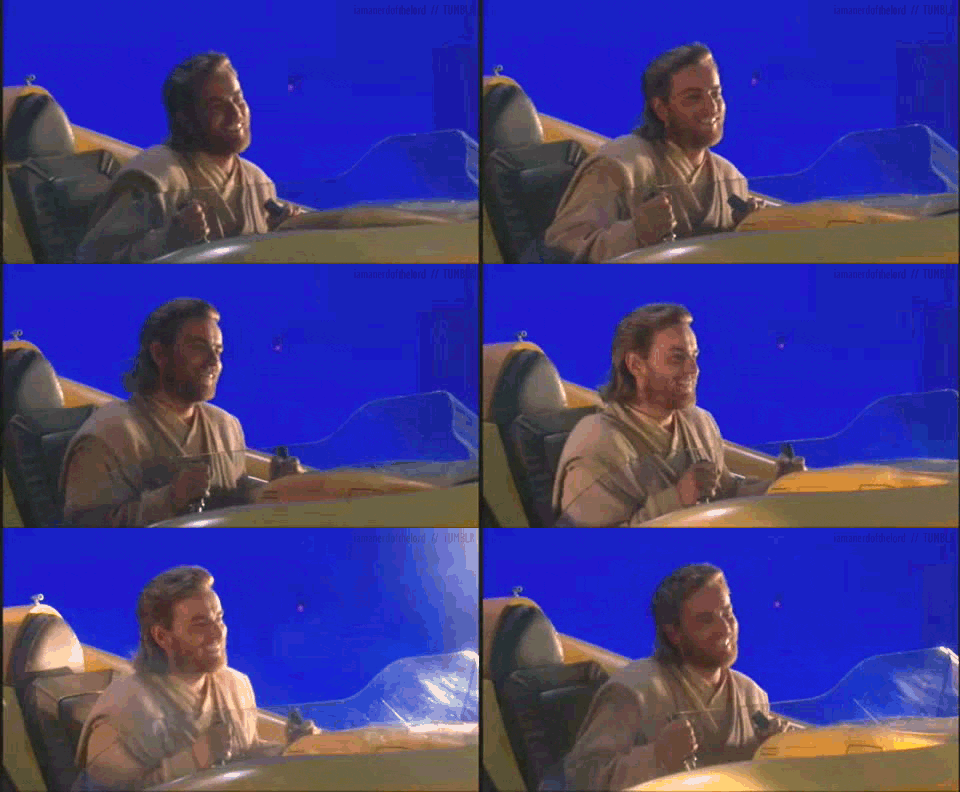
These days, you don't need to be a filmmaker to understand how a green screen works. You tell the computer to replace a certain color (in this case bright green) with another other image. The result is something like this:


Seems pretty basic. But it's time I admit the truth... I'm terrified of green screen shots. 

Why?

Call it a form of PTSD. Once upon a time I did some sub-par acting in a film that involved a car crash and the result was... less then optimal. 


To give the crew some credit, what they were trying to do was pretty complicated. Green screen shots for a moving vehicle involve light passing by from the streets, moving scenery in the background, and reflections off windows. That's a lot to think about and it's involves all three stages of production. Thankfully though, the internet has plenty of resources that list out the steps required to accomplish something like this. 

For work in postproduction, the best tutorial is by Video Copilot:


With these resources, I feel much more optimistic and prepared for this undertaking. It can be complicated, but if all steps are followed to a tee then the process should be painless. Now I just need to convince Mr. "Editing for Dummies". 


Friday, September 19, 2014

Practical Effects: The Real Magic Tricks of Filmmaking

Special effects in filmmaking could be summed up into two different styles: visual effects, and practical effects. Visual effects usually involve editing the footage in post-production, while practical effects are done live in front of the camera. Visual effects can have a really cool effect when used effectively, like in this summer's blockbuster film, "Maleficent". Of course everything you see is fake and created on a computer, but the movement of the camera makes the scene very compelling.

Free Image Hosting

So. Visual effects can be pretty cool. But I'm here to talk about why practical effects are way cooler.

Why are they way cooler?

Well, many reasons. For one the shot is going to have a timeless effect and will look real 100 years from now because, well, it is real. Visual effects however are very time sensitive. These magical, awe-inspiring scenes we see now will look laughable in a few years. But that's how technology works.

Check out these two scenes below...

The first one is from Terminator 3, where they flipped a massive construction vehicle using computer-generated visual effects. The second one is from the Dark Knight, where they do almost the same stunt except they actually flip the truck.


Now to be fair some might jump up and say the Terminator version is better because the truck is seen crunched in to the ground, tires flying through the air, and of course a nice big explosion to finish.

But sorry, you're wrong.

Consider this analogy....

The Dark Knight's effect is like a gourmet selection from that restaurant down the street...


...and The Terminator's visual effect is like a #2 from Panda Express with extra meat.


But consider this analogy for a second. Even though Panda Express is of less quality, overall it's a better deal. You're getting a lot more food for a lot less money. There's plenty like about it... but little to appreciate. You will not eat Panda Express in small bites and appreciate the amount of work it took to create such a masterpiece. It's just something that will make you happy in that moment. And minus the painful poo afterwords, that's exactly what the Terminator 3 effect is. It's just a cheap audience pleaser. 

I hope a few of these behind-the-scenes videos below will help convince you:

First off, The Dark Knight flip:


 Come on... that's just FRIGGIN COOL.

For any of you that have seen Inception, you may remember the scene when Joseph Gordon-Levitt is in a fist fight whilst flying all across a room because of changing gravity. How do you create the effect of a room rapidly changing gravity? How about RAPIDLY CHANGING THE GRAVITY?


This next video is from "Edge of Tomorrow", a film I expected to be a horrible flop. Tom Cruise stuck reliving to same war scene day after day? Sounded to me like an excuse for big explosions and no story at all. But the reviews came out and they were actually really positive. I couldn't believe it. I had to see what all the huff was about, and I was indeed pleasantly surprised by the engaging story. The story does of course include several explosions and battle scenes, but I remember thinking that they were acted out very well. That is, the actors seemed to be reacting to their environment quite realistically. After watching this video, I realized why. This video features several small clips, but the most impressive clip is at 2:58. It's truly incredible and I don't think many actors could pull it off besides Tom Cruise. 


Of course there are many other notable films that are famous for their use of practical effects, but I hope this gives you an introduction to the fine art and precise skill of these types of effects. They are dangerous, expensive, and difficult, but that's why they deserve so much appreciation.

Crave that gourmet shit.


Friday, September 28, 2012

"Nuit Blanche" and other cool stuff

Last year in my Fiction Field I class, with Steve Gordon, he showed us a series of short films that focused heavily on special effects. One film that changed my perspective on how large of an impact special effects can have on the emotional and visual aspects of a short film, was the short film Nuit Blanche, a Stellar Scene production. The film is directed by Arev Manoukian and focuses on the connection between two strangers and explores their interactions in a fantasy world. I was captivated by the film's ability to display an array of emotions in less than 5 minutes and fully engage the viewer with beautiful music and exceptional special effects. The film is silent and black and white, focusing on the actions of the characters and the tragedies created by their love at first sight.


The most intriguing part of the film is the use of special effects. The first step used to making this film was  constructing the backgrounds and landscapes piece by piece, from a variety of city landscapes and building structures. Each building was carefully constructed and built to portray the dark feelings associated with this story of fantasy.  The director then used green screens the place the actors in these locations. To portray the car accident and glass shattering, each piece of the vehicle was placed in several frames and layered behind the actor. This created a sense of realism and made the car accident very emotional for the viewers. The special effects are done so flawlessly that you believe the accident really took place. The director also altered the lighting present in each shot, creating a dark and dismal look.  
I recommend every film student to see this film. It is an excellent of example of how short films can have an incredible impact on an audience and that sometimes the most powerful films are done without dialogue. Nuit Blanche is an excellent example of extensive special effects and how flawlessly scenes can be created. Manoukain does an incredible job of portraying the emotional complexities of love at first sight and the sometimes unavoidable tragedy. This film is beautiful and proves that the shortest of films can be the most time consuming. Please check out both videos and take the time to appreciate the beauty of this short film.

Enjoy the weekend,
Brie

Wednesday, November 9, 2011

David Fincher and The Social Network


The Social Network is an award winning film by David Fincher. It tells the story of how the social-networking site of Facebook was founded but it is also so much more than that. It uses this story as a backdrop of friendship and betrayal. Based on the novel The Accidental Billionaires by Ben Mezrich, The Social Network is arguably one of the best films from the last few years.

David Fincher known for movies like Se7en and Fight Club is considered a visual artist. His films are very stylized in terms of color and composition. Looking past the technical side he also works well with actors. Not only does he allow and plot time for experimentation for the actors, he is also determined to get their best performances. In the opening scene between Mark and Erica, which was over eight pages of straight dialogue, he took 99 takes. He did this to break the actors and strip the acting away from them. Instead of sounding like rehearsed lines it looks and feels like two college kids simply talking as their characters. There is no acting going on. They know the lines inside and out and now Jesse Eisenberg and Rooney Mara have become Mark Zuckerberg and Erica Albright.

Fincher is also great with special effects. Actor Armie Hammer played both the Winklevoss twins but there are many people out there that think that there are two Armie Hammers in the real world. Josh Pence actually played one of the twins from the neck down and had Armie’s face digitally replaced over his. To further match each other’s movements and rapport they spent 10 months in twin boot camp together. This makes scenes like the rowing scene at the Henley Sequence possible.

My friends and I were so excited for this movie to come out that we even decided to recreate the amazing trailer shot for shot all in one 24 hour span during finals week of last year. Without telling our friend who looks like Jesse Eisenberg (so he would not know what he was doing) we ran around campus recreating the scenes from the movie. We later spent weeks editing it all together to make it match with the original trailer. If played side by side with the original they would match perfectly (which I have actually created a file doing so). Even though it is filled with inside jokes between friends it was posted online and have since received a large number of views (currently we just hit 800). A few weeks ago I was even asked to talk about the trailer on Ithaca College’s television show The Screening Room: Director’s Corner. If you are interested you can check out the interview here. I am the third and last person interviewed in episode five from the Fall 2011 season.

The Social Network is a brilliant film by David Fincher that I cannot speak more highly of. The acting, directing, writing, and soundtrack are just amazing. This film actually made me want to go back and re-watch other Fincher films and currently has me very excited for the upcoming Fincher release of The Girl with the Dragon Tattoo. If anything like Fincher’s previous work I am sure it will be spectacular.

Monday, October 17, 2011

Supernatural Effects

In the show Supernatural, each episode deals with a different demon or creature, and none of that would exist without the special effects. It's not just in post production and after effects, but blood pumping mechanisms and extreme make up are needed to make this show happen. I can't even count how many times someone gets stabbed or sliced in this show and there is an entire team working from pre to post to make this all happen. I was watching a few videos about the special effects and this one is a pretty revealing behind the scenes look at how the special effects team creates the blood, gore and monsters.


What is particularly interesting is how they start planning before they even get the script. They don't film everything and then work in the effects, but they can be called up and just be asked for more blood. With the demand for so many effects in such a short period of time, the production team has the dilemma of completing the project, but still making is aesthetically pleasing and as realistic as a demon throwing Jensen Ackles against a wall as it can be. Then, they have to deal with the actors limitations and creating what they need as characters to work with. The show is unique in which each episode deals with visual and special effects as well as make up effects. It is hard to distinguish the line drawn between production and post production effects. Obviously, programs like After Effects have the ability to create blood, but that can easily be done in a more organic method. It comes down to the kind of visually pleasing image you are looking for.

Sunday, October 9, 2011

Iron Man Beams Replication for Project 2

I'm working on a test for a scene in my project. I'm trying to recreate the Iron Man light beams but need some help or guidance as to what people would like to see or what it should look like.


So far I think the test is almost there. I am working on installing a little energy orb around the surface to make it look realistic in some sense. Overall I am having a great time with this project after shooting and look forward to working on more special effects.

Tuesday, October 4, 2011

The Wedding Of River Song


That's it. That's the end. This is the end of the series. You can all stop groaning at me now. ...Nah, just kidding! I could throw 26 seasons of the classic Doctor episodes at you! Muwahahaha!

I'll skip the story for this blog post. If you want to know what happened, you'll have to watch. Of course, the acting on everyone's part was impeccable. I'd expect nothing less from a BBC show that's now entering it's 49th year.

What really stood out about this episode was how bizarre it was. Something is wrong with time, meaning that all of history is happening at once. The effects team needed to therefore find out how to put pterodactyls in a park in London. The set designers had to build a secret evil lair inside of the pyramids. Make up designers had to create a horde of the Silence using only prosthetics and body glue. So many intricate parts went into making this episode look as good as it was supposed to; but together they helped deliver a visually beautiful ending to this season.

Things to look out for as far as this episode goes: Dorium, who's all blue. The fight scene between the Ponds, Kovarian, and the Silence. Any scene where they aren't on Earth. The cinematography helps the effects as the effects help the final product. The best thing about high-profile big-budget sci-fi shows is that when they're done well, they're done really well, and everything clicks together in harmony.

Get psyched for Autumn 2012. I already am.

Monday, September 26, 2011

Spielberg brings Jurassic Park to FOX

There are a lot of good shows set to premiere this fall, but the most expensive one by far is the Steven Spielberg produced Terra Nova. While the two hour series premiere (airing tonight) has been critiqued for it's choice in actors, the acting itself and the premise of the show, one aspect that has been raved about is the dinosaurs. The future is in environmental dismay and their only hope of restoring society is to take select individuals back 85 million years to live in colonies. Terra Nova expands on the realistic dinosaur effects Spielberg pioneered in Jurassic Park. He is breaking boundaries on what the audience expects from a network show, with a budget of almost $20 million for the pilot alone (the rest of the 13 episodes range around $4 million each). Each episode racks up about six to eight weeks of extra production time for the advance CGI needed to create the realistic dinosaurs that become the main focus of the show.

I think that even if the plot and writing is excellent, bad special effects can really take away from a good show. Primeval is a show that started airing in 2007 on ITV, it is about a magnetic anomaly that opens up and allows dinosaurs to freely roam between their home in prehistoric times and present day Britain. I love the show but some of the times I find myself distracted by how ridiculous some of the dinosaurs end up looking (mainly the larger ones).

Tuesday, September 13, 2011

What does Gravity have to do with it?

We talked about this in class today. Defying gravity on the set from the simple to the complex, from the cheap to the extravagant!

Though a very simple solution, it has always caused wonderment on the eyes of the public. It is probably older than that but 1930's Blood of a Poet by avant garde artist Jean Cocteau comes to my mind as one of the earliest in which gravity was defied.

le sang d´un poète

More famously and better known by the American audiences is the 1951 Fred Astaire movie Royal Wedding by Stanley Donen .

Royal Wedding by Stanley Donen

That famous sequence of course inspired an even more famous scene, albeit more complex, in one of cinema's great modern movies, Stanley Kubrick's 1968 masterpiece 2001: A Space Odyssey

The "centrifuge" set used for filming scenes depicting interior of the spaceship Discovery

And of course...INCEPTION