Showing posts with label postproduction. Show all posts

Wednesday, December 3, 2014

Teaching Filmmaking for Dummies!

It's finally here. After three consecutive semesters of blog posts, this is my final post. First Fiction Field Production 1, then Motion Graphics & Animation, and now Fiction Field Production 2, my journey is finally coming to an end. It's not that I haven't enjoyed writing dozens of posts about the fascinating things we all ought to know about the film industry--I have, mostly--but, nonetheless, every good thing must come to an end. That's why deciding what to write for my last post was such an easy decision. What's the point of it all? Why are we even here? The answer is simple: we want to make the best films we possibly can.

I've spent the last few months informing you all about the responsibilities of each and every one of the most prominent positions on a film crew. That's great and all, but what about those of you who don't quite know what you want to do with your life? What about those of you, like myself, who are still learning the basics of filmmaking? Don't fret! Because this week, I'll be focusing on Teaching Filmmaking for Dummies!

Everyone has had good teachers, professors, and mentors. Everyone has had bad ones as well. When it comes to filmmaking, there are very precise guidelines a teacher must follow to be good. Their methods may differ immensely, but the range of information must always be the same. Thankfully, it's only taken me three semesters to realize this. Here we go...

Preproduction.
It's easy enough, isn't it? Nope. Writing a script. Creating a production schedule. Finding a crew. Visualizing the film's look. Finding and securing locations. Casting actors. Putting together the production design. Making a floorplan. Breaking down the script. Creating the storyboards. Making a shooting schedule. And that's it! I'm joking. That's a lot of stuff to get done in a reasonably short amount of time, so you've better do it right the first time. A good teacher (I say teacher because a person who furthers your knowledge doesn't necessarily have to be a professor) will help their students understand the importance of this preparation, and the students will usually ignore the teacher's recommendations and consequently realize its importance after they fail to give it the proper attention. A good teacher will say "oh well, hopefully you'll do better next time." And they'll tell you how to do better next time.

Production.
The concept is easy enough to understand. It's the part of the filmmaking process when you actually make the film. It's when all of your preparation pays off and you finally see your baby coming to life. Depending on the level of preparation, this step of the process can either go smoothly (or as smoothly as possible) or terribly. While things such as lighting and shot listing are often not prepared properly in student film productions, a good teacher will give you the knowledge to think on the fly. They will pass on all the information they posses on lighting, blocking, directing, shooting, etc. If they do a good enough job (and if you're paying enough attention), you'll have no problem having a good shoot despite your ill-preparation. A good teacher will make sure you know how to light a scene to give it the proper look. They'll teach you to frame a shot so that everything has meaning and nothing is where it shouldn't be.

Postproduction.
We finally get to the part of the process when everything starts coming together. You take the "what the heck are we gonna do with this" and make it into the "I can't believe we made this." A good film teacher will make sure of this. They'll teach you the importance of coloring, sound, and each and every edit. After learning from this person, you'll comprehend the meaning of each of these aspects and how the slight alteration of just one of them can change the entire meaning of a scene. Most importantly, as a wise man once said, "Cut, cut, cut, cut, cut." What he meant by this is that anything that's not of absolute importance to the film should not be there. If it doesn't contribute to the progression of the story, get rid of it. Even when you think something may be important, try taking it out and see if the story changes without it. Chances are, it can often be thrown out. The leaner the film, the better it usually ends up being.

"Who could possibly meet these standards? A semester simply isn't enough time to get across all of this information to students without having their heads explode." You're not wrong. Well, not completely, anyway. Students' heads will most definitely explode, but it's more than possible to successfully cram all the necessary information into a short amount of time. Including typical information, a good teacher needs to hold certain characteristics...

Be blunt.
A good teacher won't make their students cry, but they tell them how they feel about the students' work. Nobody wants a film teacher who will coddle them. They'll never learn that way. They tell students what they did wrong and how they can fix it. How else will they learn?

Be demanding.
Set high standards. If a teacher expects a lot out of their students or protégés, the students will give better work. Nothing will hurt students more than low expectations, because they'll have nothing to aim for. Students don't want to disappoint their teachers, so they will try to meet those high expectations.

Be inspirational.
The hardest working students are the most inspired students. Fact. The most inspired students come from teachers who connect with them and who explain how their success began right where they are. Those who believe they can achieve success, will.


"Ok, this is simply ridiculous. How can you be blunt, demanding, and inspirational?" Well, I'm not the one to ask. It's a tricky equation that somehow makes total sense. If you'd really like to understand, I recommend you take a class with Arturo Sinclair. In the past year of my life, I've learned more about filmmaking than I ever imagined learning over the entire course of my college career. For that, I say 'thank you', Arturo. Thank you for [attempting] to teach me everything you know. Thank you for teaching me to think [way] outside the box. Most importantly, thank you for always having faith in me. I can't wait to put all the knowledge you've given me to work. After everything, one thing's for certain: you're certainly no dummy, Arturo.

Monday, October 13, 2014

Director of Photography-ing(?) FOR DUMMIES

Oh hello there. Didn't see you there. No, don't go! As long as I have you here, we have a very important matter to discuss. For centuries (or at least for a little while), there has been a daunting question on people's minds. What exactly does a Director of Photography (or cinematographer) do for a film production? Hmph, that's certainly a tough question. Let's go to the expert to try to find an answer to this inquiry.
...

What's up, guys?! You know me. I'm that guy. From that thing. You know, that thing? No? Ah well, might as well just give you what you came here for. So you want to know what a director of photography does, huh? Well you're in luck! It's time for this week's "...FOR DUMMIES!"


Like quite a few other crew positions (Producer, Director, etc.) the director of photography's (or DP for short) job stretches out over all three stages of production: preproduction, production, and postproduction. They really don't get any sleep, but who needs sleep?! Let me break it down for you.

Obviously, we start with preproduction. Duh. The DP begins his/her job with discussing the director's vision for the overall film as well as scene by scene. Based on what the director is looking for, the DP determines what exactly is needed for each scene, and, following that, hires a camera crew and organizes and purchases any equipment and supplies that will be needed. When deciding what's needed for each scene, the DP works with many other departments--including sound and lighting--to coordinate production needs. In summary, the DP uses his preproduction time very wisely. He pretty much plans out every shot and gets any and all the tools he'll need to acquire these shots.

After many months of planning, the DP's job moves into production. The most essential thing the DP must do during this step of the process is to coordinate the crew while working closely with the director to make sure every scene and shot is set up to match the director's vision. If the director doesn't get what they want, may Hitchcock have mercy on your soul. Here's where the difficult stuff comes in. For each and every shot, the DP must decide on: the best combination of cameras (oh yeah, filters and lenses, too), the placement of the cameras, what the lighting should look like, AND when the best time would be to shoot. On particularly large films, the DP often oversees several cinematographers who supervise different camera set-ups. He often ALSO manages the photography budget, so the DP is kind of like a part-time production accountant.

Finally we come to postproduction (yeah right, we're not done yet). The first step of the third step of the three-step film production process begins with the DP working with the processing lab to make sure the film retains the color and the mood that he and the director were aiming for. If this part of the process gets screwed up, then a big chunk of all the hard work and planning goes right down the drain. The DP also reviews dailies as well as cuts of the film throughout the editing process. It's important for the DP to participate as a critical eye throughout postproduction.

Alongside the film director, the director of photography has some of the most creative control of the entire crew. They decide what we see and how we're going to see it. Often times, the DP is the person who makes a good film into a film that we'll never forget...

Or they can be the person who absolutely ruins it. Either way, they're really important.

Sunday, October 5, 2014

Publicizing for Dummies

Hello ladies and gentlemen. I know this early posting may come as a shock to you all, but this week's schedule is looking a bit random, so I figured I'd enlighten you all tonight! Don't worry, I'd never let anything get between us. Now you may be wondering, how would a series of blog posts become as famous as this? Well, aside from the beautifully written ideas that I've shared with the world, it's been completely due to my Publicist! Not really. But wouldn't you love to know more about publicity? Of course you would!


A production's publicist works alongside some very important people. Specifically, a publicist works closely with the executive producer, director, art director, and publicity designer. They work to promote and, well, publicize the film during every phase of production. From the beginning of preproduction to the end of postproduction, a publicist's job is definitely one of the most vital responsibilities that decides a film's success. If no one knows about it, no one goes to see it. It's as simple as that.

In the simplest form, a publicists job is to advertise the film. This can manifest itself in posters, flyers,
and other promotional advertisements. One of the responsibilities of a publicist is to secure permission for and to supervise the placement of these advertisements. This can include anything from putting up posters in theaters around town to securing radio spots nationally. This is really the most obvious of a publicists responsibilities and it's probably the job that the public notices the most. They just don't usually know who's behind those flashy ads that convince them to see the movies.

The publicist also acts as a liaison with the press. They're to go-to-guy (or girl) when it comes to dealing with the press. It may not be particularly glamorous, but hey, someone's gotta do it. Who knows, the press may be kind of cool when you're not a famous person. Probably not, but maybe. The publicist additionally supervises the generation and distribution of press releases. I'm not totally sure how that's different from the first point in this paragraph, but it was two separate bullet points on this article I'm reading, so it's got to be its own substantial point. Right? Ah, who cares?

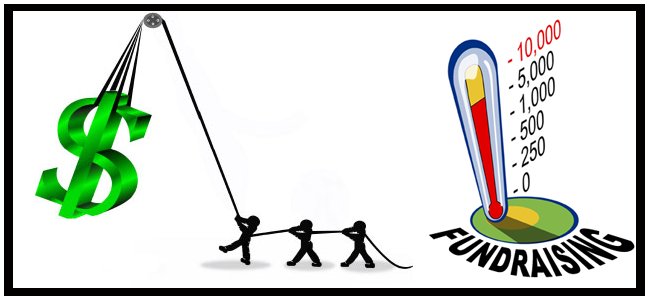
The last main responsibility of a film publicist is to assist in fundraising activities. This can involve crowd funding (such as IndieGoGo and GoFundMe) or outreach (begging rich people for money, but with class, of course). The publicist works with the executive producers in this step of their job. So basically they work with rich people to get more money from other rich people. It's actually a pretty ingenious setup if you think about it. It seems to work pretty well, at least.


Without publicists, there would be no films. Well, there would be films, but no one would go to see them, considering no one would know anything about them...or the fact that they exist. So they may as well not exist. That's what publicists are for! (Letting us know what's out there and why we "should" see it.)

Thursday, September 11, 2014

Producing for Dummies

I'd like to state for the record that producing is not actually for dummies. Nor is this an attack on you, Diana. If anything, the dummy in this situation is me. I found myself sitting in my room this afternoon, and the question popped into my head: "What exactly do movie producers do?" So, I did my research and actually found that it's a whole lot more than what I originally thought.

A producer's job begins in preproduction. Psh, I knew that. What I didn't know is that the producer is the person who pretty much gets the project off the ground. First, he (or she, of course) needs to find material for his next project from either a script or a book. Then he needs to get a script in good enough shape to attract the attention of a possible director (and even a studio if a studio wasn't the one who started the project). After that, the producer's job in preproduction is pretty much done. HAH! Yeah, right.


Once the producer has a workable script and a choice of director, all he needs to do is secure financing for the film, choose a director and other members of the creative team, work with the director to cast actors, determine shooting locations and budget, decide on a cinematographer, hire the rest of the production team (including other producers), develop a shooting schedule, and create a detailed plan of action for the entirety of production. PHEW! That's one demanding job! Oh wait, the producer isn't even close to being done.

Time to begin shooting! Now it comes to the actual production; the fun part! Or at least it's fun for some people. Sorry, producer, you're on the clock. Production is when the producer offers creative suggestions to the director, handles any and all problems with the actors and creative staff, monitors the production timetable and budget, and reviews the film shot each day. Essentially, the producer has to watch over everything. If something goes wrong, the producer better find a solution, and fast.


And now it finally reaches postproduction, the time for most people to relax and wait to see what they've worked so hard on for so many months. Postproduction is really only horrible for the editors, sound, and special effects guys, right? Wrong. Believe it or not, the producer's job still isn't done. To begin the final step, the producer sits down with the director over a nice cup of tea and decides the order and selection of scenes that will appear in the final cut of the film. After that, he reviews each cut of the film until it's satisfactory. NOW all the producer's got to do is secure a distributor for the film and review the distributor's advertising campaign. After this, and only after this, is the producer's job finally complete.

Never before today did I truly appreciate the work of producers. I honestly believed they were just the piggybanks of the production team. I know it's difficult to believe, but I was wrong. Oh so wrong. Here's to you, producers!

Friday, September 27, 2013

Incredible Cinematic Work by Sherpas Cinema

               From the creators of the award winning action sports film "All.I.Can,"Sherpas Cinema brings you "Into The Mind,an extraordinary look inside the minds of various skiers attempting some of the worlds greatest terrain. As they plummet down the side of some of the biggest mountains in the world the stunning cinematography not only captures the incredible feats of courage but also paints a story that ultimately tells the struggle of man to gauge risk versus reward. As the trailer progresses you will see the film has done an excellent job to take you along for the journey giving you the audience an inside look at the way these top athletes perceive the challenges they engage in. The plot offers a   spiritual like vibe that adds to the sublime feeling you may get throughout the course of the trailer. Every single aspect of this film is unique for its genre but the endless use of POV shots gives the video the extra edge making you feel much closer to the action. This action sports film does a superb job to show how the risks these athletes are taking are not only risks of physical feat but also of mental conquest.  Additionally this may be the greatest action sports film ever created and I think you will agree once you take a sneak peek. Presented by NorthFace, "Into the Mind" will be available in the Fall of 2013 and is currently available to pre-order at sherpascinema.com.


Thursday, December 1, 2011

Sports Media

Over the break, a father asked me to videotape his son's football game and edit the good plays he makes into a high-light real. He gave me a hand held camera and told me the different angles to shoot at for where his son would be on the field, whether it was defense or offense. This was by far the hardest event I ever shoot at. Football is such a quick game and i was constantly losing concept of where the ball and Jon were. Jon played the running back position so he was pretty much on every play. Jon's father wanted me too be zoomed in as much as possible and to always have his son on camera.

Towards the second quarter, my hand was already starting to get tired, and there was nothing i could really do about it. A tripod would have rally been handy. After halftime, Jon rushed for a 47 yard touchdown, breaking three tackles and diving into the end zone. The best part was that he was running towards me the entire time, so the shoot does like pretty cool as i zoom out and refocus during the play.

In post, I added some music and labeled what each short bit was before playing it. Mr Struss, Jon's father, was very please with what I accomplished and said that if Jon's team makes it to the championship, he would ask me to do the same thing again. Then it hit me. There are so many parents that spend a tremendous amount of money to have highlight tapes shoot for their son or daughter. So currently, I am making a website that will be linked on my old school's website for parents interested in a highlight tape for their child's college resume. I already have gotten few phone calls, and have 3 jobs for when I go back home after christmas. I think I might really have something here. Once the site is finished, I'll post again and have a link to the main page.

Tuesday, October 4, 2011

The Wedding Of River Song


That's it. That's the end. This is the end of the series. You can all stop groaning at me now. ...Nah, just kidding! I could throw 26 seasons of the classic Doctor episodes at you! Muwahahaha!

I'll skip the story for this blog post. If you want to know what happened, you'll have to watch. Of course, the acting on everyone's part was impeccable. I'd expect nothing less from a BBC show that's now entering it's 49th year.

What really stood out about this episode was how bizarre it was. Something is wrong with time, meaning that all of history is happening at once. The effects team needed to therefore find out how to put pterodactyls in a park in London. The set designers had to build a secret evil lair inside of the pyramids. Make up designers had to create a horde of the Silence using only prosthetics and body glue. So many intricate parts went into making this episode look as good as it was supposed to; but together they helped deliver a visually beautiful ending to this season.

Things to look out for as far as this episode goes: Dorium, who's all blue. The fight scene between the Ponds, Kovarian, and the Silence. Any scene where they aren't on Earth. The cinematography helps the effects as the effects help the final product. The best thing about high-profile big-budget sci-fi shows is that when they're done well, they're done really well, and everything clicks together in harmony.

Get psyched for Autumn 2012. I already am.

Tuesday, August 30, 2011

How To Do It


Welcome everyone!. The following project structure is intended to provide you with a methodology to be both specific and help you track the progress and meet your milestones. Since individual projects vary widely some points might not apply. However, you can use it as a roadmap to define/clarify your deliverables and go back to it frequently and methodically.

It has four distinct phases:

DISCOVERY

This phase helps you understand the big picture and the opportunity to achieve the main goals of your project; to take an idea from conception to completion in the most effective manner.

Brainstorming, sketch models, scenarios, analysis and feasibility assessments.

Define the requirements, scope, timeline, budget (your time and resources) and benchmarks for the project.

Requirements of Analysis:

  • Prioritize and validate requirements based on quality(1) and strategic factors
  • Determine success criteria and metrics
  • Define a preliminary list of production requirements.


Synthesis:

  • Produce a final script with the discovery result.
  • Develop a high-level implementation plan. (storyboard)
  • Present a timeline and a budget estimate.

DESIGN

During this phase, create the look and feel of the solution (style). Develop the story requirements, the creative components, the technical design and infrastructure that supports the project.

Creative Design:

  • Storyline and character creation
  • Script
  • Storyboard
  • Art Direction
  • Audio Design
  • Production Design

Technical Design:

  • Equipment requirements
  • Set/backgrounds/location/plates
  • Lighting diagrams
  • Special efx design
  • Models, costumes and makeup

PRE-PRODUCTION

Develop and integrate all the creative, technical and information components.

Creative Production:

  • Location Scouting
  • Casting
  • Rehearsals
  • Graphics, 3D video/audio production needs
  • Technical integration

Technical Production:

  • Set design
  • Lighting
  • Cinematography
  • Sound
  • System testing
  • Problem resolution

DEPLOYMENT

Demonstrate the solution after all final specifications and testing results.


Live environment:

  • Projection
  • Audience Test performance and feedback
  • Implement promotion/communication strategies


Showtime!

That's all folks!

1-Quality: the true nature of things, the peculiar and essential character


All Illustrations custom made by Rich Powell