I don't like to refer to myself as a "dummy," but I often am. I don't prefer to undermine myself, but I often do. I would rather not make myself, along with everyone I know, realize that I could do so much more than I already do...SO WHY START NOW?! I don't mean to toot my own horn or anything (although this is very exciting news), but it turns out that I've actually been doing [almost] everything I could possibly be doing to help the productions I've worked on in the past.
First, let's get our jobs straightened out. In the world of editors, there are two main positions: the editor, and the assistant editor(s). I say "editor(s)" because, while there can sometimes be only one assistant editor, there's more often than not multiple assistant editors. It's true (probably). Look it up (please don't). In a nutshell, the assistant editors report directly to the editor. They do what the editor tells them to do and the editor does what the director and executive producer tells him to do.
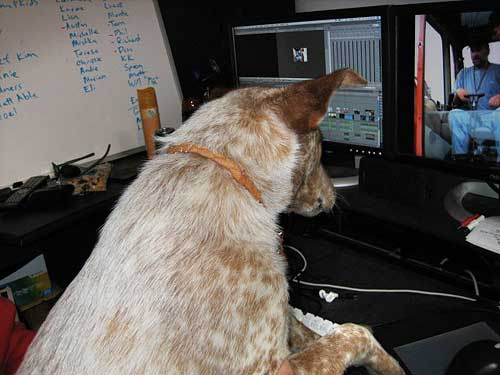 |
| They're worked like dogs...get it? It's funny! |
Let's begin with the responsibilities of the assistant editor, considering that will lead into the responsibilities of the editor. See how organized I am? The assistant editor's foremost job is to log and capture media; basically put all the files onto a hard drive and label them. After the files are logged and captured, the assistant editor organizes them in coordination with the script supervisor's log on an offline edit timeline in a rough cut format. They take the specific clips the script supervisor recommends they use and put together a very rough cut of the film without doing any detailed edits. The assistant editor also keeps a system of backups of all the files and assists the editor in compressing and the timeline and exporting it in multiple formats.
In short, the assistant editor's job is to make the editor's job as painless as possible. They gather and organize everything and even put together a rough cut of the film, pretty much just leaving the more minute, detailed edits up to the editor. Having logged at least a couple thousand files myself, it's not fun. It's definitely not fun. Hats off to you, Mr. and Ms. Assistant Editors!
Now let's move onto the editor. The chief. The head honcho. The top dog. The big cheese. Like I said, the editor is responsible for delegating responsibilities to the assistant editors. Once he/her receives the rough cuts from the assistant editors, the editor takes what they're given and cut, slice, and dice the footage into successive cuts until the final cut is reached.
 |
| An editor looking very deep in thought. |
The editor doesn't only make the meticulous edits and turn the film into the masterpiece it will hopefully become, but they're also the ones who receive all the criticism. They sit down with the director and executive producer on a regular basis to receive criticism about how they can improve their work. It's pretty mentally and physically exhausting! Not only is their work ripped apart by some very important people, but they also work unimaginable hours to change their work so that these very important people like it.
Once the "final cut" is reached (I say "final cut" because, well, the final cut isn't typically reached until the day before the project's hand-in date) the editor often assists the Directory of Photography with color correction and other postproduction effects. There's more often than not other people who are specialized in these areas who are hired for color correction and special effects, but the editor gets some level of input in what is done or how it's done.
The editor's final job is to output the final cut of the film to several formats. The format can depend on who it's being sent to. This can include film festivals, theaters, online, etc. Assistant Editors and Editors have it rough. Their jobs are to basically polish and refine with the very little time and resources that's [most likely] available.