Showing posts with label Preproduction. Show all posts

Monday, November 9, 2015

Keep Calm and Let the AD Tell You About How Stressed He Is

I'm a pessimist. Or maybe a realist. Regardless, I am stressed. Of course the week we have planned to shoot Dollhouse  also turns out to be one of the busiest weeks of my semester. The existing stress of having shooting dates late in the semester is bad enough; throw in some obligations and projects from other classes and top it off with a few tests and my week from hell is in full-swing. Forget about applying for internships for the spring. I'm just trying to survive. 

I am mostly concerned about our shoot running as smoothly as possible; I know things will go wrong, and what is worse is I know I won't be able to predict those things until they happen. As a group we are trying our best to be totally prepared, and we have had a long time in pre-production to get everything ready to go. So far my experiences on set haven't been the best, so even with our extended preparation time I am still anticipating things to  not go exactly as planned. Like Arturo talked about in class today, as the AD it is my job to make sure everything goes smoothly during production, holding each department accountable and making sure everyone is on the ball. 

The shooting schedule we have come up with is very tight, but I am hoping that our work in our long pre-production stage will pay off. There are a number of things swimming around  in my head right know about what COULD go wrong: audio, shot coverage, continuity, etc. The list goes on and on. At some point I guess I just need to trust my fellow group members and know that they will come through in their respective departments. Of course I will be providing oversight on set during the shoot, but I think that there is a fine line between micro-managing- which actually slows down production- and making sure everyone is doing their job (correctly). 


I have never taken on the role of Assistant Director before. I'm a little intimidated, mostly because we are shooting so late in the semester. We will have adequate time in post; I'm fairly confident about that. But we do NOT have time for any major re-shoots or audio issues. I get it, things happen on set that are not always predictable or avoidable. I am prepared to help deal with those issues after we shoot. But I CAN control or prevent any major issues from happening in an effort to make post production go as smoothly as possible. That pressure, however, is leaving me a little stressed and anxious. I don't want to let my group down come shoot days, and I want this project to reflect all the hard work  our members have put into it and finally be something I am proud to put my name on. 


Thursday, October 29, 2015

More Test Footage

This week, the crew and I went down to location to figure out just where we were going to place lighting on our set. This visit was one of the most crucial moments of pre-production. The Gaffer, Sound Recordist, Assistant Director, and myself had taken loads of lighting equipment to set during our second visit. This visit definitely gave us some advantages.

The first advantage was that obviously, we were able to figure out how to light each room for every shot in advance. When we go to set on our shooting dates, there will now be no time wasted trying to figure out just how to light our project. We won't be referencing loose diagrams and fixing issues as we go, we will be ready and prepared to set up and get to that first shot in significantly less time.

The second advantage to our visit was that because we have fixed the various issues that come with lighting our particular set space, we will no longer have actors sitting around and waiting to be lit properly. When we can get in the zone and begin grabbing takes sooner, the talent is likely to give a better performance because he or she is not impatient and/or waiting around.

The third advantage to our visit was that we can give our editor something to work with that will get him prepared to handle the actual footage when it comes his way. He can play with various presets to get our footage looking much closer to what we desire when we have finished collecting it.

Finally, because we brought our Sound Recordist, we have some room tone to work with, featuring random creaks in the house, cars passing by, and at some points, rain falling outside and on windows. This will give both her and the editor a sense of what kind of sounds we should prepare to work around in our natural space, since we do not have total control of what's outside the set.

All in all, we came out with some footage that we were happy with, but it is also footage that we can now improve upon when it comes time to actually shoot this thing.

Wednesday, December 3, 2014

Teaching Filmmaking for Dummies!

It's finally here. After three consecutive semesters of blog posts, this is my final post. First Fiction Field Production 1, then Motion Graphics & Animation, and now Fiction Field Production 2, my journey is finally coming to an end. It's not that I haven't enjoyed writing dozens of posts about the fascinating things we all ought to know about the film industry--I have, mostly--but, nonetheless, every good thing must come to an end. That's why deciding what to write for my last post was such an easy decision. What's the point of it all? Why are we even here? The answer is simple: we want to make the best films we possibly can.

I've spent the last few months informing you all about the responsibilities of each and every one of the most prominent positions on a film crew. That's great and all, but what about those of you who don't quite know what you want to do with your life? What about those of you, like myself, who are still learning the basics of filmmaking? Don't fret! Because this week, I'll be focusing on Teaching Filmmaking for Dummies!


Everyone has had good teachers, professors, and mentors. Everyone has had bad ones as well. When it comes to filmmaking, there are very precise guidelines a teacher must follow to be good. Their methods may differ immensely, but the range of information must always be the same. Thankfully, it's only taken me three semesters to realize this. Here we go...

Preproduction.
It's easy enough, isn't it? Nope. Writing a script. Creating a production schedule. Finding a crew. Visualizing the film's look. Finding and securing locations. Casting actors. Putting together the production design. Making a floorplan. Breaking down the script. Creating the storyboards. Making a shooting schedule. And that's it! I'm joking. That's a lot of stuff to get done in a reasonably short amount of time, so you've better do it right the first time. A good teacher (I say teacher because a person who furthers your knowledge doesn't necessarily have to be a professor) will help their students understand the importance of this preparation, and the students will usually ignore the teacher's recommendations and consequently realize its importance after they fail to give it the proper attention. A good teacher will say "oh well, hopefully you'll do better next time." And they'll tell you how to do better next time.

Production.
The concept is easy enough to understand. It's the part of the filmmaking process when you actually make the film. It's when all of your preparation pays off and you finally see your baby coming to life. Depending on the level of preparation, this step of the process can either go smoothly (or as smoothly as possible) or terribly. While things such as lighting and shot listing are often not prepared properly in student film productions, a good teacher will give you the knowledge to think on the fly. They will pass on all the information they posses on lighting, blocking, directing, shooting, etc. If they do a good enough job (and if you're paying enough attention), you'll have no problem having a good shoot despite your ill-preparation. A good teacher will make sure you know how to light a scene to give it the proper look. They'll teach you to frame a shot so that everything has meaning and nothing is where it shouldn't be.

Postproduction.
We finally get to the part of the process when everything starts coming together. You take the "what the heck are we gonna do with this" and make it into the "I can't believe we made this." A good film teacher will make sure of this. They'll teach you the importance of coloring, sound, and each and every edit. After learning from this person, you'll comprehend the meaning of each of these aspects and how the slight alteration of just one of them can change the entire meaning of a scene. Most importantly, as a wise man once said, "Cut, cut, cut, cut, cut." What he meant by this is that anything that's not of absolute importance to the film should not be there. If it doesn't contribute to the progression of the story, get rid of it. Even when you think something may be important, try taking it out and see if the story changes without it. Chances are, it can often be thrown out. The leaner the film, the better it usually ends up being.

"Who could possibly meet these standards? A semester simply isn't enough time to get across all of this information to students without having their heads explode." You're not wrong. Well, not completely, anyway. Students' heads will most definitely explode, but it's more than possible to successfully cram all the necessary information into a short amount of time. Including typical information, a good teacher needs to hold certain characteristics...

Be blunt.
A good teacher won't make their students cry, but they tell them how they feel about the students' work. Nobody wants a film teacher who will coddle them. They'll never learn that way. They tell students what they did wrong and how they can fix it. How else will they learn?

Be demanding.
Set high standards. If a teacher expects a lot out of their students or protégés, the students will give better work. Nothing will hurt students more than low expectations, because they'll have nothing to aim for. Students don't want to disappoint their teachers, so they will try to meet those high expectations.

Be inspirational.
The hardest working students are the most inspired students. Fact. The most inspired students come from teachers who connect with them and who explain how their success began right where they are. Those who believe they can achieve success, will.


"Ok, this is simply ridiculous. How can you be blunt, demanding, and inspirational?" Well, I'm not the one to ask. It's a tricky equation that somehow makes total sense. If you'd really like to understand, I recommend you take a class with Arturo Sinclair. In the past year of my life, I've learned more about filmmaking than I ever imagined learning over the entire course of my college career. For that, I say 'thank you', Arturo. Thank you for [attempting] to teach me everything you know. Thank you for teaching me to think [way] outside the box. Most importantly, thank you for always having faith in me. I can't wait to put all the knowledge you've given me to work. After everything, one thing's for certain: you're certainly no dummy, Arturo.

Friday, November 14, 2014

Storyboards: More Important Than You Think


          Today I want to introduce a blog that I've recently go into, run by former Pixar employee Emma Coats. Here blog is called Story Shots, and it caters to a curious audience who are interested in seeing what actually goes into developing and making films (animated or not).
          And an interesting piece that was brought up dealt with the technique of drawing storyboards from pre-existing films. Now you might think that that sounds silly. Why would you need to draw someone else's work? What if you can't draw? Isn't that just a waste of time better spent learning a more practical skill? Wrong, wrong, wrong!
          See, the underlying basis to making any film is knowing what exactly you're going to make. This ranges from how it's lit, how it's staged, how it's colored, even how the character interact within their environment. It may seem like storyboarding is just one of those "small" things you do in the pre-production process, but you have to understand that without a good storyboard you're film is basically lost.
          A storyboard is quite literally your film in its most negative form. Every single cut, transition, pan, tilt, etc., is captured in these drawings. But now you might be thinking, "cool, that makes sense. So this  means I should start storyboarding!" Yes...and no.
         You definitely don't have to be an artist when it comes to storyboarding, but knowing how light, shadows, colors, and perspectives interact with changing camera movements only helps in the preproduction process. And this is why this kind of technique should be encouraged for those looking to make a film (or to even just draw). Emma mentions that some movies that are famous for being "ground-breaking" in their genre are Jaws, E.T., Raiders, etc. are the best to draw from because it literally shows you what they did to make them.
          This can teach you about composition, lighting, camera position, and even the types of lenses you should consider for each shot. So storyboarding isn't just some off-hand thing you can get away with half-assing. It needs to be taken seriously because it what makes a good film great.

Monday, October 13, 2014

Director of Photography-ing(?) FOR DUMMIES

Oh hello there. Didn't see you there. No, don't go! As long as I have you here, we have a very important matter to discuss. For centuries (or at least for a little while), there has been a daunting question on people's minds. What exactly does a Director of Photography (or cinematographer) do for a film production? Hmph, that's certainly a tough question. Let's go to the expert to try to find an answer to this inquiry.
...

What's up, guys?! You know me. I'm that guy. From that thing. You know, that thing? No? Ah well, might as well just give you what you came here for. So you want to know what a director of photography does, huh? Well you're in luck! It's time for this week's "...FOR DUMMIES!"


Like quite a few other crew positions (Producer, Director, etc.) the director of photography's (or DP for short) job stretches out over all three stages of production: preproduction, production, and postproduction. They really don't get any sleep, but who needs sleep?! Let me break it down for you.

Obviously, we start with preproduction. Duh. The DP begins his/her job with discussing the director's vision for the overall film as well as scene by scene. Based on what the director is looking for, the DP determines what exactly is needed for each scene, and, following that, hires a camera crew and organizes and purchases any equipment and supplies that will be needed. When deciding what's needed for each scene, the DP works with many other departments--including sound and lighting--to coordinate production needs. In summary, the DP uses his preproduction time very wisely. He pretty much plans out every shot and gets any and all the tools he'll need to acquire these shots.

After many months of planning, the DP's job moves into production. The most essential thing the DP must do during this step of the process is to coordinate the crew while working closely with the director to make sure every scene and shot is set up to match the director's vision. If the director doesn't get what they want, may Hitchcock have mercy on your soul. Here's where the difficult stuff comes in. For each and every shot, the DP must decide on: the best combination of cameras (oh yeah, filters and lenses, too), the placement of the cameras, what the lighting should look like, AND when the best time would be to shoot. On particularly large films, the DP often oversees several cinematographers who supervise different camera set-ups. He often ALSO manages the photography budget, so the DP is kind of like a part-time production accountant.

Finally we come to postproduction (yeah right, we're not done yet). The first step of the third step of the three-step film production process begins with the DP working with the processing lab to make sure the film retains the color and the mood that he and the director were aiming for. If this part of the process gets screwed up, then a big chunk of all the hard work and planning goes right down the drain. The DP also reviews dailies as well as cuts of the film throughout the editing process. It's important for the DP to participate as a critical eye throughout postproduction.

Alongside the film director, the director of photography has some of the most creative control of the entire crew. They decide what we see and how we're going to see it. Often times, the DP is the person who makes a good film into a film that we'll never forget...

Or they can be the person who absolutely ruins it. Either way, they're really important.

Sunday, October 5, 2014

Publicizing for Dummies

Hello ladies and gentlemen. I know this early posting may come as a shock to you all, but this week's schedule is looking a bit random, so I figured I'd enlighten you all tonight! Don't worry, I'd never let anything get between us. Now you may be wondering, how would a series of blog posts become as famous as this? Well, aside from the beautifully written ideas that I've shared with the world, it's been completely due to my Publicist! Not really. But wouldn't you love to know more about publicity? Of course you would!


A production's publicist works alongside some very important people. Specifically, a publicist works closely with the executive producer, director, art director, and publicity designer. They work to promote and, well, publicize the film during every phase of production. From the beginning of preproduction to the end of postproduction, a publicist's job is definitely one of the most vital responsibilities that decides a film's success. If no one knows about it, no one goes to see it. It's as simple as that.

In the simplest form, a publicists job is to advertise the film. This can manifest itself in posters, flyers,
and other promotional advertisements. One of the responsibilities of a publicist is to secure permission for and to supervise the placement of these advertisements. This can include anything from putting up posters in theaters around town to securing radio spots nationally. This is really the most obvious of a publicists responsibilities and it's probably the job that the public notices the most. They just don't usually know who's behind those flashy ads that convince them to see the movies.

The publicist also acts as a liaison with the press. They're to go-to-guy (or girl) when it comes to dealing with the press. It may not be particularly glamorous, but hey, someone's gotta do it. Who knows, the press may be kind of cool when you're not a famous person. Probably not, but maybe. The publicist additionally supervises the generation and distribution of press releases. I'm not totally sure how that's different from the first point in this paragraph, but it was two separate bullet points on this article I'm reading, so it's got to be its own substantial point. Right? Ah, who cares?

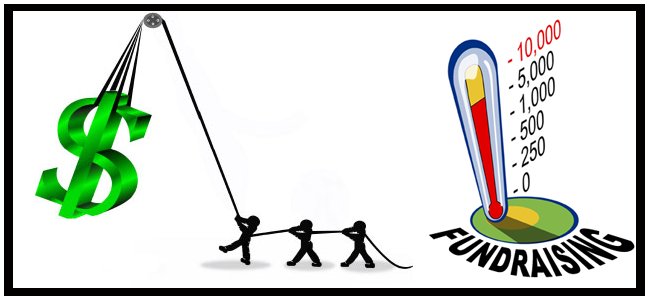
The last main responsibility of a film publicist is to assist in fundraising activities. This can involve crowd funding (such as IndieGoGo and GoFundMe) or outreach (begging rich people for money, but with class, of course). The publicist works with the executive producers in this step of their job. So basically they work with rich people to get more money from other rich people. It's actually a pretty ingenious setup if you think about it. It seems to work pretty well, at least.


Without publicists, there would be no films. Well, there would be films, but no one would go to see them, considering no one would know anything about them...or the fact that they exist. So they may as well not exist. That's what publicists are for! (Letting us know what's out there and why we "should" see it.)

Thursday, September 11, 2014

Producing for Dummies

I'd like to state for the record that producing is not actually for dummies. Nor is this an attack on you, Diana. If anything, the dummy in this situation is me. I found myself sitting in my room this afternoon, and the question popped into my head: "What exactly do movie producers do?" So, I did my research and actually found that it's a whole lot more than what I originally thought.

A producer's job begins in preproduction. Psh, I knew that. What I didn't know is that the producer is the person who pretty much gets the project off the ground. First, he (or she, of course) needs to find material for his next project from either a script or a book. Then he needs to get a script in good enough shape to attract the attention of a possible director (and even a studio if a studio wasn't the one who started the project). After that, the producer's job in preproduction is pretty much done. HAH! Yeah, right.


Once the producer has a workable script and a choice of director, all he needs to do is secure financing for the film, choose a director and other members of the creative team, work with the director to cast actors, determine shooting locations and budget, decide on a cinematographer, hire the rest of the production team (including other producers), develop a shooting schedule, and create a detailed plan of action for the entirety of production. PHEW! That's one demanding job! Oh wait, the producer isn't even close to being done.

Time to begin shooting! Now it comes to the actual production; the fun part! Or at least it's fun for some people. Sorry, producer, you're on the clock. Production is when the producer offers creative suggestions to the director, handles any and all problems with the actors and creative staff, monitors the production timetable and budget, and reviews the film shot each day. Essentially, the producer has to watch over everything. If something goes wrong, the producer better find a solution, and fast.


And now it finally reaches postproduction, the time for most people to relax and wait to see what they've worked so hard on for so many months. Postproduction is really only horrible for the editors, sound, and special effects guys, right? Wrong. Believe it or not, the producer's job still isn't done. To begin the final step, the producer sits down with the director over a nice cup of tea and decides the order and selection of scenes that will appear in the final cut of the film. After that, he reviews each cut of the film until it's satisfactory. NOW all the producer's got to do is secure a distributor for the film and review the distributor's advertising campaign. After this, and only after this, is the producer's job finally complete.

Never before today did I truly appreciate the work of producers. I honestly believed they were just the piggybanks of the production team. I know it's difficult to believe, but I was wrong. Oh so wrong. Here's to you, producers!

Saturday, September 22, 2012

Goodfellas, cocaine, and my one-shot-film location

A couple days ago my roommates and I settled down to watch one of my favorite movies, Goodfellas. The 1990 adaptation of Wiseguy, by Nicholas Pileggi is directed by Martin Scorsese and depicts the lifestyle of italian mobsters throughout the mid fifties to early eighties. It's a great story but more importantly reminds me of a personal theory of one of my friends regarding Scorsese's cocaine use and his directing style. My friend believes that throughout Scorsese's career you can see a fluctuation in his directing style dependent on his drug use, specifically the "speed" of the film. He believes movies like Taxi Driver and Mean Streets have a much slower feel to them then New York,  New York and The Last Waltz Personally, I've never agreed with him but it's a interesting theory that still pops into my head every time I watch a Scorsese film - at least it was memorable.


Lastly, I want to share my one-shot-film location with you guys:


It's exactly what I had in mind when I wrote the script so I'm really excited to film the project this Monday.