Showing posts with label Movie. Show all posts

Monday, November 16, 2015

Clockwork Orange

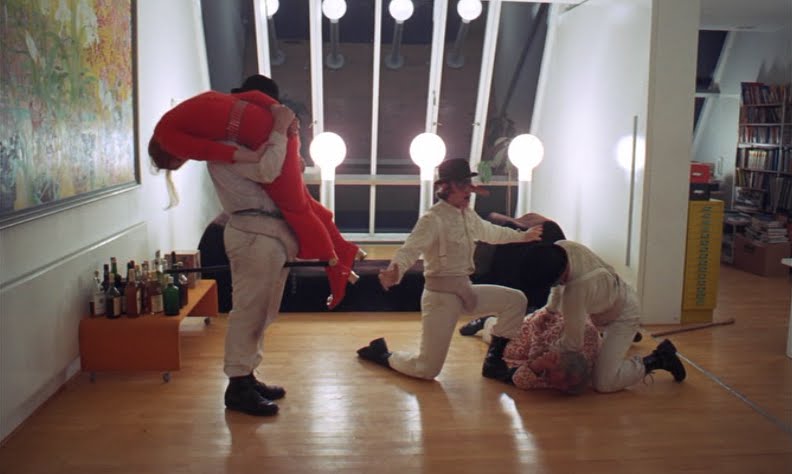
This semester I've been trying to watch on the films that I've been chastised for not watching yet. It's been a great ride so far and a lot of the classics I thought were over hyped actually turned out to be pretty great! However every once and awhile there come a time when I flick on a film that really grips me. And this time dear friends and trusted readers, that film was Stanley Kubrick's a Clockwork Orange.
Spoilers Y'all
I really didn't know what I was expecting coming into the film. For years I'd heard that it set the bar for ruthless onscreen violence, and for the most part it lived up to the hype. Sure we may see more Ultraviolence nowadays, but I'm sure that back then this film really was a real horror show. Overall I loved the film, I loved the character of Alex as a self aggrandizing psychopathic narcissist, I loved the sets seen below:

And I loved how the change the main character goes through. I feel as though most of what I loved about this film can be summed up in the following clip, which I don't suggest you watch if you haven't seen the film. It's wacky, weird, and works wonderfully to frame the psychological instability of the main character.

Thursday, October 1, 2015

Lord of the Rings

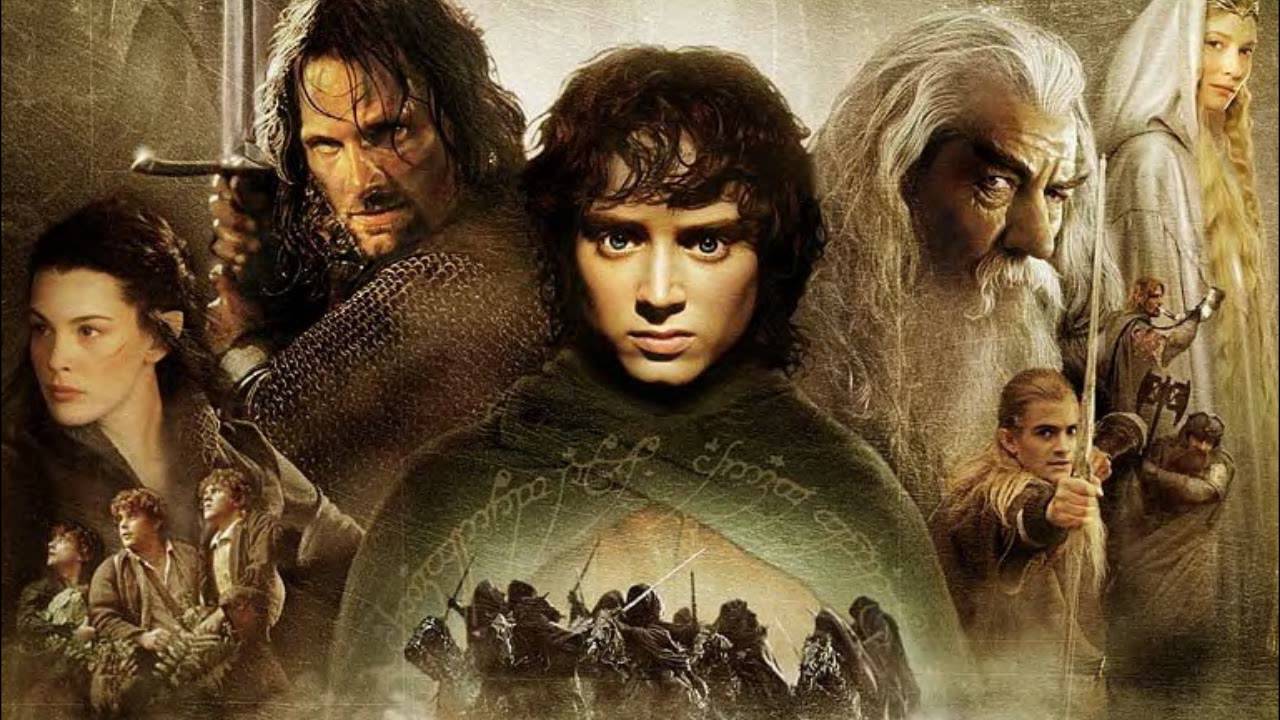
So I've never seen a Lord of the Rings movie before. I don't know, I just never really had an interest in them. I've heard they were good movies, I just never really felt like sitting through 12 hours of movies that I didn't have much of an interest in. I was going to continue living like this, until one of my roommates forced to watch them, all of them, extended editions to boot. So I figured now's as good a time as any, so I decided to sit down with a few people to watch it for the first time.
For a movie that came out in 2001, I think the film held up really well. With a good cast, believable writing and solid special effect for the time, I was pretty impressed with the first movie, Fellowship of the Rings. At some points you could definitely tell from the special effects and cgi that this wasn't a movie released within the past 5 years, but with that being said, they still got the job done and didn't take me out of the experience, plus for the time they must have looked incredible.
In addition to that, at some points the cinematography was really well done. There were a lot of sweeping shots, over head shots, and scenes with a lot going on within them, and all of it was put together really well. There were even subtle touches like certain characters having a glow around them.

Going into this movie, I really didn't think I was going to enjoy it all that much. And to be honest, it isn't toping any best of lists for me. I know that last line is borderline blasphemous in the eyes of some, but with all that being said, it was still a real solid movie and I enjoyed my time watching it. I guess there was a reason that it was included on the American Film Institute's revised 100 Greatest Movies of All Time list as one of the few films from the 21st century.

Friday, October 3, 2014

How the trailer convinced me NOT to watch the movie

The purpose of a movie trailer is to excite the audience and encourage them to go see the movie for when it actually comes out. However, there have been a few movie trailers that I've seen that did the exact opposite for me.


The Giver:
I first read the book "The Giver" in grade school when I was forced to write an essay on it. Unlike most assigned readings, I actually really enjoyed the book and really got into the story. I can remember a time in class when we actually talked about how it wouldn't make a good movie because of how the whole movie was based around a slow reveal and the main character's thoughts. Here's the trailer:
What?

Spaceships at the end? Did the creators even read the book? I was half expecting the trailer to end with "directed by Michael Bay." I talked to a friend who saw the movie (but didn't read the book) and he actually really enjoyed it. So maybe I'm just being a hater, or pictured the book in a different way than anyone else, but I never would have guessed that, that trailer would be for "The Giver."


Cabin in the Woods

I actually have seen "Cabin in the Woods," and I thought it was a really enjoyable movie. But the trailer wouldn't make it seem like that. The actual movie was a really unique take on a genre that is normally over-saturated with similar ideas and basic plots.


The thing that "Cabin in the Woods" is how unique it is. The trailer makes it seem like the movie carries the same plot lines as every other scary movie: The hot couple, the stoner, a cabin in the woods, a lake, a creepy old man, ect. They hinted at the unique portion of the plot, but not enough to actually know that the movie would be anything different.

Battleship

To be fair, I have not been a fan of this movie since the beginning; since I found out that they were making a movie based on a board game. I realize that people are struggling to come up with original ideas for movies; using a board game that I learned to play when I was 6 seems like a bit of a stretch.


It starts out seeming like it has an actual plot that seems vaguely based on a board game (basically just naval battles). However that quickly turns into something with aliens and giant metal robots coming from the sea and a bunch of other big explosion-y things that happened really quick that I didn't understand.


Monday, September 15, 2014

Directing for Dummies

Welcome to the newest edition of "[insert random film crew position] for Dummies!" I'm you're host, Mike, and today we shall be delving into the world of the director. *Oooo ahhh* Now, I know what you're all thinking: "Duh! A director is the guy/girl that directs people!" You know what? You'd be correct in saying that. Go figure!

I'm sure you all know the basics of a director's job. I'm here today, though, to try to teach you a little something that you may not have already known. Let's start from the beginning. Now, after a director is hired by producers for a project, the director must then work side-by-side with the producers to cast actors for the film. This can be an extremely long and tedious process, but it's one that simply must be done. Clearly. Without quality actors, you can't possibly dream to have a quality film. Well, I guess you could, but that's all it would be: a dream.

Next up on the list of things to do, the director has to organize and select shooting locations. Of course, the director has location scouts working for him to truly find the best locations for shooting, but he has creative control and authority as to which locations will appear in the film. At the same time, the director interprets--and sometimes even writes or selects--the script for the film. The director rarely ever writes the script himself, but if he's not hired by a production house to direct the film, the director will often go out and find a script he'd like to work with. The location selections are hugely dependent on the script and the way the director interprets it, so the two steps are pretty much synonymous.

The director's next job is the last step before filming can begin. He must approve the sets, costumes, choreography (not present in most films), and music. These aspects of film are usually completely invisible to the untrained eye, or ear, because the only time most people will find them noticeable is when they are done incorrectly. If a film is set on a 1950s Japanese farm, and the actors are wearing tuxedos and sneakers with Kanye vaguely playing in the background, something went wrong...very, very wrong. It's the director's job to make sure mistakes like this never happen.

What else does the director do? Well I'm glad you asked! The rest of the director's work is pretty straight forward and most of you already know all of these things. But guess what! I'm going to tell you about it anyway! The director has a whole lot to do during production. The most obvious task is directing the actors. Whether it's explaining to actors how he wants them to portray their character in a given moment or if it's simply helping actors get into character, the director is the guy doing it. While doing this, the director also keeps the crew on track and makes sure everyone's doing what they need to be doing. Film shoots are generally tightly scheduled, so there's no time for excessive screw-ups and messing around. While doing this, the director also works with the cinematographers on shot composition and makes sure he likes what's in the frame.

Production is quite a daunting time for directors. They're basically the ringleaders for the wildest circuses on the planet. If they crack, the film is doomed to fail. The director must keep his cool so that everyone else does.

So now the film is shot. Yay! The only thing that's left for the director to do is work with the editors on creating first a rough cut and then a final cut of the film. The director gives his input throughout the process on what he thinks looks and feels better. Sometimes, this leads to reshoots of scenes or even cutting entire scenes from the film. But hey, who ever said directing was easy?

Friday, September 12, 2014

How the film boyhood was written

So we all know about the stunning movie that took 12years make known as "Boyhood". Well if you're interested in how such a story gets created, you've come to the right place. An exclusive interview with the writer of Boyhood, Richard Linklater, will let us learn the way to create such a film ourselves... or at least appreciate the creative genius behind it. Attached is a 9minute interview explaining how Richard wrote this film but I will divulge a few details prior to taking a gander. Richard knew the ending of the film 11 years before he was finished writing it, but he needed to know how to get to that end.
Initially Richard wanted to make a film about childhood but he did not know how to incapsulate but all the sudden wants his finger hit the keyboard the idea came to him. From the beginning he knew the idea was impractical but he decided to keep pursuing it. When he decided to start filming it he said he spent about 3 days a year filming it but it took about 2 years of preproduction before he could start filming. He also had the luxury of spending two years in post production so he had a lot of time to perfect his production.
When making the film he decided he did not just want to show content that built upon the characters but just to show daily life during the time of production. He believed that this build up of information would naturally be impactful. Richard tried to take those little forgettable moments and make them memorable. The child she chose to be in the film was someone from his town who he now views practically as his nephew. He told the kid to write down his life events when something significant happened and utilized those memories to write his script. At the begging of the film the now adult was 7 years old. Richard made sure to think about the current time period when writing the script rather than the future or the past. It took creative genius and determination to create such a script, for more details I urge you to watch the short interview which can be found at the attached link.

http://nofilmschool.com/2014/08/write-movie-12-years-richard-link-later-boyhood


Thursday, September 11, 2014

Producing for Dummies

I'd like to state for the record that producing is not actually for dummies. Nor is this an attack on you, Diana. If anything, the dummy in this situation is me. I found myself sitting in my room this afternoon, and the question popped into my head: "What exactly do movie producers do?" So, I did my research and actually found that it's a whole lot more than what I originally thought.

A producer's job begins in preproduction. Psh, I knew that. What I didn't know is that the producer is the person who pretty much gets the project off the ground. First, he (or she, of course) needs to find material for his next project from either a script or a book. Then he needs to get a script in good enough shape to attract the attention of a possible director (and even a studio if a studio wasn't the one who started the project). After that, the producer's job in preproduction is pretty much done. HAH! Yeah, right.


Once the producer has a workable script and a choice of director, all he needs to do is secure financing for the film, choose a director and other members of the creative team, work with the director to cast actors, determine shooting locations and budget, decide on a cinematographer, hire the rest of the production team (including other producers), develop a shooting schedule, and create a detailed plan of action for the entirety of production. PHEW! That's one demanding job! Oh wait, the producer isn't even close to being done.

Time to begin shooting! Now it comes to the actual production; the fun part! Or at least it's fun for some people. Sorry, producer, you're on the clock. Production is when the producer offers creative suggestions to the director, handles any and all problems with the actors and creative staff, monitors the production timetable and budget, and reviews the film shot each day. Essentially, the producer has to watch over everything. If something goes wrong, the producer better find a solution, and fast.


And now it finally reaches postproduction, the time for most people to relax and wait to see what they've worked so hard on for so many months. Postproduction is really only horrible for the editors, sound, and special effects guys, right? Wrong. Believe it or not, the producer's job still isn't done. To begin the final step, the producer sits down with the director over a nice cup of tea and decides the order and selection of scenes that will appear in the final cut of the film. After that, he reviews each cut of the film until it's satisfactory. NOW all the producer's got to do is secure a distributor for the film and review the distributor's advertising campaign. After this, and only after this, is the producer's job finally complete.

Never before today did I truly appreciate the work of producers. I honestly believed they were just the piggybanks of the production team. I know it's difficult to believe, but I was wrong. Oh so wrong. Here's to you, producers!

Friday, November 22, 2013

Editing and Stuff

"The effect you can get from juxtaposing different shots together in a film is unlike anything else in writing, or photography." -Vsevolod Pudovkin


Anyone who's ever edited anything thinks he/she is a great editor. It's the nature of the art. Learning how to cut clips and apply filters are easy to learn, and can create impressive looking material. However, just as there is a difference between Instagrammers and professional photographers, there exists a wide gap between a consumer cutting some clips on iMovie and a working editor. But what makes an editor great? Although I've come across a wide array of contrasting opinions on the topic, I've found a couple of attributes that most of the Internet could agree on:

1. Cut tight – The best editing approach is to cut tight scenes without becoming too “cutty”. This means taking out unnecessary pauses between actors’ delivery of dialogue lines. Sometimes it mean tightening the gaps within dialogue sentences through the use of carefully placed cutaways. It may also mean losing redundant lines of dialogue, after the director has reviewed your cut.

2. Temp music – Many editors like working with temporary music as a placeholder. I advise against this for two reasons. First – people tend to fall in love with the temp score and then it’s hard to get real music that feels as good. Second – temp music becomes a crutch. You tend to be more forgiving of a weak scene when there’s interesting music than when the scene is naked. I prefer to cut a strong scene and make it work through editorial solutions. If a scene can stand on its own, then the addition of sound effects and a score will make it that much better. The exception is a visual montage set to music. Here, I tend to do better when I’m cutting to music rather than the other way around.

3. No Dragnet edits – The original Dragnet television series used a certain approach to cutting dialogue scenes. Audio and video edits tended to be made as straight cuts between the actors without any overlaps as they delivered their lines. It followed this formula: cut to actor A – deliver the line; cut to actor B – deliver the line; cut back to actor A and so on. Walter Murch refers to this as the Dragnet-style of editing. Our brains seem to react better to edits where the change in picture and sound is not always together. These are called split edits, L-cuts or J-cuts.

4. Matching action – Matching actors’ hand positions, use of props, eyeline and stage position from one cut to another fall into the technical category of how to make a proper edit. Walter Murch offers a rule of six criteria that form reasons to make a cut at a given instance. The greatest weight is given to whether that cut drives the emotion of the scene or moves the story along. Technical matching is the least important concern. I’m not saying you should throw it out the window, because a mismatch that is too extreme can be very jarring to the audience. On the other hand, as an editor friend often tells me, “Matching is for sissies.” The audience will often ignore many minor continuity differences from one shot to the next if they stay totally engrossed in the story. Your job as the editor is to cut in such as way that they do.

5. Moving camera shots – Moving the camera around is a staple of action sequences. This might be a camera on a dolly, crane, Steadicam or just handheld. In an action scene, this is designed to create a level of tension. When I cut these shots together, I prefer to cut on movement, so that the camera is in constant motion from one shot to the next. Many directors and DP will disagree, preferring instead to start and stop each camera move before making the cut. Both approaches work under the right situations, but my tendency is to cut tighter and not let the audience’s eye rest on the set or a shot or a scene for too long, unless there is a reason to do so.

6. Don’t cut back to the exact same angle – If you have a choice of several camera angles, don’t automatically cut back to the same camera angle or take that you just used in the previous shot. This is, of course, unavoidable in a dialogue scene with only two angles and one take of each; but, if the director shot different takes with different framing, try to use a little of all of them. Don’t get stuck in a cutting rut, like master/single/reverse, master/single/reverse, etc. Mix it up.

7. B-roll shots in threes – When the scene calls for cutaway inserts, it feels right to use three on a row. Not a single shot, not two, but three. These should be at least 1.5-2 seconds long (or longer). An example might be when a character enters the room and looks around. The POV inserts work nicely in triplets and give the audience a good idea of the landscape that the character encounters. It mimics our real-world experience of moving our head around and seeing different aspects of the same surroundings.

8. Cut for the eyes – Actors that do well on TV and in films (as compared with the stage) are all very expressive with their face, but most importantly, their eyes. When I’m cutting an intense dialogue scene, I’m looking at how the actors’ eyes play in the scene. Do they convey the proper emotion? What is the reaction of the other actors in the scene? What the actors are or aren’t doing facially determines my cutting. It drives my decision to stick with the principal actor delivering the dialogue or whether I briefly cut away to see reactions from the others.

9. Pull the air out of actors’ performances – Going back to Item 1 – I like to cut tight. Recognize that many actors will overact. They will milk a scene for more than is appropriate. They will accentuate pauses, add more stumbles and stammers (where scripted) and give lengthy glances. Sometimes this works, but your job as the editor is to dial these back as you cut. Take these pauses out by cutting away and then back. Cut out redundant actions and line deliveries. Make it real, so it doesn’t feel like ACTING.

10. Shaping story – It is said that there are three films: the one that’s scripted, the one that’s been filmed and the one that’s edited. When you cut a feature, pay close attention to the story chronology and don’t be afraid to veer from what was written or filmed if it makes sense to do so. Many editors use note cards on a storyboard wall to create a quick visual representation of the storyline. This helps you make sure that you reveal things to the audience in the most logical order and that nothing is inadvertently edited out of place.

11. Digital aids – Modern NLEs and finishing techniques like digital intermediates offer a lot of tools that aid the filmmaker. For example, digital images are very tolerant of blow-ups. You can add camera zooms or blow-up a shot (creating a wide and a close-up from a single shot) with these tools. This is especially true if you shot on 35mm film or with the RED One camera, because the large image area of the film negative or camera sensor allows more overshoot space than HD cameras. Don’t be afraid to zoom in as long as the image quality holds up.


12. Make your choices, but be prepared for others – Your job as the editor is to shape the story and the pacing of the film. First and foremost this means you are there to help the director realize his or her creative vision. But you were also hired for your own best instincts. Most editors finish a first cut without the director sitting over their shoulder. During that time is your initial chance at putting your own stamp on the film. When the first cut is completed, the director and editor work together to refine that cut into the director’s cut.

Thursday, November 14, 2013

"Free Birds" gobbled by critics


Free Birds


For my show The Screening Room this week I had to review the new animated film "Free Birds" which tells the strange tale of Reggie, voiced by Owen Wilson, an unusually smart turkey who attempts to get the other birds of his flock to realize their farmer master is fattening them up for Thanksgiving dinner. The graphics are not that impressive, but the storyline is amusing. There are not a lot of Thanksgiving themed films, besides of course the classic "Charlie Brown's Thanksgiving", so this one was intriguing and well timed. It has a great cast of Owen Wilson, Amy Poehler and the hilarious Woody Harrelson. Critics have been gobbling this movie to shreds, as they say it is"Technically proficient yet creatively moribund, Free Birds begs unfortunate comparisons with the dim-witted fowl that inspired it." Rotten Tomatoes gave this movie a 19%. Enough said. 


Yikes. Sorry folks if you were looking for an entertaining turkey movie! The only thing this movie ignites in the audience is hunger. Yum, turkey. This movie is also featured in 3-D which I literally don't understand. Why would this movie about striking turkeys need to be featured in 3-D? I personally don't like the whole effect in general but they are just going overboard.Overall, "Free Birds" should have never been set free to the public. It has all the right components but it just doesn't pull through. And Owen Wilson needs to stop being animated characters. 

Here's the trailer:


Friday, December 14, 2012

To be continued

Hey guys. Very excited for tonights screenings. If you get a chance, come a little bit early. I was fortunate enough to DP a thesis film being screened before ours titled "The Call", directed by Sarah Furie.


My final post is gonna be about a film I watched for one of my missed blog posts (ironic, eh?). Last night I watched Fahrenheit 451, a movie that was trippy as hell, to be quite frank. The movie catches your attention right off the bat with the intro credits done as voice over, something I've never heard of before, over flashing neon images. This immediately drew me in. I thought that something like that was extremely innovative and creative especially for a movie done in the 60's.

On that note, I also thought the movie was very before its time. The twisted, dark sense that you get in the first few minutes gave me a very Clockwork Orange kind of vibe; one that seems extremely risque for its time. The cinematography and set design was also very stunning for such an old movie.

Overall I felt that Fahrenheit 451 was a very good movie. It starts off in a way that really throws you off and, at times, turns you off from the movie. But if you stick with how strange it seems at first you realize it is in fact a great film. 4 stars.

Have a good finals/break everyone! Good luck to all you who are off to LA.

-Nick

Wednesday, December 12, 2012

The Hobbit

Watching the Lord of the Rings series when I was much younger was one of the best experiences of my life! My mom read all the books including the Hobbit and she's very excited about watching the Hobbit in Theaters. My boyfriend and I decided we'll go and watch it in theaters on the night of the premiere! This is something either of us have ever done! Surprising I know! Watching the blog videos (vlogs as I like to call them) about their making of the film Pre, production and post, it filled my heart with inspiration! Needless to say, if I had a tail it'd be going in circles!

We watched the post production blog and I have also seen the production blog itself. They have literally hundreds of people working on this film! It took them 266 shooting days to film the hobbit! How I dream of being employed for that long on one film! It would be amazing to work on such an incredible project! When I see the production blogs done by the crew, especially the art department crew my heart just melts with the idea that I want so badly to do that someday! And there's no reason I shouldn't be able to do so.

Raise your hand if you'd donate your hair to film!! Ooo Ooo me me me me me!!

OH yeah!!

I can only hope I've kicked this flu by then!! So in order to work on kicking that I'm going to go make myself a cup of tea and relax a little. Enjoy! Go see the movie!!

-Lucy Lynne' Hall

Wednesday, November 21, 2012

Want to play a little game?

Hey everyone,
 I've only watched a couple of good movies so far this thanksgiving break. One of them is called "Ondine"! It was produced in 2009 and directed by Neil Jordan, known for directing Interview with a vampire (favorite #113/124 films).  The story is about an irish fisherman who finds a woman in his net and he believes her to be a selke (a water nymph). The story was very engaging and I couldn't stop watching it, it was in a way kind of intimate in the way you get to know the characters and feel for the relationship between them. It didn't place on my fav's list so far but who knows, perhaps years from now I'll come across it again and watch it and decide I really loved it. At this point I did really enjoy it and would recommend it to many.


Anyways, to get to a more interesting point, perhaps. I would like to play a little game! I'm going to post 10 movie quotes and you comment on the blog to reveal what movies they're from!

Here they are:

1: "Toto, I've got a feeling we're not in Kansas anymore"

2: "May the force be with you"

3: "E.T Phone home"

4: "A census take once tried to test me. I ate his liver with some fava beans and a nice chianti."

5: "Mama always said life was like a box of chocolates. You never know what you're gonna get."

6: "I see dead people"

7: "Stella! Hey Stella!"

8: "Here's Johnny!"

9: "Forget it, Jake, it's Chinatown"

10: Striker: "Surely you can't be serious."
       Rumack: "I am serious... and don't call me shirley."


Well those should be easy enough! Guess away friends!
Tata for now!

-Lucy Lynne' Hall