Friday, September 26, 2014

Wrapping Your Brain Around Marketing

Let's paint a scenario...

You've been working endlessly on your newest film for the past two years. The shots look fantastic, your audio was mixed by a serious professional, and your actors nailed their performance. Through all the blood, sweat, and tears (also known as pre-production, production, and post-production) you finally have a beautiful film that you're especially proud of.

Awesome.

But now what?

You just spent thousands of dollars putting this thing together. But how are you going to make that money back? And if you're lucky enough, make a profit?
Well, this is where marketing comes in. That's right, marketing... that thing you thought only business and IMC majors had to worry about. And unlike the normal three-step production process, marketing and sales is something that spans the entire filmmaking process. Here's a helpful diagram to illustrate:
(sorry for the eye-squinting sized text)


In case you can't read it, the diagram suggests that the moment the development process starts, it's time to start thinking about how the film will be marketed. In other words:

WHO is going to watch your film?
&
HOW will you make them remember it?

A recent article on nofilmschool.com highlighted six points that were stressed as part of a panel at IFP Week entitled "Wrapping Your Brain Around Marketing". These points (which I've summed up into four) can help insure your film is a success when you're finally ready for it to be viewed by the public.

1. Stay on Topic

It's important to remember that your film is not just a singular product but more like a brand. With every piece of production material, there has to be a sense unity between it all. In their article they use the example of the the "Super-Size Me" poster:


Other good examples of posters that exemplify their film include "Her" and "Pulp Fiction".


Even without knowing any concepts of design you can tell these posters give an accurate, and most importantly memorable, depiction of their film. But it's not just about having a poster. Which brings me to their next point:

2. Pictures, Pictures, Pictures

From wide shots to production stills, having additional content can save you that sinking feeling when you're deep in editing and realize you don't have enough content in terms of coverage. They also recommend having a professional photographer on set for at least a few days to capture behind the scenes material which can be used for promotion and possibly even poster ideas. Once you have all of those extra pictures though... be careful with them. If your lucky enough to have your film featured in a magazine, they will want exclusive photos. Having professional, exclusive content can make or break the promotion of a film. 

3. Distribution

So you've got your great film and pretty poster but now it's time to move on to the serious part. Interestingly enough though, they don't ramble on about how hard it is for your film to be shown at a festival or featured in a movie theater. Instead they mention the rapidly growing market of video-on-demand (VOD) for documentary filmmakers. 


Films that people don't want to go see in movie theaters are the very ones they want to watch at home on their Mac, Kindle, Xbox, or whatever they use to watch films at home these days. Watching epic films at the movie theater will never loose it's charm, but for indie and doc filmmakers VOD might be the way of the future. 

4. Funding

Let be real. Having professional posters, pictures, and a distribution plan is great, but how the hell are you going to afford that? Money does not come from thin air, and I doubt you have enough money in your pocket to create that dream project. Thankfully though, raising money is easier today then it ever was!


These crowd-sourcing fundraiser websites have paved the way for thousands of independent films. They stress in the article that a filmmaker has to take advantage of every resource available to them – that includes the "old-fashioned" email list and yes, even that cold hard phone call.   


The main point... (tl;dr) is that marketing is not an extra task started after the film is created but part of the entire filmmaking process. It starts in the earliest parts of the development process, and finishes well after the film is released. 


Monday, September 22, 2014

Production Assisting for Dummies

Hello everyone! It's that time of the week again when you quietly sit at your computer screen, looking for something to do, and somehow stumble upon this blog. It's time for "[insert random film crew position] for Dummies!": the game show where this isn't actually a game and the points totally matter. Welcome! Let's get started shall we? If you haven't figured out what we'll be discussing today by now from the clear title at above, well, you've got bigger problems to worry about...but let's talk about Production Assistants.


Now, most people probably think of a production assistant (P.A.) as a type of "slave" or "under-appreciated, under-paid, over-worked" laborer just trying to make their way in the film industry. That's pretty much exactly what a P.A. is. I'm sorry P.A.s, but it's true and you know it. If you're otherwise convinced, stop lying to yourself. You're not helping anyone. You're just hurting yourself more.

SO! For those of you who didn't already know, there are four main P.A. categories. First up on our list is the Set P.A. This is certainly the most widely known type of P.A. due to the fact that they have the most widely spread list of responsibilities. These P.A.s often work directly for the Assistant Directors, but in reality work for all departments since they take information from the AD's and pass it on to the respective departments. Set P.A.s are key in managing extras, crowd control, or helping company moves. These tasks require as much help as possible, so P.A.s really save the day in this aspect. They also responsible for collecting paperwork and passing out scripts and schedules to those who need them. So basically they help in assuring everyone knows what they're doing and when, which can really make or break a production. Set P.A.s escort actors to and from their trailers, too, which is kind of awesome, as well as deliver film to the airport or the production office. They even get to touch the shiny equipment when loading or unloading from the trucks! How cool is that?!

Next on our list we have the Art Department P.A. This position will probably come off as, well, not that great to most people. Art Department P.A.s essentially do what most people think P.A.s do. They run errands and help out with miscellaneous office duties. It sucks, but someone has to do it. These P.A.s do, however, sometimes get to assist with the construction of props or set dressing. Ignoring the other two parts of the job, they do get at least a little bit of valuable experience in the art department.

Who helps out with the wardrobe?? Great question! It turns out there are actually Wardrobe P.A.s! While these P.A.s also run some miscellaneous errands, they get some hands-on work in the specific department as well. They assist the costumers in whatever it is that they may need including labeling and collecting costumes. They sometimes organize costumes for laundering, too. Nobody likes a dirty costume! At least I don't.

We close today's riveting episode with...wait for it...Location P.A.s! Location P.A.s are extremely valuable to the overall production of a film. Yes, they run errands, but they deal with a whole lot of big-boy stuff, too. They deliver contracts, put up signs to direct workers to set, make and distribute maps to to locations, and even get to clean up locations after filming! I'm jealous just thinking about it! In all seriousness though, without these wonderful people, cast and crew may not make it to set on time (if ever) and, without the proper delivery of the contracts, there wouldn't even be a location to shoot! You go, Glen Coco.

P.A.s are more than often taken advantage of and are far too under-appreciated. Really, they're the ones making sure that everything no one else wants to do gets done. If you would like to break into the film industry and consider yourself thick-skinned, become a P.A.

Filming Under The Sea: Part One


I am currently taking a scuba diving class and I am a Television-Radio student, so I thought putting the two together would be a genius idea! So here is a summary of what you need to know about shooting under water.

Learn to Dive

Becoming a certified SCUBA diver is perhaps the most obvious requirement for underwater filmmaking. Filmmakers often bypass the bulky SCUBA equipment when taking video of large animals such as whales, but you’ll need to learn the basics of SCUBA diving to take your skills to the next level. Understanding how to dive properly will allow you to get close to coral without damaging it or capture footage of wild marine life without endangering yourself. It will also help you learn to keep a camera steady while the animals perform their behaviors.

In addition to SCUBA training, we also recommend that you learn to free-dive. The disadvantage of traditional SCUBA is that you often scare large fish and marine mammals with bubbles. Free-diving allows you to swim freely with these creatures. But be safe; always practice free-diving with a buddy around.

Rebreathers

If you don’t want to make bubbles but you need to stay down for extended periods, you can use closed circuit rebreathers, self-contained dive units that recycle the air we breathe so as not to release any bubbles. A rebreather adds oxygen to the system and filters out carbon dioxide. These systems generally allow a diver to stay underwater for a long time.


Know the Underwater Environment

When shooting video underwater, you want to make sure you don’t break or damage anything in proximity. This may sound obvious, but it can be a bit difficult maintaining your focus on your subject while making sure you are not sinking, floating up to the surface, or crashing into rare coral or dangerous rocks. If you are diving in blue water without a fixed reference, it can be hard to know if you are heading up or down. This can induce vertigo and lead to a potentially dangerous situation. Before you start playing with the camera, be sure to practice good buoyancy skills so that you can stay at a constant depth. To get close to wildlife underwater, you want to stay relaxed. Move slowly and controlled; don’t chase fish or other marine life, or you are likely to scare them off. Plus, your footage will look better if you pace yourself. Avoid kicking up silt and dust from the bottom. It will get in front of the camera and make the water murky. There is nothing worse than thinking you have a great shot only to discover later that the cloud of dirt you just kicked up ruined the clarity of the image.

Colors and Light

Colors are different underwater than they are above. The intensity of certain colors like red and yellow diminish quickly the deeper you dive. This image shows how different colors diminish with depth.


The red-colored tank topper looks almost black and the diver’s skin looks blue! With increased depth, water absorbs color at different rates. Water absorbs red first causing video to appear more blue or green than you hoped. In clear tropical waters, blue remains the longest, and when you are diving in temperate waters, plankton and other particles create a strong green hue.

There are two easy ways to compensate for these color issues when underwater. The first one is to use a color filter on your camera, usually red. It will bring back some of the red in the image you are shooting, making it appear richer. The second option is to use underwater lights. If you are shooting in shallow water, or in clear tropical waters, you probably won’t need them. Always make use of the natural sunlight. The deeper you go, the darker it will be. When you know you will be diving to depths where sunlight is limited, you will need to bring a few extra lights.

Next week I will talk more about the equipment that is needed to shoot under the sea!

Friday, September 19, 2014

Alison Bechdel: the Test


If you find yourself bored without anything to do on October 8th, you should head on over to Textor 102 to see Alison Bechdel speak. Without going too far into her life, Alison Bechdel is an American cartoonist whose most known for her comic Dykes to Watch Out For. But if her name rings a bell yet her work does not, you might be familiar with the cinematic theory named after her: the Bechdel test.
The Bechdel test is something used to gage the gender equality of films, specifically toward women. It has three very simple requirements to pass: one, there more be two female characters (with names); two, they must talk to each other; three, they must talk to each other about something other than a man. See, the main reason behind the test is to show the very realistic idea that women have plots that circle around something other than a love interest.
While it stands on the issue of feminist theory and equal-right films, to me it represents good writing. If you have a script that can’t follow these three very simple rules, then you have stuck yourself in a very traditionalistic (and cliche) plot-hole. For me, being able to write well means that you can produce a script that people can relate to. But in order to do this, you need to be able to write realistically. And if just so happens that in real life, women do talk to each other about many things than just men.

Indiewire's Project of the Day

As student filmmakers, I think it's really important that we take a look at new and upcoming independent filmmakers and their current projects. A great way to do this is by checking Indiewire's Project of the Day. Every day, they post another indie project in development that you can learn all about. Each project comes with a Tweetable Logline, Elevator Pitch, Production Team, About the Film, and Current Status. They also often have a clip or behind-the-scenes look at the project, as well as links to their IndieGoGo or Kickstarter page. Today's Project of the Day is "California Dreaming," a comedy/fantasy about an old lottery addict – his fed up wife – a multimillion-dollar jackpot and an armed robbery! While that "Tweetable Logline" didn't catch my attention, their "Elevator Pitch" sure did:

John has been playing the lottery over the last fifty years that he and Molly have been married, but never won. As always, she nags him for wasting money while he watches the draw on television at a diner. But today is John's lucky day! He has the winning ticket and is just about to hit multimillion dollar jackpot, when two robbers barge in for a stick-up! "California Dreaming" is a film about a relationship. A love story about discovering that you are the richest person in the world, as long as you have your loved one next to you!

For more information on "California Dreaming," go to http://www.indiewire.com/article/project-of-the-day-california-dreaming-20140919.

Staying in the loop of upcoming independent filmmakers can be great, but let's be real. We're all thinking it. It'd be sick if one of our projects made it onto Indiewire's Project of the Day. So how do we do it? Simple. Just fill out a form. Indiewire wants to help filmmakers like us get exposure. But there's more. At the end of every week, they ask readers to vote for their favorite POTD and the winner becomes Indiewire's Project of the Week. Then, readers can vote again at the end of the month and the winner becomes Indiewire's Project of the Month. The weekly winner gets a digital distribution consultation form SnagFilms and the monthly winner gets a creative consultation from either Tribeca Film Institute's Director of Narrative Programming or Director of Documentary Programming. Those are some pretty awesome opportunities for filmmakers like us. So what are you waiting for? Here's the form: http://www.indiewire.com/article/projectoftheday

Shooting 4K films on your iPhone?

So we all know about the new beautifully clear 4K TVs and more importantly, 4K filming cameras. Now that they've been out for a couple months prices haven't started to calm down and they are a bit more affordable. Since it has come out though new technology around 4K filming has emerged. Other than the 8K TVs and whatever else they have now, they've developed a new way to film 4K film without buying a 4K camera. Recently an app has been developed for the iPhone that seeks to bring 4K filming, editing, and delivery for phones everywhere at a big price.

The app known as "Vizzywig" is estimated to cost an estimated $1,000. It will allow you to film at 24 high resolution frames per second at a data rate of 72MB/s. The creator Michael Zaletel made the app in such a way that it allows you to actually add transitions titles, music, ect. Currently the app is only available for IOS 7 and IOS 8 and requires at least 32GB or 64GB memory card.

This addition to the iPhone is revolutionary for filmmakers everywhere and even the common folk. Having this ability can greatly impact the average persons ability to make great films. It is definitely upping the popularity of film making. For more information view the link and watch the attached video to see what you can do.


http://nofilmschool.com/2014/09/you-can-now-shoot-glorious-4k-video-your-iphone-itll-cost-you

Bechdel, Mako Mori, and Russo: Three Tests for Cinema.

I recently found out that on October 8th Alison Bechdel will be coming to Ithaca College. Bechdel is a cartoonist best known for her graphic memoir Fun Home,  comic strip Dykes to Watch Out For, and The Bechdel Test.

     The Bechdel Test originated from the comic strip Dykes to Watch Out For.
Basically the Bechdel Test is used to test female representation in movies. For a film to pass the Bechdel Test, it must have three things.

1. At least two named* female characters
2. who have a conversation
3. about something other than a man.

*not always part of the rule 

While it seems that it would be simple to pass, there are a huge number of films that fail the test. In fact, a large amount of films even fail the first rule.
Seen Here: Hollywood


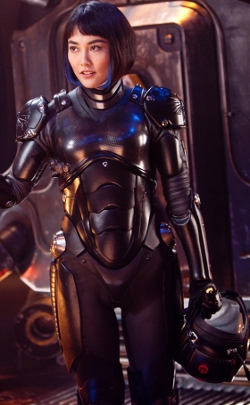
There are, however, some problems with the Bechdel Test. For instance, the Bechdel Test does not test for how well the women are portrayed in the film. It is also not an indicater of wether a film is good or not. There are many fantastic films that fail the test while there are many terrible films that pass the test. One film that I personally believe is great, yet fails the Bechdel Test is Guillermo del Toro's Pacific Rim. The reason I mention this film is that there is another test named after the films lead, and only main, female character; Mako Mori.

Despite being the one of only female character in the film, Mako, who is played by actress Rinko Kikuchi, is a strong and well written character. Even with this great and well developed character, Pacific Rim fails the Bechdel Test. The Mako Mori test is another, and possibly better way to test and notice strong female characters in cinema. For a film to pass the Mako Mori Test it must have
1. At least one female character
2. Who has her own narrative arc
3. that is not about supporting a man's story. 

This test brings to light, not only the amount of females with lines, but how well written the females are and if their storylines are dependant on a man.

The third test is called the Russo Test, and as an openly gay male, the most important to me. The Russo Test measures LGBT+ portrayal in film. For a film to pass the Russo Test:

1. The film contains a character that is identifiably lesbian, gay, bisexual, and/or transgender.
2. That character must not be solely or predominantly defined by their sexual orientation or gender identity. I.E. they are made up of the same sort of unique character traits commonly used to differentiate straight characters from one another.
3. The LGBT character must be tied into the plot in such a way that their removal would have a significant effect. Meaning they are not there to simply provide colorful commentary, paint urban authenticity, or (perhaps most commonly) set up a punchline. The character should matter.
(Source) 

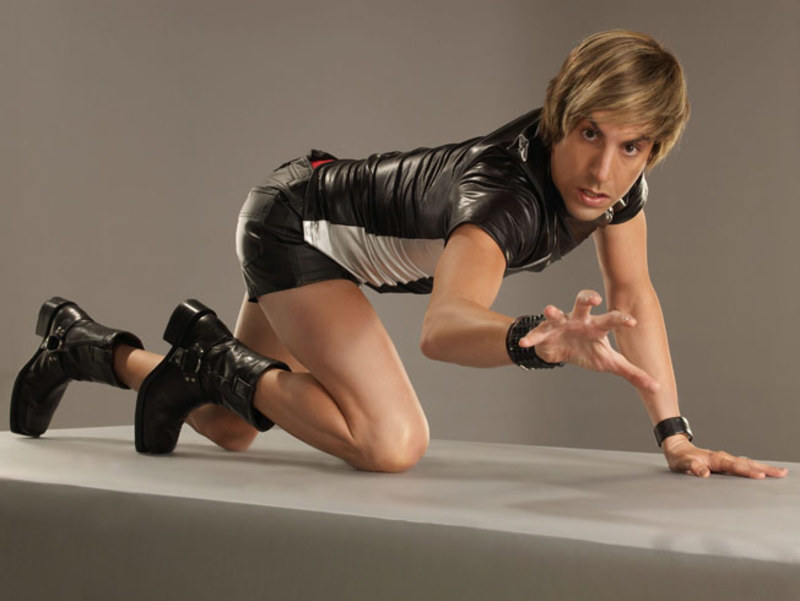
So basically we like our gay characters looking less like this

and more like this

From: The Way He Looks
Being "the future" of cinema it is important that we strive to include both well written female and LGBT+ characters. 


My experience at the Toronto Film Festival

This past weekend I ventured to Toronto, Canada with a few of my friends during the Toronto Film Festival to see a film premier that he had worked on. It was an amazing experience.


The film didn't exactly get accepted into the film festival however. Or really even get submitted. Here's a preview.


My friend spent ~2 weeks traveling across the country with other skaters, skating hills, parks, ledges, and anything else they could find. I got the opportunity to see the video premier before it was even released online at a party with all of the skaters in the video.

The day after that was an event called The Toronto Board Meeting. Basically hundreds of skaters meet up and skate through the middle of Toronto and we all wear a suit and tie, get it, "board meeting."


Here are some pictures from the event:


All photo credits go to "skate invaders"

There was an insane amount of media coverage, from skaters, videographers, news teams, and even a drone. Being around and spending time with the guys who premiered the film helped me learn a lot about making professional quality skateboarding media. While there isn't really much money to be made in the skate industry, or any money at all, taking this skate trip made me realize how open I would be to living on the road and working in the skate industry producing media for various companies. 

New Popeye movie makes innovations in computer animated movies

Ok I know that Popeye isn't the ideal cartoon character that you'd think of when making an eyebrow raising movie.
(His enormous forearms scare me too) 
But, from the looks of the new animation test for the new Popeye movie, we might be changing our minds. Director and narrator Genndy Tartakovsky, who is known for making Hotel Transylvania, has had a life long obsession with the spinach addicted sailor and now will finally make a movie dedicated to his favorite cartoon character. Tratakovsky's style of physics defying animation from this video is well demonstrated. He has adapted the 1930's cartoon to have a more sleek and sharp looking design that makes the cartoon characters look almost lifelike. Follow the link below to get a look at the behind the scenes video about the process of making this new animation movie.
https://www.youtube.com/watch?v=M1lzJuwJD9k 

Needless to say, this looks a thousand times better than the 30's and 40's cartoons, cartoon strips, and the 1980 Robert Altman live action rendition of Popeye. The movie doesn't have a release date but sources say that the movie should be released in the coming year. 

Movies: to Score or not to Score?

The simple fact that films typically have a musical score always seems to slip right by me when I'm actually making any kind of short film or TV show myself. It's just not something that I would typically think about. Good audio? Sure. Sound effects? Yeah, why not. But never a score. This lead me to thinking, hey, who says that films need to have any kind of music or instrumentality at all? That, in turn, lead me to google, which lead me to some interesting websites, which lead me here, to this blog post.

As behind-the-scenes as they typically are, we all know the names of a few movie composers: Hans Zimmer (please click that link for your own sake), Danny Elfman, and of course, the legendary John Williams. Their scores don't just add noise to all of their respective films: they add feeling, and set a tone for any given scene or even the movie as a whole  If you need an example for a really amazing score that is spot on in terms of creating an entire atmosphere for a film, look no further Howard Shore and the Lord of the Rings trilogy. It doesn't just add tension or give scenes a certain flavor: it's music that like, I could actually see hobbits playing out on their front porches. Or whatever hobbit holes have instead of porches. Dirt clods? I don't know. 

 But what I'm curious about is if some films rely too heavily on composers and a musical score in order to fix what would otherwise be a weak script. Recently, there was a video going around the internet called "Star Wars without Williams." While it was meant to be funny, it also pointed out something pretty important: this throne room scene is super awkward without music. What was once a jovial and triumphant scene is now just echoey and weird. Don't get me wrong, I like Star Wars as much as the next guy or gal, but Audio (and script) - wise, Lucas kind of dropped the ball here. 

On the opposite side of things, however, is it possible to have a good film without any scoring at all? Sure. Just check out No Country for Old Men, The Birds, and 90% of Castaway. The key to scoring films, as I'm slowly but surely finding out, is to balance a good script with subtle yet powerful music. Emphasize certain emotions or themes that you want to have emphasized, while at the same time making sure that your film could still be successful without the music shoving those emotions down your throat. If you're looking for some more interesting info on how composers mess with our emotions, you check out a BBC article on that very topic right here.

Practical Effects: The Real Magic Tricks of Filmmaking

Special effects in filmmaking could be summed up into two different styles: visual effects, and practical effects. Visual effects usually involve editing the footage in post-production, while practical effects are done live in front of the camera. Visual effects can have a really cool effect when used effectively, like in this summer's blockbuster film, "Maleficent". Of course everything you see is fake and created on a computer, but the movement of the camera makes the scene very compelling.

Free Image Hosting

So. Visual effects can be pretty cool. But I'm here to talk about why practical effects are way cooler.

Why are they way cooler?

Well, many reasons. For one the shot is going to have a timeless effect and will look real 100 years from now because, well, it is real. Visual effects however are very time sensitive. These magical, awe-inspiring scenes we see now will look laughable in a few years. But that's how technology works.

Check out these two scenes below...

The first one is from Terminator 3, where they flipped a massive construction vehicle using computer-generated visual effects. The second one is from the Dark Knight, where they do almost the same stunt except they actually flip the truck.


Now to be fair some might jump up and say the Terminator version is better because the truck is seen crunched in to the ground, tires flying through the air, and of course a nice big explosion to finish.

But sorry, you're wrong.

Consider this analogy....

The Dark Knight's effect is like a gourmet selection from that restaurant down the street...


...and The Terminator's visual effect is like a #2 from Panda Express with extra meat.


But consider this analogy for a second. Even though Panda Express is of less quality, overall it's a better deal. You're getting a lot more food for a lot less money. There's plenty like about it... but little to appreciate. You will not eat Panda Express in small bites and appreciate the amount of work it took to create such a masterpiece. It's just something that will make you happy in that moment. And minus the painful poo afterwords, that's exactly what the Terminator 3 effect is. It's just a cheap audience pleaser. 

I hope a few of these behind-the-scenes videos below will help convince you:

First off, The Dark Knight flip:


 Come on... that's just FRIGGIN COOL.

For any of you that have seen Inception, you may remember the scene when Joseph Gordon-Levitt is in a fist fight whilst flying all across a room because of changing gravity. How do you create the effect of a room rapidly changing gravity? How about RAPIDLY CHANGING THE GRAVITY?


This next video is from "Edge of Tomorrow", a film I expected to be a horrible flop. Tom Cruise stuck reliving to same war scene day after day? Sounded to me like an excuse for big explosions and no story at all. But the reviews came out and they were actually really positive. I couldn't believe it. I had to see what all the huff was about, and I was indeed pleasantly surprised by the engaging story. The story does of course include several explosions and battle scenes, but I remember thinking that they were acted out very well. That is, the actors seemed to be reacting to their environment quite realistically. After watching this video, I realized why. This video features several small clips, but the most impressive clip is at 2:58. It's truly incredible and I don't think many actors could pull it off besides Tom Cruise. 


Of course there are many other notable films that are famous for their use of practical effects, but I hope this gives you an introduction to the fine art and precise skill of these types of effects. They are dangerous, expensive, and difficult, but that's why they deserve so much appreciation.

Crave that gourmet shit.


Thursday, September 18, 2014

The Fault In Our Stars

I was forced…yes forced to watch The Fault in Our Stars this past weekend. I refused to watch it before because I’m not a fan of movies involving any type of terminal sickness. One reason is, I get queasy and the main reason is that I’d rather not be depressed for days after it ends. However, my roommate told me I absolutely HAD to watch it and she wasn’t letting it go so I gave in. She said she balled her eyes out but my other roommate said she didn’t shed a tear so I was curious to see how I would react.  


The movie was twenty minutes in and I was already crying. I almost shut it off but then it happened…I got attached to the characters. I had to watch even though I knew it was going to end in tragedy. It was very well paced. I don’t cry easily and I haven’t cried like that in a long time. I was crying at the happy parts and actually needed a box of tissues next to me. It was pathetic.


For those who haven't seen it yet I don't want to give anything away so I will just say the story is about first love in the face of death (clearly shown in the trailer below). Yes it is full of clichés but I actually didn’t mind. The movie is definitely targeted towards teenage girls but it’s honest and bittersweet. At times I think it tries too hard to be cute and sappy. However, it’s still adorable and the lead actors truly do a great job.

I admit, I was slightly depressed after but I was also inspired and extremely grateful for everything I have. So yes I recommend watching it...if you’re in the right state of mind and have some tissues or a whole box.


House of Cards Part One: The Parts to Like

So on my 22nd birthday, I got a package from my girlfriend. I was at the age when I wasn't expecting too much, just happy to get something. Hopes for something cool and mysterious were not high but there were there. I opened it up. It was the second season of House of Cards on DVD.
A cheeky grin and a hushed string of expletives followed.
See, around episode eleven of House of Cards, I decided a casual distaste for the show would not suffice and I would instead need to take upon myself a rather fiery, impassioned crusade that involved spewing overly-analytical bile upon any person who crossed my path with even a vaguely informed positive impression of the show, a mindset that would win me no friends but a whole series of very, very casual acquaintances that probably wouldn’t mind not seeing me again. I made this clear to Ms. Ryan O’Leary and perhaps labored upon the point a tad too often because a week later all talk of House of Cards was banned. A few months later, smartass little bastard, she had a joke at my expense with my birthday gift.
House of Cards came into play with perfect timing. People are dissatisfied with the wallowing cesspool of greed and incompetence that defines the government, with 75% of people expressing dissatisfaction with the direction of America and Congressional approval ratings at an all time low. And yet at the same time there is also a distinct absence of mainstream entertainment willing to address this unease. It was Kevin Spacey’s first big project since we, as a people, realized we missed Kevin Spacey. Also, acclaimed director David Fincher’s first foray into television after a wildly successful career in film. All this delivered to viewers via Netflix’s revolutionary bulk delivery of episodes, an innovation not unlike when HBO first debuted The Sopranos fifteen years ago without commercials but with boobs and fucks and blood. Yes, House of Cards had the narrative of innovation and singularity behind it to be considered for entry into the Pantheon alongside the other greats such as The Sopranos, The Wire, Breaking Bad, Mad Men. And Deadwood if you pretend it has an ending, which I do, and Twin Peaks if you ignore the ending, which I don’t. Honorable mentions to Hill Street Blues for kicking it all off though. That show gets something like a plaque on the wall or they name the whole building after it.
Anyway.
House of Cards, in case the reader is unaware, is about a Congressman with a nice southern drawl but probably a penis a couple sizes too small for his liking cause he sure works hard to compensate for something we’re never really made aware of by ruining a variety of lives until he reigns supreme and powerful at the top of it all, named Frank Underwood. Slighted and angered when he’s denied the promised position as Secretary of State by the administration, he crafts an elaborate plot to attain revenge and power. Shenanigans follow.
There was a lot to like as I started watching. Sometimes, to marvel at. Spacey as Frank Underwood kills it, giving him a somehow simultaneous edge of camp and malevolence. Robin Wright, as his wife Claire, is just as good, though Claire is not given nearly enough interesting material for Robin to shine as much as she could. Of the bunch though, the stand out is Corey Stoll as an alcoholic congressman looking to clean up his act for the big time named Peter Russo. For the first few episodes he was the only actor of the ensemble to ever make feel any emotions, but that’s more due to the character than anything. The plot machinations can be hit or miss, but there are certain moments and episodes that offer a real cathartic look at just how dreadfully fucked government can be. On a technical level, the cinematography is a pitch perfect collection of dull grays and blues that bring to mind for whatever reason a cold unexpectedly caught on a cloudy summer day or a dreary day spent in a hospital room when it’s raining outside but for some reason you leave the window open. It’s a perfect match for the cynicism that underpins every facet of the show.

All this added up to a good show. In its strongest moments, a really good show. But as I kept watching, I still felt a distance. When a TV show hits me, it burrows into my gut and rests there. I’ll spend countless hours, though only really countless because I don’t care to know how much time I’m wasting on this shit, reading, understanding, analyzing, rewatching the parts I can’t quite let go of. And it wasn’t happening with House of Cards. But it was with everyone else. Next week, I'll get into what wasn't clicking with me. 

Monday, September 15, 2014

Directing for Dummies

Welcome to the newest edition of "[insert random film crew position] for Dummies!" I'm you're host, Mike, and today we shall be delving into the world of the director. *Oooo ahhh* Now, I know what you're all thinking: "Duh! A director is the guy/girl that directs people!" You know what? You'd be correct in saying that. Go figure!

I'm sure you all know the basics of a director's job. I'm here today, though, to try to teach you a little something that you may not have already known. Let's start from the beginning. Now, after a director is hired by producers for a project, the director must then work side-by-side with the producers to cast actors for the film. This can be an extremely long and tedious process, but it's one that simply must be done. Clearly. Without quality actors, you can't possibly dream to have a quality film. Well, I guess you could, but that's all it would be: a dream.

Next up on the list of things to do, the director has to organize and select shooting locations. Of course, the director has location scouts working for him to truly find the best locations for shooting, but he has creative control and authority as to which locations will appear in the film. At the same time, the director interprets--and sometimes even writes or selects--the script for the film. The director rarely ever writes the script himself, but if he's not hired by a production house to direct the film, the director will often go out and find a script he'd like to work with. The location selections are hugely dependent on the script and the way the director interprets it, so the two steps are pretty much synonymous.

The director's next job is the last step before filming can begin. He must approve the sets, costumes, choreography (not present in most films), and music. These aspects of film are usually completely invisible to the untrained eye, or ear, because the only time most people will find them noticeable is when they are done incorrectly. If a film is set on a 1950s Japanese farm, and the actors are wearing tuxedos and sneakers with Kanye vaguely playing in the background, something went wrong...very, very wrong. It's the director's job to make sure mistakes like this never happen.

What else does the director do? Well I'm glad you asked! The rest of the director's work is pretty straight forward and most of you already know all of these things. But guess what! I'm going to tell you about it anyway! The director has a whole lot to do during production. The most obvious task is directing the actors. Whether it's explaining to actors how he wants them to portray their character in a given moment or if it's simply helping actors get into character, the director is the guy doing it. While doing this, the director also keeps the crew on track and makes sure everyone's doing what they need to be doing. Film shoots are generally tightly scheduled, so there's no time for excessive screw-ups and messing around. While doing this, the director also works with the cinematographers on shot composition and makes sure he likes what's in the frame.

Production is quite a daunting time for directors. They're basically the ringleaders for the wildest circuses on the planet. If they crack, the film is doomed to fail. The director must keep his cool so that everyone else does.

So now the film is shot. Yay! The only thing that's left for the director to do is work with the editors on creating first a rough cut and then a final cut of the film. The director gives his input throughout the process on what he thinks looks and feels better. Sometimes, this leads to reshoots of scenes or even cutting entire scenes from the film. But hey, who ever said directing was easy?