For the past two years I have been blurring logos for
“Company X” (A well known company I won't mention). At first I blurred them
using Motion but after Final Cut X came out, they did the big switch to Adobe so
I had to figure out the best way to do it in After Effects. I have been
blurring for about 5 hours straight today so I figured I would take a break and
write about it because my eyes are actually going blurry.
I feel like there is a much easier way of blurring these
logos using a different technique or software like DaVinci but as of now I have to do
it the long and monotonous way. In case you were itching to know... this is my everyday process:
Company X sends me footage using a highly secure
transfer software.
I download it and bring it into After Effects.
Sometimes they send me an e-mail with notes and
time code for each package which I refer to throughout the process.
I play through the layer of video once and then
start at the beginning.
When I find the first logo I need to blur I
create an adjustment layer. I set in and out points for that layer/logo.
Then I create a mask covering the logo.
The next step is adding the blur. The blur I use
is called “fast blur” and I also add some feathering so the blur better blends with
the surrounding area.
The intensity of the blur depends on the size
and clarity of the logo.
Now frame by frame I move
the mask to follow the logo using key frames.
However, if an important character moves a part of their
body partially in front of the blurred mask I have to create a subtraction
mask. AKA my WORST nightmare. Not really but it’s just an extra step.
In order to create a subtraction mask I
duplicate the original video layer and drag it on top of the blurred layer. I
create a mask around the character’s obstructing part in the duplicate video
layer.
I follow that object using key frames until it cuts to the next shot or the character stops obstructing the blurred mask.
And then I repeat these steps for the remainder
of the package.
A final blurred shot looks a little like this….. (but with Company X's footage)
A typical package has 40 adjustment layers instead of 7 but
you get the idea. I know I could potentially use motion tracking with this but
I found that when you have footage that whips/pans very quickly and the logos
aren’t clearly defined, motion tracking takes longer than just doing it by
hand. So I hope you enjoyed this extremely boring blog post as much as I did.
Now back to blurring I go!
In his most recent short film he created, "Aspirational" starring Kirsten Dunst, Frost explores the "selfie culture" and comments on how social media effects our interactions, even with celebrities. It's entertaining and funny, while making a sad statement about our society. Watch the two minute film below:
If you enjoyed that, you may enjoy his previous short film with Lizzy Caplan, titled "Fashion Film." It's a commercial for Viva Vena and spoofs fashion advertisements that you'd normally see. (Clever for a fashion brand to make fun of other fashion advertisements... I see what you're doing here, Viva Vena.) And as always, Lizzy Caplan is hilarious.
Here are the three award short films for Vogue if you want to check those out:
I would not consider myself an advertising or fashion person at all, but I really love the charming humor that comes through in these beautiful advertisements.
Hello ladies and gentlemen. I know this early posting may come as a shock to you all, but this week's schedule is looking a bit random, so I figured I'd enlighten you all tonight! Don't worry, I'd never let anything get between us. Now you may be wondering, how would a series of blog posts become as famous as this? Well, aside from the beautifully written ideas that I've shared with the world, it's been completely due to my Publicist! Not really. But wouldn't you love to know more about publicity? Of course you would!
A production's publicist works alongside some very important people. Specifically, a publicist works closely with the executive producer, director, art director, and publicity designer. They work to promote and, well, publicize the film during every phase of production. From the beginning of preproduction to the end of postproduction, a publicist's job is definitely one of the most vital responsibilities that decides a film's success. If no one knows about it, no one goes to see it. It's as simple as that.
In the simplest form, a publicists job is to advertise the film. This can manifest itself in posters, flyers,
and other promotional advertisements. One of the responsibilities of a publicist is to secure permission for and to supervise the placement of these advertisements. This can include anything from putting up posters in theaters around town to securing radio spots nationally. This is really the most obvious of a publicists responsibilities and it's probably the job that the public notices the most. They just don't usually know who's behind those flashy ads that convince them to see the movies.
The publicist also acts as a liaison with the press. They're to go-to-guy (or girl) when it comes to dealing with the press. It may not be particularly glamorous, but hey, someone's gotta do it. Who knows, the press may be kind of cool when you're not a famous person. Probably not, but maybe. The publicist additionally supervises the generation and distribution of press releases. I'm not totally sure how that's different from the first point in this paragraph, but it was two separate bullet points on this article I'm reading, so it's got to be its own substantial point. Right? Ah, who cares?
The last main responsibility of a film publicist is to assist in fundraising activities. This can involve crowd funding (such as IndieGoGo and GoFundMe) or outreach (begging rich people for money, but with class, of course). The publicist works with the executive producers in this step of their job. So basically they work with rich people to get more money from other rich people. It's actually a pretty ingenious setup if you think about it. It seems to work pretty well, at least.
Without publicists, there would be no films. Well, there would be films, but no one would go to see them, considering no one would know anything about them...or the fact that they exist. So they may as well not exist. That's what publicists are for! (Letting us know what's out there and why we "should" see it.)
A bottle episode is an episode made using as few cast members, sets, and effects as possible. The stories are usually set in only one location. Due to the lack of location the episode is often used as a chance to develop characters and reveal more about them. In television this is very important as character development happens over a much longer time and to a much smaller degree. Very often characters will not have major changes to who they are. For one example, we look to The Office. At the start of the show Michael Scott is an endearing idiot and by his departure his is just as much one as when he started. Sure Michael learns some lessons but none that change his overall character. Bottle Episodes aren't trying to break this form, they simply offer a chance for more depth of the characters to be revealed. Breaking Bad and Community both have good examples of bottle episodes.
Yeah bitch, bottle episode.
In the Breaking Bad episode Fly, Walt and Jesse must kill a fly lose in the superlab to save them from contaminating a batch of blue sky. Walt and Jesse are the only major players to appear on screen and the episode is set almost entirely in the superlab. The lack of location change and action forces the characters to deal with and confront the consequences and emotional weight of Jesse's girlfriends death. This isolation would not have been doable in a regular episode, or at least have the same effect.
Six Seasons and a Movie
The cancelled too soon meta comedy Community also did a bottle episode, one that is often considered the series best episode. The episode takes place entirely in the Greendale Library and uses only the main cast. Community uses this episode to reveal more secrets and backstories about the Greendale Seven. At the start of the episode Abed even points out that their situation is shaping up to be a bottle episode. While originally acting civilized, the episode shows what happens as time stretches on and what they really think about each other comes to fruition.
The idea of a bottle can appear in movies though it is often done for more of an artistic reason rather than a budgetary one. The films tend to focus more on human nature, similar to what Community does in it's bottle episode, One very simplistic example of this is a film called Buried. In the film, Ryan Reynolds finds himself buried alive. He is the only character to appear on screen the entire film and there is never an exterior shot. Every shot takes place inside the coffin and the same shot is never repeated.
In television, the bottle episode style of filming is a great way to develop character and keep the budget low.
The purpose of a movie trailer is to excite the audience and encourage them to go see the movie for when it actually comes out. However, there have been a few movie trailers that I've seen that did the exact opposite for me.
The Giver:
I first read the book "The Giver" in grade school when I was forced to write an essay on it. Unlike most assigned readings, I actually really enjoyed the book and really got into the story. I can remember a time in class when we actually talked about how it wouldn't make a good movie because of how the whole movie was based around a slow reveal and the main character's thoughts. Here's the trailer:
What?
Spaceships at the end? Did the creators even read the book? I was half expecting the trailer to end with "directed by Michael Bay." I talked to a friend who saw the movie (but didn't read the book) and he actually really enjoyed it. So maybe I'm just being a hater, or pictured the book in a different way than anyone else, but I never would have guessed that, that trailer would be for "The Giver."
Cabin in the Woods
I actually have seen "Cabin in the Woods," and I thought it was a really enjoyable movie. But the trailer wouldn't make it seem like that. The actual movie was a really unique take on a genre that is normally over-saturated with similar ideas and basic plots.
The thing that "Cabin in the Woods" is how unique it is. The trailer makes it seem like the movie carries the same plot lines as every other scary movie: The hot couple, the stoner, a cabin in the woods, a lake, a creepy old man, ect. They hinted at the unique portion of the plot, but not enough to actually know that the movie would be anything different.
Battleship
To be fair, I have not been a fan of this movie since the beginning; since I found out that they were making a movie based on a board game. I realize that people are struggling to come up with original ideas for movies; using a board game that I learned to play when I was 6 seems like a bit of a stretch.
It starts out seeming like it has an actual plot that seems vaguely based on a board game (basically just naval battles). However that quickly turns into something with aliens and giant metal robots coming from the sea and a bunch of other big explosion-y things that happened really quick that I didn't understand.
Have you ever noticed the distinct likeness that blockbuster films tend to have with one another? Like how the big movies always have a good guy, and a bad guy, and a love interest? Or how romantic comedies always start sad, and then get happy, and then get sad, and then get happy again? Or maybe you’ve never noticed any of these things but you did find it odd that the villain in Batman, Star Trek, The Avengers, and James Bond all got caught on purpose. The reason for these (not so) subtle parallels between big blockbuster movies all comes down to saving the cat. “Saving the— what? Cat?” Yes, dear reader; the cat. We all know that Hollywood is actually a snake pit devoid of any sort of human compassion, love, and/or decency.
Despite this unfortunate fact, filmmakers DO have a Bible— It’s called “Save The Cat!,” written by Blake Snyder that dates all the way back to 2005. Boasting the tagline, “The Last Book On Screenwriting That You’ll Ever Need,” modern day entertainment professionals boast that it’s the only book they’ll ever read.” “Save the Cat,” presents a formulaic outline of a story’s Three Act Structure in a concise, easy-to-understand way. According to Snyder, successful stories share a number of very specific beats that appear at very specific times throughout a screenplay. And, funnily enough, most big-budget movies nowadays follow his beat sheet to a tee. I’ll use the popular 2013 movie “Her,” written and directed by Spike Jonze and rated a commendable 94% on Rotten Tomatoes to illustrate each beat.
Opening Image (page 1) – Occurs on the 1st page of a screenplay. The opening image is a visual that represents the struggle & tone of the story. A snapshot of the main character’s problem, before the adventure begins.
In Her, the opening image shows THEODORE (Joaquin Phoenix) writing a love letter on behalf of someone else. Pulling back, we realize this is his job. He sits all day in a stark and lonely cubicle, and writes love letters to people he’s never met before.
Set-up (pages 1-10) — Expand on the “before” snapshot. Present the main character’s world as it is, and what is missing in their life.
In Her:
– Theodore is having trouble getting over his divorce.
— He’s been depressed for some time now and even his friends have trouble getting him out of the house.
— Theodore isolates himself socially and loves to play video games and interact with all things technological, more than he likes dealing with real people.
— Theodore is friends with a woman who lives in his building. Her name is AMY (Amy Adams), 30s, and she’s unhappily married to a narcissist.
— Bored of his video games, Theodore can’t sleep one night and calls a phone sex line for companionship. This ends disastrously and Theodore is unfulfilled.
Theme Stated (happens during the Set-up usually around page 5) – What your story is about; the message, the truth. Usually, it is spoken to the main character or in their presence, but they don’t understand the truth…not until they have some personal experience and context to support it.
In Her:
Theodore rides the elevator with Amy and her know-it-all husband. The husband proclaims to Theodore: “It’s hard to make time for the stuff you care about the most in life.” He’s talking about the documentary that Amy is working on, but this statement will have special meaning for Theodore later on in the story.
Catalyst (page 12) – The moment where life as it is changes. It is the telegram, the act of catching your loved-one cheating, allowing a monster onboard the ship, meeting the true love of your life, etc. The “before” world is no more, change is underway.
In Her:
Theodore attends a computer software convention. There, he buys the latest operating system, called OS1, for his computer.
Debate (pages 12-25) – But change is scary and for a moment, or a brief number of moments, the main character doubts the journey they must take. Can I face this challenge? Do I have what it takes? Should I go at all? It is the last chance for the hero to chicken out.
In Her:
— Theodore is at first reluctant to install OS1, but then gathers the courage to do so…
— Theodore chooses a female voice. Theodore tells the initial set-up person about his relationship with his mother. And within seconds we meet…
— SAMANTHA (voiced by Scarlett Johansson). She is sexy sounding. She is smart. And she appears to know everything.
— Theodore is taken aback. He doesn’t know what to make of this. He is almost shy around Samantha at first. And then after some banter and social discourse, Theodore agrees to Samantha’s request…
— Samantha asks to be allowed access to Theodore’s hard drive. In order for her to work most efficiently, she needs as much information about Theodore as possible.
Break Into Two (Choosing Act Two: page 25) – The main character makes a choice and the journey begins. We leave the “Thesis” world and enter the upside-down, opposite world of Act Two.
In Her:
Theodore finally agrees and in seconds, Samantha knows everything about him. Their relationship begins…
B Story (page 30) – This is when there’s a discussion about the Theme – the nugget of truth. Usually, this discussion is between the main character and the love interest. So, the B Story is usually called the “love story”.
The Promise of the Premise: Fun and Games (pages 30-35)– This is the fun part of the story. This is when Craig Thompson’s relationship with Raina blooms, when Indiana Jones tries to beat the Nazis to the Lost Ark, when the detective finds the most clues and dodges the most bullets. This is when the main character explores the new world and the audience is entertained by the premise they have been promised.
Midpoint (page 55) – Dependent upon the story, this moment is when everything is “great” or everything is “awful”. The main character either gets everything they think they want (“great”) or doesn’t get what they think they want at all (“awful”). But not everything we think we want is what we actually need in the end.
Bad Guys Close In (pages 55-75) – Doubt, jealousy, fear, foes both physical and emotional regroup to defeat the main character’s goal, and the main character’s “great”/“awful” situation disintegrates.
All is Lost (page 75) – The opposite moment from the Midpoint: “awful”/“great”. The moment that the main character realizes they’ve lost everything they gained, or everything they now have has no meaning. The initial goal now looks even more impossible than before. And here, something or someone dies. It can be physical or emotional, but the death of something old makes way for something new to be born.
Dark Night of the Soul (pages 75-85) – The main character hits bottom, and wallows in hopelessness. TheWhy hast thou forsaken me, Lord? moment. Mourning the loss of what has “died” – the dream, the goal, the mentor character, the love of your life, etc. But, you must fall completely before you can pick yourself back up and try again.
Break Into Three: Choosing Act Three (page 85)– Thanks to a fresh idea, new inspiration, or last-minute Thematic advice from the B Story (usually the love interest), the main character chooses to try again.
Finale (pages 85-110) – This time around, the main character incorporates the Theme – the nugget of truth that now makes sense to them – into their fight for the goal because they have experience from the A Story and context from the B Story. Act Three is about Synthesis!
Final Image (page 110) – opposite of Opening Image, proving, visually, that a change has occurred within the character.
Not convinced? Here are just a few other examples of movies that follow the “Save the Cat” formula.
But why did he call it “Save the Cat?” What does that even mean? According to the old people in my life, the hero of a movie would often prove himself by rescuing a cat. Like from a tree or something I guess. By rescuing the cute little kitten, the hero becomes generally liked by the viewers and has them on his side for the rest of the movie. This, “save the cat” moment can now be broadened to refer to the scene where the protagonist does something that makes the audience like him or her— regardless of whether or not there’s a feline on set. This moment is pivotal, and without it the audience is less likely to sympathize with the main character when they do something dumb and ruin everything.
With the mass quantities of “writers” shoving their scripts into the faces of many production management companies, prospective buyers will look for any reason to pass on a screenplay. Not following Blake Snyder’s “formula” is reason enough for the intern doing script coverage to stamp a big fat, “PASS” on the cover. Don’t even try to send unsolicited or unregistered scripts to production companies. They absolutely will not read it.
Even though Hollywood seems all about the “Save the Cat” trend, the strict “mathy-ness” of the whole thing turns many people off. Some people believe that they should stay true to their vision, and that with hard work, and hope, they’ll make it big in the entertainment glamorous industry. Blake responds to hopes like these in a painfully blunt fashion not unlike a Fiction Field II professor I know.
Still, it’s hard to ignore the guy that titles his Youtube video, “On Story Structure (and how Save the Cat ruined Hollywood).” Just a video about story structure. AND HOW THIS ONE BOOK LITERALLY RUINED ALL OF HOLLYWOOD. But that’s like, not the main point of the video or anything. (It is.) Check it out!
As we launch ourselves head-first into the next project, a few of us might be scrambling to think of a pitch: something that will captivate an audience, something that will hook viewers, and something that could stand on-par with other festival-grade features. But where to start? Where do we even look? Honestly, it really depends on what type of person you are but if you're finding yourself in a creative slump maybe it's time to look for some inspiration.
Film Riot could be exactly the resource you're looking for. Hosted by Ryan Connolly, this is a youtube channel that is dedicated to offering tips, tricks, and tutorials about all states of production. It offers the perspective of someone who has had his own film entered into the Tribeca Film Festival, and people who specialize in a specific area (such as Dustin Lee from Full Sail). In this episode, they basically go over the fundamentals of scriptwriting. And while it may be something you've heard before, it's worth reminding yourself what exactly a good script is made up of. And while tutorials are not everyone's cup of tea, Film Riot strives to put a friendly and like-able face to its product. They feel less like a lecture and more like we're casually learning with him (Ryan) as he explains how he managed to accomplish this special effect or that specific shot. If you continue on through his channel, you’ll discover a plethora of filmmaking tutorials that really help when it comes down to conceptualizing exactly what you want to do in a feature length film and how exactly you need to do it.
Whilst on my weekly routine of scouring Short of the Week, I came across a four minute film called "Tyler". After finishing a short of about the same length about children myself, I was interested to see what it was about. What I saw was the opposite of what I expected. Director Sam Benenati created something that I consider a cross between a film, a music video and poetry. "Tyler" concentrates more on emotions and visuals than a completely concrete story, which I believe is why it's so strong. Coming from a writing background, I find it very difficult for me to come up with experimental concepts rather than a locked down story, so I found this film refreshing and inspiring.
The sound design immediately jumps out at you. The entire film is a fluid, memory-like sequence, which was perfectly assisted by the overlapping music and dialogue. The shots were just as beautiful. I am a huge fan of natural lighting, and in this film, it really humanized each of the characters.
Although the film is technically about a young boy who falls in love with his older brother's girlfriend, it really touches on each of the characters' relationships with each other, even with the missing father figure. Dakota Allbecker, who played the young boy, did a phenomenal job expressing the character and interacting with the older actors. Short of the Week writer Ben Watts reported that Benenati had "a knack for directing children without making them feel precocious or 'child-actor'-y", which I admire much more now that I have worked with children myself. I think "Tyler" is a very successful short film and I plan on looking up more of Benenati's work.
"It must always be remembered that the primary aim of pictures is to provide entertainment. To entertain people, one must first capture their interest." - Alfred Hitchcock
The name, Alfred Hitchcock, has sort of become a cliche, which is ironic because his filmmaking broke so many cliches by changing visual storytelling, specifically for psychological thrillers. Hitchcock, born in 1899, progressed filmmaking and influenced future films.
One piece of advice he said was, "Make your audience suffer, but give them pleasure. The same pleasure they have when they wake up from a nightmare." For example, Rear Window shows the danger early but uses the entirety of the film to build suspense. It makes the audience uncomfortable as they imagine the characters getting caught or witnessing a murder. It's not until the end when Hitchcock manages a somewhat sweet ending by wrapping up all the characters. Miss Lonelyheart finds a man, the dancer's love comes home, and the couple who's dog died has a new one. Lisa, played by Grace Kelly, reads a travel magazine next to Jeff, played by Jimmy Stewart, who now has two broken legs instead of one. The audience goes through a tremendous amount of suffering and suspense in order to enjoy this somewhat happy ending.
Hitchcock implemented and created many different techniques to portray emotion and make the audience feel something. His stylistic close ups on facial expressions helps convey the characters' strong emotions. Hitchcock is also famous for his point of view shots he used to create suspense. Second-unit cameraman, Irmin Roberts, created the dolly zoom, or "Vertigo Effect," which is used in Vertigo. Watch the scene below:
Once sound was used in films, dialogue started being used really heavily. But Alfred Hitchcock defined cinema as a visual medium. He believed dialogue should only be used when the visuals can't communicate an idea. He says, "sometimes you find that a film is looked at solely for its content without any regard to the style or manner in which the story is told." He wanted to use the camera every chance he gets to reveal the story with visuals and objects.
So now that we have covered some basics of under water filming. We can now do over some important equipment that is needed.
Equipment
Underwater Camera Housing
The underwater housing for your camera is the most important (and expensive) item for underwater filmmaking. It is also the best investment you will make because it protects the camera from the hazardous elements of an underwater environment.
For the hundreds of cameras on the market there are relatively few underwater housings. If you don’t already have a camera, you should first look for a quality housing and let that lead you to a camera. In other words, shop for housing first and camera second.
In general, camera housings are mechanical, digital, or a combination of the two. Generally, they have buttons and pins that go through the hard casing to physically push buttons and turn switches on your camera. The benefit of a mechanical housing is that parts can be replaced if something breaks in the field. The buttons and switches have to be kept in good condition so they don’t jam or get stuck, but you don’t need to worry about electronics getting wet and ruining the electronic board.
Digital Housings
Digital housings plug into a port on the camera and operate all the camera functions from digital controls on the housing. They are often constructed so that the buttons are in an ideal place for the diver to control in the underwater environment, usually where your thumbs would naturally grab the camera. This is a real plus. But be advised; an occasional failed circuit board can leave you stranded if you are in a remote location.
Watertight bags are a less expensive option, but they tend to restrict your range of depth.
Lights
LEDs
More energy-efficient LEDs are also gaining popularity with deep water filmmakers. With greater battery life and the decent colors they produce.
Halogen
Small halogen lights are what most divers carry with them to see things at depth. If you want your video to look like daytime, you would have to get stronger halogen lights made specifically for use with video equipment.
Another thing that needs to be considered is how you are going to hold both the camera and the light or lights. Most divers use a mounting mechanism that attaches to the camera housing. Lights and mounting is are usually bought separately. If you are customizing your own lighting system, just remember that you will want to be able to adjust the lights underwater without much effort.
After seeing the trailer for the first time today, I cannot wait much longer to see the feature length film. This film is combining two different types of stories into one and it looks beautiful. This movie is looking to combine the unlikely love story of Stephen Hawking and his college sweetheart and the story of how Mr. Hawking overcame insurmountable odds to accomplish so much in the field of physics. The trailer looks to combine Hawking's theories of physics with theories about humanity, life and love. Les Miserables star, Eddie Redmayne was perfectly casted to play the roll of Mr. Hawking. From the looks of the trailer, he has really prepared for this roll. In the trailer you can see how the motor neuron disease related to amyotrophic lateral sclerosis slowly being to deteriorate Mr. Hawking. I can see this movie winning the Oscar for Best Actor in a Leading Role, similar to the way Tom Hanks won the award for his roll in Forrest Gump. See for yourself in the trailer below.
Judging from the trailer, this movie looks to be mesmerizing and will grasp the attention of audiences everywhere. The film is set to release in theatre nationwide on November 7th.
With Gravity cleaning up at the Oscars last year, Guardians of the Galaxy dominating the box office this Summer, and a new Star Wars film right around the corner, sci-fi is suddenly... kind of cool. Leave it to Christopher Nolan, however, to make it even cooler.
Interstellar, Nolan's follow-up to 2012's The Dark Knight Rises, is set to be one of the biggest films of the year - in terms of subject matter and, presumably, revenue - bar none. With a joint script - co-authored by Christopher's brother Jonathan - that's been in development since 2007 and a cast that just won't quit, here's my personal top five reasons why Interstellar just might be the best movie of the year.
Just in case you've literally been living under a rock for the past year, sci-fi isn't the only thing that's cool again: so is Matthew McConaughey. With an almost perfect triad of movies under his belt from 2013 - Mud, The Wolf of Wall Street, and his Oscar-winning performance in Dallas Buyer's Club - not to mention 2014's near perfect HBO series True Detective, McConaughey has the chance to blow us all out of the water once again. From the extremely limited amount that we know about the film, McConaughey will be playing Cooper, an astronaut/father who is forced to leave Earth in search of a new home for his kids/the rest of humanity. As Detective Rust Cohle would say: alright alright alright. Wait. No. Wrong character.
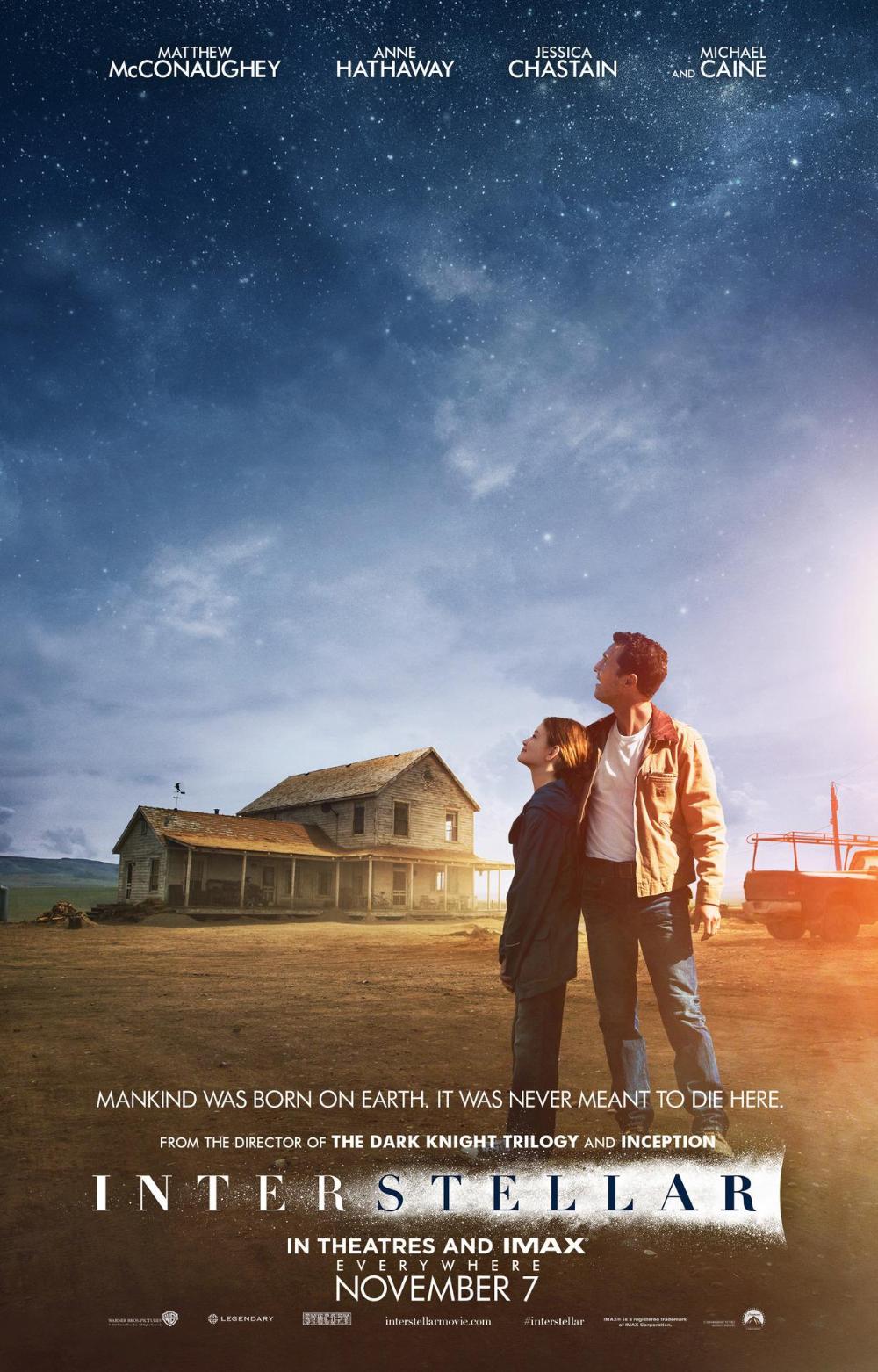
2. This is some of the promotional art for the film:
It's beautiful and subtle and everything you would expect to see from a film about the endless possibilities of space. And it basically taps into that unrefined subconscious area of anybody who dreamed of being an astronaut when they were a kid (which was pretty much everyone, right?) I couldn't find who designed the posters, but it's better than about 95% of what studios think are smart ideas for posters these days, including this little gem.
3. The Script is Super Secretive (and Hans Zimmer is composing)
Alright so that's technically two reasons. Nolan, already notorious for keeping his scripts under wraps, has been more tight-lipped than ever before about the Interstellar script. So tight-lipped, in fact, that he wouldn't even give the script to his long time collaborator, Hans Zimmer. According to Variety, Nolan gave Zimmer a one page sheet of text - that gave no hints about the film whatsoever - and told him to base the score off of that. Zimmer said that "the page had more to do with my story than the plot of the film. He knows how to get under my skin." The score will also be a step in a new direction for the duo, who have reportedly decided to scrap their loud, stringy, booming bass noises for something a little more different.
4. The Film will Actually be Shown on Film
For it's limited release in North America (in approximately 240 theaters) Interstellar will be projected in 70mm and 35mm formats, alongside the 70mm imax projections in at least 40 locations. The film is an exception to Paramount Studios initiative to stop releasing movies on traditional film stock as opposed to digitally. Filmmakers like Nolan, J.J. Abrams, and Quentin Tarantino have all stepped forward in defense of classic film stock, even though it's becoming less and less common - and practical - for theaters.
5. This is the full cast list:
Right here. Enjoy. Not to mention the actual plot, which has something to do with black holes and Matty McCons saving the world/ looking great in a
space suit. I've heard rumors - TOTAL RUMOR RIGHT HERE, TAKE IT WITH THE BIGGEST GRAIN OF SALT YOU CAN FIND - that the trailers don't even show footage from the second half of the movie, which, by the way has an incredibly long and exciting running time of 169 minutes. Yes, your butt will be sore, but so will your brain. In a good way. Hopefully. Here's a trailer if you're so inclined.
Since we'll all be spending the next few days thinking up the project that will control our lives for the next 2+ months, I thought it'd be nice to do a "Short Films for Dummies"-esque post on how to make a great short that we'll want in our portfolio.
As I'm sure you all expect me to say, a great short is nothing without a great story. Choose a story that you have a personal connection with. When the writer or director has a connection to the material, it demonstrates a powerful point of view--something that's much harder to find when you tackle big topics like space travel, the meaning of life, or an entire relationship. Then take your personal connection and tell a story of one character's or couple's journey, but no more than that. In a short film, there is little room for subplots and secondary characters and montages. Just a single dilemma that will be resolved by the end in some way. Short films are not about events, but the people those events happen to. While plot and twists are important, your film will be forgotten without memorable characters that your audience can empathize with. So you want a main character with a strong personality, including quirks, desires, and goals.
All great stories have three things in common: a beginning, a middle, and an end. Even if it feels like the story could go on or become part of a larger story, every short needs some sort of closure or resolution. Sometimes the hardest part is deciding where to start your story. You have a very short window of time to create a world that grabs the audience in. Mapping out your characters' journey is a good way to figure out where to start. You need to find the most visual and quickest way for the audience to get to know your character. Whether it be an image or action or line that makes the audience get where the characters are starting from, let that be your opening shot and scene. In a short, there's no luxury of 10 pages to set them up and tell us about their hopes, dreams, backstories, and all that little stuff you'd find in a feature. You've really only got your first page to make them interesting to your audience. In that first page, you want your audience to understand, connect with, and root for your character.
The last thing you want is predictable story. Audiences like when you set up their expectations, then subvert them. There should be twists in the first and last minute of your film. It's easy and tempting to use your film to say something cynical about human nature or relationships or society, but if you find a way to leave your audience with even the slightest positive impression, there's a much greater chance of it leaving a lasting impression on them and remembering your work. So if at all possible, end with a positive spin.
Let's move on from story to other aspects of making a short film. It doesn't take a great amount of money to make a great
short, but it does take great production value. So how do you guarantee
great production value? You start by choosing great locations. You want
locations that add a visual element to your story and allow for great
shot choices. When choosing locations, think about the tone and mood
that each place creates and make sure it fits the tone and mood you have intended. In shorts, it's not just what story you tell, but how you tell it. The writer and director should always be trying to get their voice and style across. That includes having visuals and moments that show off voice, style, POV, technical awareness, knowledge of shot composition, depth, etc. You absolutely, positively must be prepared before you get on set. You should know exactly what you need to get from every scene, including what emotion, what action, what shots, what tone, etc.
Back to budget. As I said earlier, short films do not require much money. To keep your production at a low cost and on schedule, start by writing a project with only a few locations and a few characters. The fewer locations, the better. As for characters, try not to have scenes that call for a dozen extras. The more actors you have to manage on set, the more difficult your life will be. Quick side note. I'm only going to say one thing about the casting process. When casting,
don't cast your friend cause they bought you beer or your
professor's son out of convenience. Hold auditions like the young
professional that you are. That is all. Another tip for saving time on set (and budget, if you're feeding your cast and crew as you should be) is to try to keep the times of days in your scenes as consistent as possible. Having all day scenes or all night scenes will condense the number of shoots you can film your short in. And the last thing you want to do is have a scene focused around a specific hour, like sunrise or sunset. You're practically guaranteed to not get everything you need in time and may lose a whole day of production.
If you want this next short to be one that you submit to contests, then it should not be longer than around 12 minutes. Festivals need to fit numerous shorts into 90-minute slots, so they can't program a short that takes up one-third of their time. The average length is about 4-8 minutes, plus end credits, which could add a minute or so to your short.
In conclusion, keep your short, short.
It
doesn’t take a great deal of money to make a great short, but it does
take great production value. - See more at:
http://www.scriptmag.com/features/notes-margins-elements-great-short-films#sthash.8wTX71zo.
It
doesn’t take a great deal of money to make a great short, but it does
take great production value. - See more at:
http://www.scriptmag.com/features/notes-margins-elements-great-short-films#sthash.8wTX71zo.dpuf
It
doesn’t take a great deal of money to make a great short, but it does
take great production value. - See more at:
http://www.scriptmag.com/features/notes-margins-elements-great-short-films#sthash.8wTX71zo.dpuf
Alright, SPOILERS FOLLOW. IF YA CAN'T HANDLE IT MOVE ON. Part three, now.
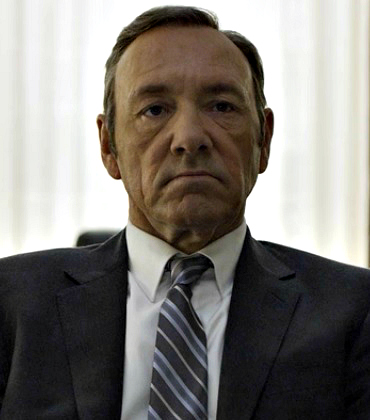
Peter
Russo dies. He doesn’t just die. Frank Underwood kills him. See, he lapsed back
into alcoholism and botched his chance at being Governor. With nothing left he
wants to atone for his crimes and come clean about all his illegal backdoor
politicking. That’d put Frank in an uncomfortable spot. So he picks up Russo
from a drunken stupor and drives him to a garage, leaves the car ignition on,
rolls down the windows and shuts the garage door. The U.S. House Majority Whip
Leader did that. When I expressed some mild reserve regarding the plausibility
of such an event to two avowed House of Cards fans, they looked at each other
and then to me.
“What
else was he gonna do?”
Anything.
Anything at all. Frank Underwood, the viewer is led to believe, is capable. A
man able to manipulate the subtle nuances and impulses of the human mind to his
advantage. He knows where every piece on the chessboard is, where they will
soon be and how they’ll get there. Five turns in advance. So he looks at this
man, a drunken wretch of a human being who’s only been talking about coming
clean while disastrously inebriated to absurd proportions and may very well
wake up the next morning and see the light and laugh off what he was saying the
night before, Underwood sees this man and believes the only solution to be
murder. And the moment’s not treated as a mistake made amidst a paranoid haze
of anxious uncertainty but a cold, deliberate decision. As if no other option
remained. I’m sorry but fuck that.
Aside
from the whole murder thing being all sorts of stupid, Frank got an emotionally
unstable alcoholic to go on a high profile, high stress election campaign that
would leave him more tempted than ever before but did not consider the possibility
that he may in fact relapse as 75% of alcoholics do within their first year of
recovery. A smart man would see that risk and not take it. If he did, he’d plan
a variety of backups to cushion the potential fallout. But Frank is surprised
as anyone else when it happens. As for the actual murder, really, what the
fuck, there were so many other possible solutions. Discredit the drunken
alcoholic as a crazy person in the press, threaten his family, bribe him with all
the money in the world, manipulate the events publicly so that he looks like
the one who masterminded it all, drug him and ship him off to Guam or
something. At least Guam would’ve been a fun sort of camp. It’s just crazy that
Frank murders Peter in order to avoid the possible legal ramifications should
Peter come forward and speak up but anticipates no apparent consequences for
fucking murder. Granted, the issue rears its head in the first episode of
season two when a reporter suspects him of the Russo murder. So he pushes the
reporter in front of a train. Then that thing is all null and void. Okay then.
It
is not as if television shows can’t explore the creative potential outside the
realm of possibility. Many of the great shows thrive off of the implausible,
often achieving their most powerful moments via batshit-when-you-think-about-it
means. But these moments all function within the boundaries the shows set for themselves
and never come at their own expense. House of Cards set the boundaries as a tell
all fictional tale of the true nature of Washington but then shits all over
them with murder. Twice. It took its carefully crafted verisimilitude and tore
it asunder. At the same time, it’s not like it’s some frivolous soap opera
where the stretching of reality does not matter either. Between the dialog and
all the interviews about commitment to reality and the episode being called
“Chapters,” as if there was a grand literary scheme to all this and the
narrative wasn’t just riding by the seat of its shit stained coat tails to an
ending.
Much
of my anger stems from the disservice the show did to Peter Russo in his final
moments. Part of it comes from the fact that everyone else thinks the show is
great and it’s not and everyone thinks that moment is great and harrowing and
it’s not and how I wished the show was great but it’s not. But most of my anger
comes from the realization of what about show is really about.
See,
the show was never about Russo. He was a narrative pawn, a character that
existed just to die and provide emotional watershed. It’s not about politics. It
just does not have enough to say about the subject. Hell, it’s not even about
Frank. It’s about his slow and often illogical ascent to power and all the
giddy kickass moment that accompany it. The entire dramatic thrust of the show,
what entertains the viewer and guides the narrative and provides catharsis, is
Frank winning. The other characters don’t complicate or challenge him in
anyway. They exist solely to be beaten and disposed of in the wake of his path.
It ends up being some high-class snuff film with flag pendants and cuff links
and C-Span. Ascent narratives are a delicate art and they botch it. Breaking
Bad, another one of the great shows, centered itself around the inherent thrills
of an ascent narrative as well. But that narrative worked in large part due to
its attention to the side characters. Their existence outside of the main
character’s was fully developed and entertaining in its own right. This gave
them the air of not obstacles but complications. So when the main character
inevitably hurt those side characters on his way up, it complicated our joy and
sympathy for the main character and the ascent itself, and at a certain point
for many viewers out right displaced the sympathy. House of Cards is too
careless with its side characters to ever pull of such a delicate balance of
thrill and empathy. But it does try and it does fail, reaching for these overly
dramatic moments that seem like needless and preposterous story beats intended
to inject stakes and emotional heft into the narrative but end up just
completely undercutting every emotional moment that proceeded them, like some
bogus shot of adrenaline bought off some shady dude in an alley that sends the user
into an even worse state, ultimately rendering them a lifeless corpse.
House
of Cards spends too much time trying to be great without doing any of the
groundwork that helped create a strong foundation the actual great shows used
to ascend into greatness. And so it ends up being a good show that thinks it’s
great. And a smart person who thinks they’re the smartest in the room will
always irritate more than a dumb one that knows he’s dumb.
People
buy into it because of the pedigree of it all. Smoke and mirrors. For me, it’s
like if everyone else in the world looked at wrestling and thought of it as a
deeply engaging narrative with a lot to say about the barbaric state of
violence in society, with out of nowhere plot twists that are really gratifying
and some nuanced, well balanced character work that meshes real well with the
visceral physicality of it all.
It's a shame because we deserve a show like this to be great. It just didn't happen. Oh well!
Welcome back! Don't know how you got here? Don't know why you're here? Me neither! As long as I have you, though, let's discuss a very important matter. Now, I don't know about you, but I've been wondering what a script supervisor does for quite some time. I understood the very basics of the job, but what in the world are the specifics?! I don't know! Or at least I didn't know. Until now! It's "Script Supervising for Dummies!"
What most people already know about being a script supervisor is that they, well, supervise the script. "But what exactly does that entail?" one may ask. The paramount job of a script supervisor is to maintain a daily log of the day's shots and their relation to the script during the production process. They act as the chief continuity person on set and act as the on-set liaison to the postproduction staff.
Essentially, the script supervisor is the editors' best friend. They're practically the only ones on set who have the postproduction staff's best interests at heart. They keep track of every shot and make sure it'll be able to be cut together later in the production process. We love our script supervisors!
Getting a little more into the details of the job, a script supervisor's foremost task is to maintain of log of all shots taken on set. This log has every bit of information an editor could possibly need. It has shot numbers that match up with the script, slated shot numbers, comments from the director or DP (usually explaining important details of what to use/not use), continuity information, the tape/reel number, camera settings, the date and time, production statistics, etc., etc., etc. Any and all questions postproduction staff may have should be answered by this log. If there are any questions left unanswered, the script supervisor didn't do his/her job and will most definitely be fired...ok, maybe not fired, but someone will definitely be slightly upset.
Along with the continuity notes on the shot log, the script supervisor must also have keen eyes on set so as to call out any errors while shooting. This can include anything from an actor's hand movements from shot to shot to a prop placement error. Clearly, they can't interrupt a shot just to point out an error, but instead will relay their notes onto one of the directors so that they can correct them in future takes. To assure for consistent prop/set placement and design from day to day (you never know what fool will decide to move something), the script supervisor cross-references with the continuity stills photographer daily. They need to make sure they'll have easy access to any continuity stills during production so they can quickly double-check anything they need to without costing the production any time.
A script supervisor who's particularly good at their job will most likely have some level of editing experience, or at least a general understanding of how it works. It makes for a much better judge of what can and what cannot be cut together (continuity). Speaking for anyone who's ever worked in postproduction, we love our script supervisors. We really, really do.
 A typical package has 40 adjustment layers instead of 7 but you get the idea. I know I could potentially use motion tracking with this but I found that when you have footage that whips/pans very quickly and the logos aren’t clearly defined, motion tracking takes longer than just doing it by hand. So I hope you enjoyed this extremely boring blog post as much as I did. Now back to blurring I go!